
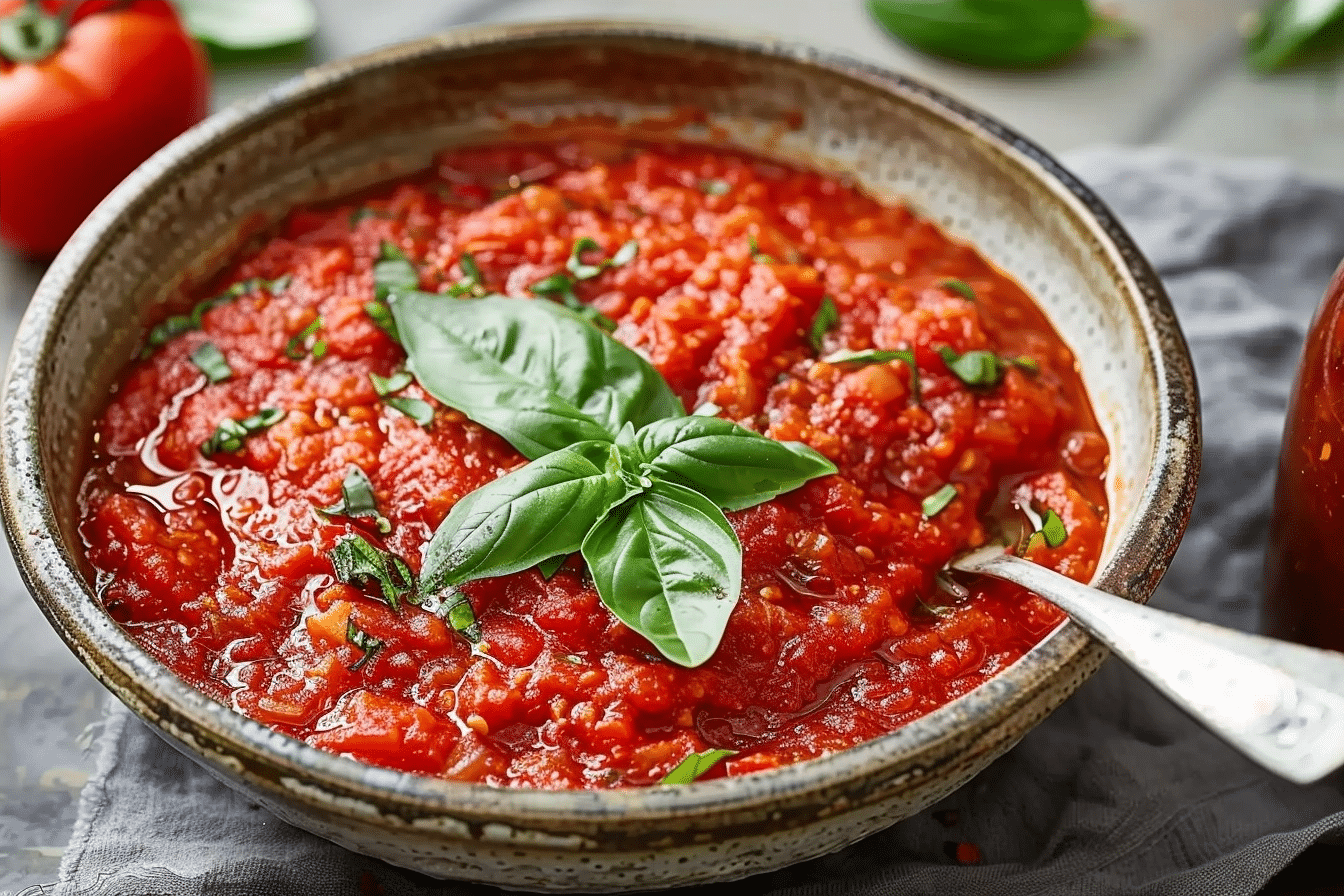
Homemade Marinara Sauce | Easy Classic Italian Recipe is a smooth, bright tomato sauce made from stewed tomatoes, tomato paste, olive oil, aromatics, and fresh parsley. This classic pantry-friendly sauce offers steady flavor, silky texture, and forgiving technique that I rely on for weeknight dinners and weekend batch cooking. The method yields a balanced sauce that pairs with pasta, meatless mains, and simple oven bakes.
| Prep Time | Cook Time | Total Time | Servings | Difficulty | Cuisine |
|---|---|---|---|---|---|
| 10 minutes | 30 minutes | 40 minutes | About 6 | Easy | Italian |
Image ALT text suggestion: Close-up of a skillet of simmering marinara with a wooden spoon and fresh parsley on the side.
This recipe works because it balances acidity, savory depth, and herb brightness. Why This Recipe Works
I rely on canned stewed tomatoes and tomato paste for consistent, concentrated tomato flavor without long roasting or peeling work. Blending the tomatoes with the paste and herbs gives a uniform, silky body that clings to pasta and bakes evenly under cheese.
I use slow, gentle simmering to develop sweetness and reduce raw acidity while keeping the fresh parsley and oregano bright. The simple sautéed onion in olive oil adds a soft aromatic backbone, and stirring in a non-alcoholic white wine substitute lifts the sauce with subtle acidity for a rounded finish.
Image ALT text suggestion: A bowl of blended tomato sauce beside a jar of dried oregano and a bunch of fresh parsley.
This section lists every ingredient and practical swaps. Ingredients
| Ingredient | Quantity | Notes/Alternatives |
|---|---|---|
| Stewed tomatoes, canned | 2 (14.5 ounce) cans | Use San Marzano style for sweeter flavor; crushed tomatoes work but adjust sweetness. |
| Tomato paste | 1 (6 ounce) can | Double for thicker sauce or use concentrated passata for smoother texture. |
| Fresh parsley, chopped | 4 tablespoons | Flat-leaf parsley preferred; basil works as an aromatic alternative. |
| Garlic, minced | 1 clove | Use 2 cloves for stronger garlic presence; add with onions to avoid burning. |
| Dried oregano | 1 teaspoon | Oregano adds classic Italian flavor; use 1 tablespoon fresh if available. |
| Salt | 1 teaspoon or to taste | Start with less, adjust after simmering; use kosher salt for best control. |
| Ground black pepper | ¼ teaspoon | Freshly ground for best aroma; increase slightly to taste. |
| Olive oil | 6 tablespoons | Extra-virgin for finishing; use mild for cooking if preferred. |
| Onion, finely diced | ⅓ cup | Yellow onion for sweetness; shallot for a subtler flavor. |
| Non-alcoholic white wine substitute | ½ cup | Use ½ cup low-sodium vegetable broth plus 1 teaspoon white wine vinegar or ½ cup white grape juice plus 1 teaspoon lemon juice. |
Image ALT text suggestion: Ingredients measured on a wooden board: cans of tomatoes, a can of tomato paste, parsley, garlic, onion, oil, and seasonings.
This section walks through each step in order. Step-by-Step Instructions
Prep and blend
- Place stewed tomatoes, tomato paste, parsley, minced garlic, dried oregano, salt, and ground black pepper in a food processor.
- Blend the mixture until smooth, scraping down the sides once to ensure an even texture.
Sauté aromatics and combine
- Heat olive oil in a large skillet over medium heat until it shimmers.
- Add finely diced onion and cook until slightly softened, about 2 minutes, stirring frequently.
- Stir in the blended tomato sauce and the non-alcoholic white wine substitute, scraping up any fond from the pan.
Simmer to finish
- Bring the sauce to a gentle simmer, then reduce heat to maintain a low, steady simmer.
- Simmer, stirring occasionally, until the sauce has thickened and reduced by about one-third, about 30 minutes.
- Adjust seasoning with salt and pepper, remove from heat, and stir in any extra chopped parsley if desired before serving.
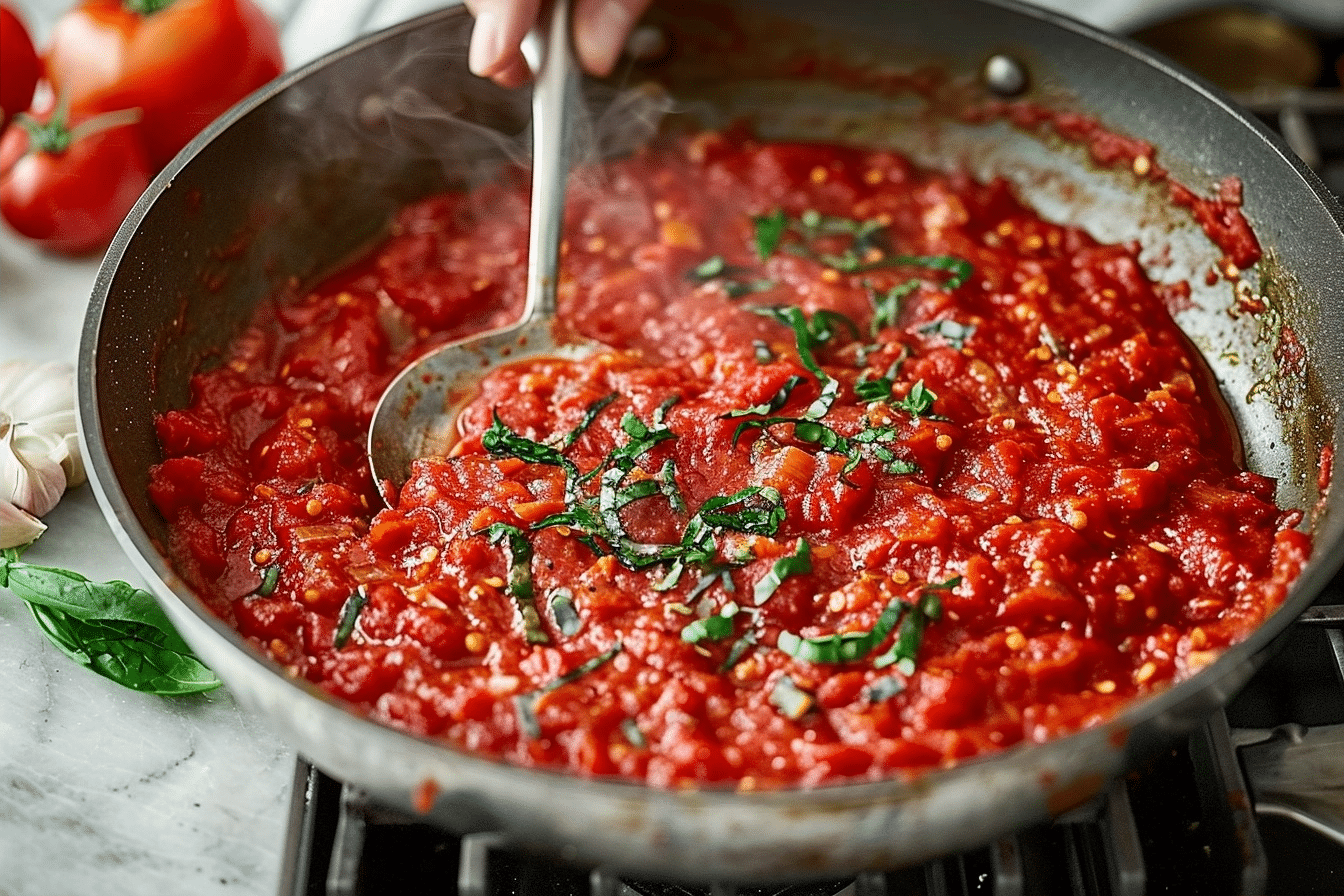
Image ALT text suggestion: A wooden spoon stirring thick marinara sauce in a shallow skillet while steam rises.
This section gives precise techniques for reliable results. Chef Tips for Perfect Results
- Use full-flavored canned stewed tomatoes for consistent sweetness; avoid plain whole tomatoes unless you add a touch more tomato paste.
- Sauté onions only until softened, not browned, to keep the sauce bright; browned onions add a sweeter, caramelized note you can use intentionally.
- Maintain a gentle simmer around 185-205°F (85-96°C) so the sauce reduces without vigorous splatter and preserves fresh herb notes.
- Taste after 20 minutes and adjust salt; tomatoes often concentrate as they reduce, so final seasoning matters more than initial amounts.
- Add a teaspoon of sugar only if the sauce tastes overly acidic; I prefer adjusting acidity with a splash of lemon or the recommended vinegar in the substitute.
- Finish with a tablespoon of extra-virgin olive oil off the heat for a silky mouthfeel and improved aroma.
Image ALT text suggestion: Measuring spoon adding a pinch of salt to a pot of simmering marinara.
This section identifies frequent errors and fixes. Common Mistakes to Avoid
- Cooking too hot: High heat causes uneven reduction and can scorch the sauce. Fix by lowering the heat to a gentle simmer and stirring more often.
- Under-seasoning early: Adding salt only at the end can leave flavors flat while simmering. Fix by seasoning in stages and tasting toward the end of cooking.
- Burning the garlic: Adding raw garlic to hot oil without onion can burn it and create bitterness. Fix by adding garlic with the blended sauce or after the onion softens.
- Skipping reduction: Not simmering long enough leaves a watery sauce that won’t cling to pasta. Fix by simmering the sauce until it thickens to a spoon-coating consistency.
- Using too much acidic substitute: Excess vinegar or juice can overpower the tomatoes. Fix by starting with the suggested substitute ratios and tasting; add acid in small increments.
Image ALT text suggestion: A burnt rim on a skillet demonstrating overcooked sauce with a corrective caption.
This section offers swaps and their effects. Variations and Substitutions
| Ingredient | Substitution | Flavor/Texture Impact |
|---|---|---|
| Stewed tomatoes | Crushed tomatoes or passata | Passata yields smoother texture; crushed tomatoes provide more rustic bits for body. |
| Fresh parsley | Fresh basil or a mix of both | Basil gives a sweeter, aromatic finish and pairs well with mozzarella. |
| Non-alcoholic white wine substitute | ½ cup vegetable broth + 1 tsp white wine vinegar | Maintains acidity without alcohol; slightly earthier than wine. |
| Olive oil | Butter or a neutral oil | Butter adds richness and silkiness; neutral oil lets tomato flavor shine more directly. |
| Tomato paste | Concentrated tomato purée | Provides similar depth; adjust quantity for desired thickness. |
Image ALT text suggestion: Three small bowls showing different sauce variations and garnishes for comparison.
This section lists ideal matches and occasions. Serving Suggestions and Pairings
Serve this marinara with freshly cooked spaghetti, penne, or rigatoni tossed until every piece is coated. Use as the base for baked dishes like eggplant Parmesan, a simple tomato gratin, or layered lasagna without meat for a vegetarian main.
Pair the sauce with garlic bread, a crisp green salad dressed with lemon and olive oil, and grated hard cheese such as Pecorino Romano or Parmigiano-Reggiano. Offer red pepper flakes, extra parsley, and a drizzle of olive oil at the table for guests. This sauce also works well for weeknight family dinners, casual entertaining, and holiday meatless Italian menus.
Include internal references for more ideas: homemade pasta recipes, garlic bread guide, and vegetarian lasagna tips.
Image ALT text suggestion: A plate of spaghetti tossed with marinara and garnished with parsley and grated cheese.
This section explains safe methods and times. Storage and Reheating
| Method | Duration | Instructions |
|---|---|---|
| Refrigerator | 4 to 5 days | Cool to room temperature, transfer to an airtight container, reheat gently on the stove over low heat. |
| Freezer | 3 months | Freeze in portioned airtight containers or heavy freezer bags; thaw overnight in the fridge before reheating. |
| Reheating | Immediate | Warm over low heat, add a splash of water or broth if too thick, and finish with a drizzle of olive oil. |
Image ALT text suggestion: Mason jars of marinara sauce labeled with dates ready for freezing on a kitchen counter.
This section provides approximate nutrition per serving. Nutritional Information
| Nutrient | Amount per Serving |
|---|---|
| Calories | 110 kcal |
| Protein | 3 g |
| Fat | 7 g |
| Carbohydrates | 10 g |
| Fiber | 2 g |
| Sugar | 6 g |
| Sodium | 420 mg |
Approximate values.
Image ALT text suggestion: Nutrition label style layout showing approximate calories and macros for a serving of marinara.
This section answers common queries and troubleshooting. Frequently Asked Questions
Can I substitute fresh tomatoes for canned stewed tomatoes?
Yes, you can substitute fresh tomatoes for canned stewed tomatoes. Use about 2 pounds of ripe tomatoes, core and roughly chop, then simmer longer to break them down and concentrate flavor. Add a small amount of tomato paste to boost body if the fresh tomatoes are watery. Monitor seasoning as fresh tomatoes can vary in acidity and sweetness.
How do I know when marinara sauce is done?
The sauce is done when it has reduced and thickened enough to coat the back of a spoon. The surface should show gentle movement and the volume should reduce by roughly one-third after a gentle simmer. Taste to confirm balanced acidity, sweetness, and salt before removing from heat. Allow the sauce to sit five minutes off the heat to let flavors settle.
Why is my marinara sauce bitter or metallic?
Bitter or metallic notes usually come from overcooked tomatoes, burned garlic, or a reaction with certain cookware. Remedy bitterness by adding a small pinch of sugar, a splash of non-alcoholic acid like vinegar, or finishing with a tablespoon of olive oil to round flavors. Prevent issues by cooking at a gentle simmer and avoiding burnt aromatics.
Can I make this marinara sauce ahead of time?
Yes, you can make this marinara ahead and refrigerate for up to five days or freeze for three months. Cool sauce to room temperature before storing in airtight containers and label with the date. Reheat gently on the stove and adjust seasoning after warming to freshen the flavor. This sauce often tastes better the next day as flavors meld.
How should I store homemade marinara sauce for later use?
Store homemade marinara in airtight containers in the refrigerator for up to five days or freeze in portions for three months. Use freezer-safe bags or rigid containers and remove excess air to prevent freezer burn. Thaw overnight in the fridge before reheating gently on the stove. For long-term storage, freeze flat in bags for efficient stacking and quicker thawing.
Image ALT text suggestion: A question mark icon next to a jar of sauce representing a FAQ section graphic.
This conclusion summarizes the recipe and encourages cooking. Conclusion
This Homemade Marinara Sauce | Easy Classic Italian Recipe gives a dependable, flavorful tomato sauce that fits weeknight dinners and special meals alike. Follow the simple blending and gentle simmering steps to achieve smooth texture and balanced acidity, and use the storage tips for make-ahead convenience. Try this sauce on pasta, baked dishes, or as a versatile condiment to brighten your next meal with honest tomato flavor.
Image ALT text suggestion: A final plated dish showing pasta dressed in marinara with parsley and grated cheese to close the recipe.
External references: Serious Eats, USDA.
Homemade Marinara Sauce | Easy Classic Italian Recipe
Ingredients
- Stewed tomatoes, canned (2 14.5-ounce cans)
- Tomato paste (1 6-ounce can)
- Olive oil (3 tablespoons)
- Onion, chopped (1 medium)
- Garlic, minced (1 clove)
- Dried oregano (1 teaspoon)
- Fresh parsley, chopped (4 tablespoons)
- Salt (1 teaspoon, or to taste)
- Ground black pepper (¼ teaspoon)
- Non-alcoholic white wine substitute (2 tablespoons, see notes)
Instructions
- Heat olive oil in a skillet over medium heat. Add onion and sauté until translucent, 5-7 minutes. Add garlic and cook for 1 minute. Stir in canned tomatoes, tomato paste, and non-alcoholic wine substitute. Add oregano, salt, and pepper. Simmer gently, uncovered, for 30 minutes to reduce and mellow flavors. Use a blender to puree until smooth. Stir in fresh parsley and adjust seasoning.