
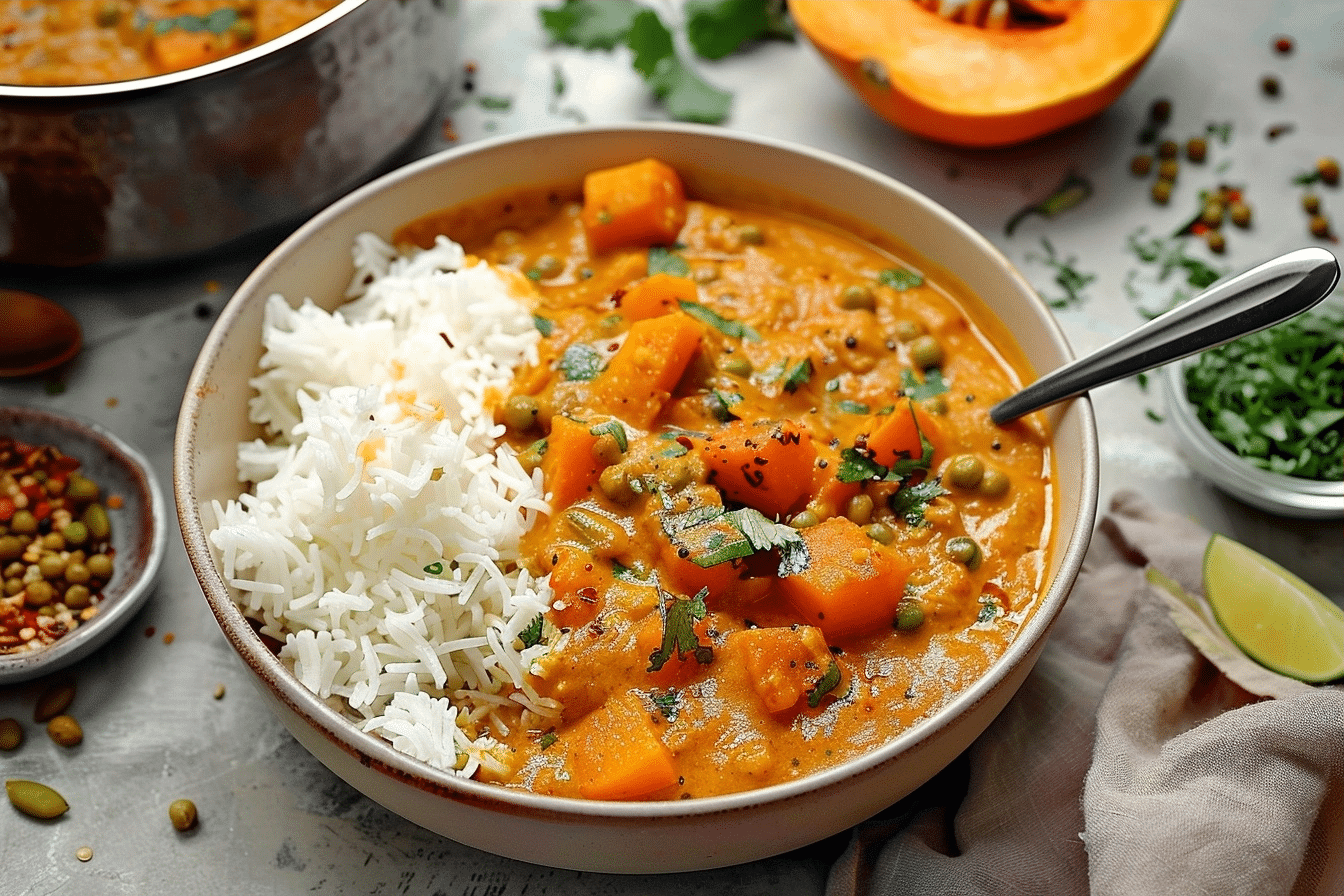
This creamy one-pot pumpkin curry is a comforting Indian inspired dinner that combines smooth pumpkin puree, toasted spices, and coconut milk into a fast, reliable weeknight meal. Creamy One-Pot Pumpkin Curry cooks in a single pan and delivers rich texture, warm spices, and minimal cleanup while using pantry-friendly ingredients. The recipe features pumpkin, passata, aromatic ginger and garlic, and tender vegetables for a balanced, satisfying dinner.
| Prep Time | Cook Time | Total Time | Servings | Difficulty | Cuisine |
|---|---|---|---|---|---|
| 10 mins | 15 mins | 25 mins | 4 | Easy | Indian inspired |
Why This Recipe Works
This recipe works because it layers aromatic vegetables, toasted spices, pumpkin, and coconut milk into a cohesive, flavorful curry. I rely on simple steps and reliable spice ratios to coax maximum flavor from minimal ingredients, which keeps the dish approachable for cooks of every level.
I find that starting with sautéed onion, carrot, and bell pepper builds natural sweetness that balances the earthy pumpkin and the warmth of cumin and turmeric. The addition of passata brightens the sauce while coconut milk smooths and rounds the curry, creating a luscious texture that clings to rice and naan effectively.
Image ALT text suggestion: Close-up of a creamy orange pumpkin curry in a single pot, garnished with chopped cilantro and lime wedges.
Ingredients (Creamy One-Pot Pumpkin Curry)
This section lists every ingredient with practical swaps and precise quantities so you can shop and prep confidently before cooking. I often prepare a mise en place to speed assembly and avoid overcooking delicate greens at the end.
Image ALT text suggestion: Ingredients arrayed on a counter including onion, pumpkin puree, coconut milk, spices, and fresh herbs laid out before cooking.
| Ingredient | Quantity | Notes/Alternatives |
|---|---|---|
| Oil or water (if oil-free) | 1/2 tbsp | Use neutral oil or 1/2 tbsp water for oil-free cooking |
| Onion, chopped | 1 medium (110 g) | Yellow or white onion works best |
| Carrot, chopped | 1 cup (150 g) | Cook until slightly softened for sweetness |
| Bell pepper, chopped | 3/4 cup (80 g) | Red or orange peppers add sweetness; green for savory notes |
| Garlic, minced | 3 cloves | Fresh minced garlic for best flavor |
| Fresh ginger, minced | 2-inch (5 cm) | Grated or finely minced |
| Curry powder | 1/2 tbsp | Use mild or hot depending on preference |
| Ground turmeric | 3/4 tsp | Adds color and warm flavor |
| Ground cumin | 1 tsp | Toasted cumin enhances aroma |
| Salt | 3/4 tsp (or to taste) | Adjust based on broth and coconut milk saltiness |
| Smoked paprika | 1/2 tsp | Adds mild smokiness; omit for no-smoke flavor |
| Black pepper | 1/4 tsp (or to taste) | Freshly ground preferred |
| Passata or tomato sauce | 1/2 cup (125 g) | Use crushed tomatoes if passata unavailable |
| Pumpkin puree | 2 cups (500 g) | Homemade or canned; ensure unsweetened pumpkin puree |
| Vegetable broth | 1/2-1 cup (120-240 ml) | Use 1/2 cup for thicker curry; up to 1 cup for saucier curry |
| Coconut milk, canned | 3/4 cup (180 ml) | Full-fat for creaminess; light for fewer calories |
| Kale, chopped (or spinach) | 6-8 leaves | Use spinach for tender, quick wilting greens |
| Fresh herbs to garnish | To taste | Cilantro or parsley both work well |
| Lime or lemon juice | To drizzle | Brightens the curry before serving |
| Cooked rice | To serve | Basmati or jasmine recommended |
Step-by-Step Instructions (Creamy One-Pot Pumpkin Curry)
This section gives clear, action-first steps you can follow without stopping to guess timing or technique. I tested each step to ensure vegetables remain tender and spices bloom without burning.
Image ALT text suggestion: A series of steps showing sautéing onions, stirring in spices, and a simmering one-pot pumpkin curry on the stove.
Phase 1: Prep
- Measure and chop all vegetables and herbs so they are ready to add to the pan.
- Open the cans of coconut milk and pumpkin puree so you can stir them in without delay.
Phase 2: Cook the base
- Heat oil in a pan over medium heat and sauté the onion, carrot, and bell pepper for about 4-5 minutes.
- Stir in garlic and fresh ginger and sauté for a further 1 minute.
- Add curry powder, turmeric, ground cumin, smoked paprika, salt, and black pepper and stir for 30 seconds to toast the spices.
Phase 3: Build the curry
- Pour in passata and pumpkin puree, then stir to combine with the spiced vegetables.
- Add 1/2 cup to 1 cup vegetable broth depending on desired consistency and stir until smooth.
- Stir in 3/4 cup canned coconut milk until the sauce becomes silky and uniform in color.
Phase 4: Simmer and finish
- Bring the mixture to a simmer and let simmer on low heat for about 5-8 minutes or until the veggies are tender.
- Finally, add the chopped kale and let simmer for a further 1-2 minutes, then turn off the heat.
- Taste and adjust seasonings, adding more salt, pepper, or red pepper flakes to taste.
- Serve the curry over cooked rice with a drizzle of lime juice and a scatter of fresh herbs.
You can watch the video in the post for visual instructions. Optional: You can add cooked chickpeas for additional protein by stirring them in during Phase 3.
Chef Tips for Perfect Results
This section lists professional tips I use to ensure consistent texture and bright flavor in every batch. Follow these cues for ideal spice bloom, sauce thickness, and finishing touches.
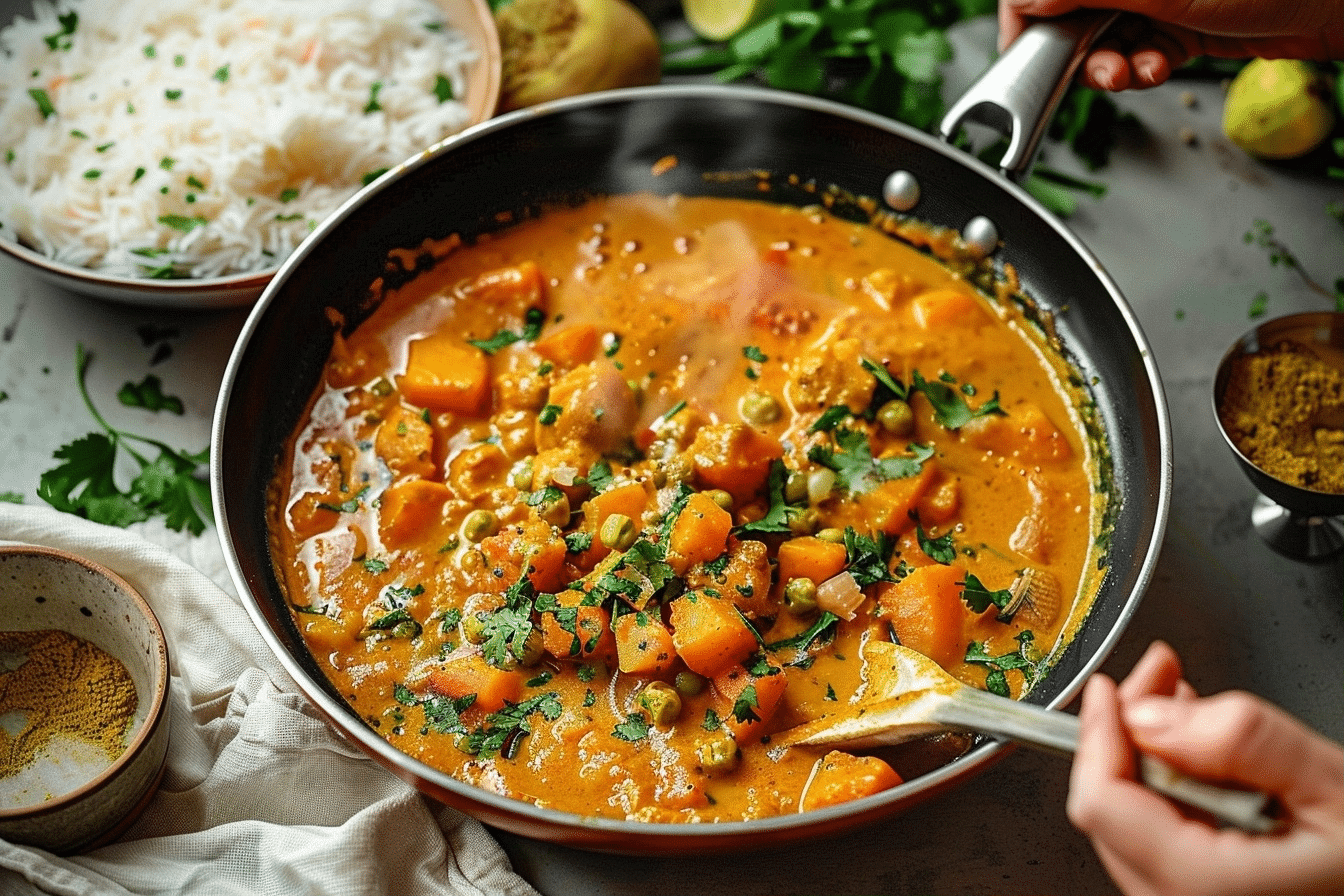
Image ALT text suggestion: A close-up of a spoon stirring pumpkin curry with visible spices and a sheen of coconut milk.
- Toast spices briefly: After adding ground spices, stir for 20 to 30 seconds to bloom the flavors but avoid burning them, which turns spices bitter.
- Control thickness with broth: Use 1/2 cup vegetable broth for a thicker curry and up to 1 cup for a saucier finish, adjusting at the simmer stage.
- Use full-fat coconut milk for creaminess: Full-fat coconut milk gives a silky mouthfeel; stir the can well before measuring to reincorporate the cream.
- Add greens last: Add kale or spinach at the end and simmer only 1 to 2 minutes so greens keep tender texture and bright color.
- Taste and adjust: Always taste at the end and adjust salt and acidity with lime or lemon juice to lift the flavors.
- Optional protein: Fold in canned cooked chickpeas in Phase 3 for extra protein and texture without altering spice balance.
Common Mistakes to Avoid
This section highlights common errors and provides quick fixes so your curry turns out great every time. I include the reasons behind each mistake and step-by-step prevention methods.
Image ALT text suggestion: A photo showing an overcooked curry contrasted with a perfectly textured one-pot pumpkin curry.
- Burning spices: Spices burn when the pan is too hot or if left without stirring. Prevent this by keeping medium heat and stirring constantly for the first 30 seconds after adding spices.
- Watery curry: Adding too much broth or failing to reduce will thin the sauce excessively. Fix by simmering a few extra minutes uncovered to concentrate flavors or add a spoonful more pumpkin puree to thicken.
- Dull flavor: Not toasting spices or under-seasoning can lead to flat curry. Resolve by briefly toasting spices and tasting before serving, then adding salt and acidity as needed.
- Soggy greens: Adding kale or spinach too early causes limp, overcooked greens. Add the greens at the end and simmer only 1 to 2 minutes until wilted bright green.
- Oversalted result: Using salty broth plus added salt can over-salt the curry. Use low-sodium broth and taste before adding the final salt adjustment.
Variations and Substitutions
This table lists simple ingredient swaps and the expected impact on flavor and texture so you can customize the curry to your pantry and preferences. I test these substitutions to preserve balance when altering core ingredients.
Image ALT text suggestion: Several small bowls showing alternative ingredients such as chickpeas, sweet potato, and spinach next to a pot of curry.
| Ingredient | Substitution | Flavor/Texture Impact |
|---|---|---|
| Pumpkin puree | Butternut squash puree or sweet potato puree | Similar sweetness and creaminess with a slightly nuttier note from butternut squash |
| Coconut milk (full-fat) | Light coconut milk or cashew cream | Light coconut milk reduces richness; cashew cream keeps creaminess without coconut flavor |
| Kale | Spinach or Swiss chard | Spinach wilts faster and gives tender texture; chard is heartier |
| Passata | Crushed tomatoes or tomato puree | Crushed tomatoes give more texture; puree maintains smooth sauce |
| Vegetable broth | Water plus 1/4 tsp bouillon or low-sodium chicken broth (if not vegetarian) | Bouillon concentrates flavor without adding sodium overload; chicken broth adds savory depth |
Serving Suggestions and Pairings
This recipe pairs well with neutral sides and bright accompaniments that complement the curry’s creamy texture and warm spices. I serve it several ways depending on the occasion and the crowd.
Image ALT text suggestion: A plated bowl of pumpkin curry with a mound of basmati rice, naan on the side, and lime wedges.
- Serve over steamed basmati or jasmine rice for a classic pairing that soaks up the sauce.
- Offer warm naan or roti for scooping and to add a chewy contrast to the silky curry.
- Garnish with fresh cilantro or parsley and a generous squeeze of lime or lemon juice to brighten the dish.
- Pair with a simple cucumber raita or plain yogurt to cool the palate on spicier versions.
- Drink pairings include unsweetened iced tea or light sparkling water with citrus; avoid alcohol in accordance with the recipe constraints.
- Serve this curry for weeknight dinners, casual gatherings, or holiday vegetarian mains like Thanksgiving or Diwali-inspired feasts.
Storage and Reheating
This table lists safe storage times and reheating methods so you can prepare the curry ahead and enjoy leftovers without losing texture or flavor. I prefer reheating gently to preserve creaminess.
Image ALT text suggestion: Leftover pumpkin curry stored in glass containers with labels and date stickers in a refrigerator.
| Method | Duration | Instructions |
|---|---|---|
| Refrigerator | 3-4 days | Cool completely, store in airtight containers; reheat over low heat, stirring often until warmed through |
| Freezer | 2-3 months | Freeze in portioned airtight containers; thaw overnight in the fridge before reheating gently on the stove |
| Reheat | N/A | Reheat on low heat with a splash of broth or water to refresh sauce; avoid high heat to prevent curdling of coconut milk |
Nutritional Information
Below is an approximate nutritional breakdown per serving based on standard ingredient choices and portion sizes. Values are estimates and will vary with ingredient brands and substitutions.
Image ALT text suggestion: Nutrition facts styled layout beside a bowl of curry to indicate healthy comfort food.
| Nutrient | Amount per Serving |
|---|---|
| Calories | 320 kcal |
| Protein | 6 g |
| Fat | 18 g |
| Carbohydrates | 36 g |
| Fiber | 6 g |
| Sugar | 8 g |
| Sodium | 420 mg |
Approximate values.
Frequently Asked Questions
This FAQ section answers common long-tail queries about substitutions, doneness, troubleshooting, make-ahead planning, and storage to help you succeed every time.
Image ALT text suggestion: A Q and A style layout with a small bowl of curry beside a notepad of questions and tips.
Can I substitute pumpkin puree in this pumpkin curry?
Yes, you can substitute pumpkin puree with butternut squash or sweet potato puree for similar texture and sweetness. Those substitutes provide a slightly nuttier or sweeter flavor but maintain the creamy mouthfeel. Adjust seasoning and acidity to taste after adding the substitute.
How do I know when the curry is done and the vegetables are tender?
The curry is done when the carrot and bell pepper are fork-tender and the sauce coats the back of a spoon. Simmer on low for 5 to 8 minutes and test a piece of carrot for tenderness. If vegetables need more time, simmer an additional 1 to 2 minutes, checking frequently.
What should I do if my curry tastes bland or too spicy?
If the curry tastes bland, add a pinch more salt and a squeeze of lime or lemon juice to brighten flavors immediately. If it is too spicy, stir in a little more coconut milk or pumpkin puree to mellow heat, and serve with cooling yogurt or raita on the side.
Can I make this pumpkin curry ahead of time for meal prep?
Yes, you can make this curry ahead and store it in the refrigerator for up to 4 days or freeze for up to 3 months. Cool completely before refrigerating and reheat gently with a splash of broth to refresh the sauce before serving.
How should I store leftovers of this one-pot pumpkin curry?
Store leftovers in airtight containers in the refrigerator for 3 to 4 days or in the freezer for 2 to 3 months for best quality. Thaw frozen portions overnight in the fridge and reheat on low heat, stirring to recombine coconut milk and sauce.
Conclusion
This Creamy One-Pot Pumpkin Curry is a quick, comforting Indian inspired dinner that balances pumpkin richness, warm spices, and creamy coconut for a reliable weeknight meal. Follow the step-by-step method and chef tips to achieve silky texture and bright, layered flavor every time. Serve over rice with fresh herbs and a squeeze of lime for a memorable cozy plate.
Try this recipe tonight and enjoy the warm, comforting flavors that only a creamy pumpkin curry can deliver.
Internal links: Perfect Rice, Homemade Naan, Vegetarian Protein Additions.
External references: USDA, BBC Good Food.
Creamy One-Pot Pumpkin Curry | Easy Indian Inspired Dinner
Ingredients
- Oil or water (if oil-free), 1/2 tbsp (use neutral oil or 1/2 tbsp water for oil-free cooking)
- Onion, chopped, 1 medium (110 g) (yellow or white onion works best)
- Carrot, chopped, 1 cup (150 g) (cook until slightly softened for sweetness)
- Bell pepper, chopped, 3/4 cup (80 g) (red or orange peppers add sweetness; green for savory notes)
- Garlic, minced, 3 cloves (fresh minced garlic for best flavor)
- Fresh ginger, minced, 2-inch (5 cm) (grated or finely minced)
- Curry powder, 1 1/2 tbsp (blend of mild or yellow curry)
- Ground cumin, 1 tsp
- Ground turmeric, 1 tsp
- Tomato passata, 1 1/4 cups (300 g)
- Canned coconut milk (full-fat), 13.5 fl oz (400 ml)
- Pumpkin puree, 2 cups (500 g) (not pie-filling)
- Optional: Potatoes or cauliflower (1 1/2 cups chopped) (adds heartiness)
- Salt, to taste (adjust based on passata salt content)
- Black pepper, to taste
- Chopped cilantro and lime wedges, for garnish
Instructions
- Heat oil or water in a large pot over medium heat. Add onion, carrot, and bell pepper; sauté 2–3 minutes until tender.
- Add garlic and ginger; cook 1 minute until fragrant.
- Stir in curry powder, cumin, and turmeric. Toast spices 1 minute, stirring constantly to prevent burning.
- Add passata and 1 cup water. Cook 2 minutes until slightly thickened.
- Pour in pumpkin puree and coconut milk. Stir well to combine.
- Add optional vegetables (if using) and simmer 10 minutes until tender. Mash pumpkin slightly for a smoother texture if desired.
- Season with salt and pepper. Adjust consistency with additional water or coconut milk as needed.
- Simmer uncovered 2-3 minutes to reduce, then garnish with cilantro and serve warm.
Notes
Adjust spice levels by increasing/decreasing curry powder.
For extra richness, swirl in a splash of coconut milk before serving.
Serve with basmati rice, roasted chickpeas, or naan for a complete meal.