
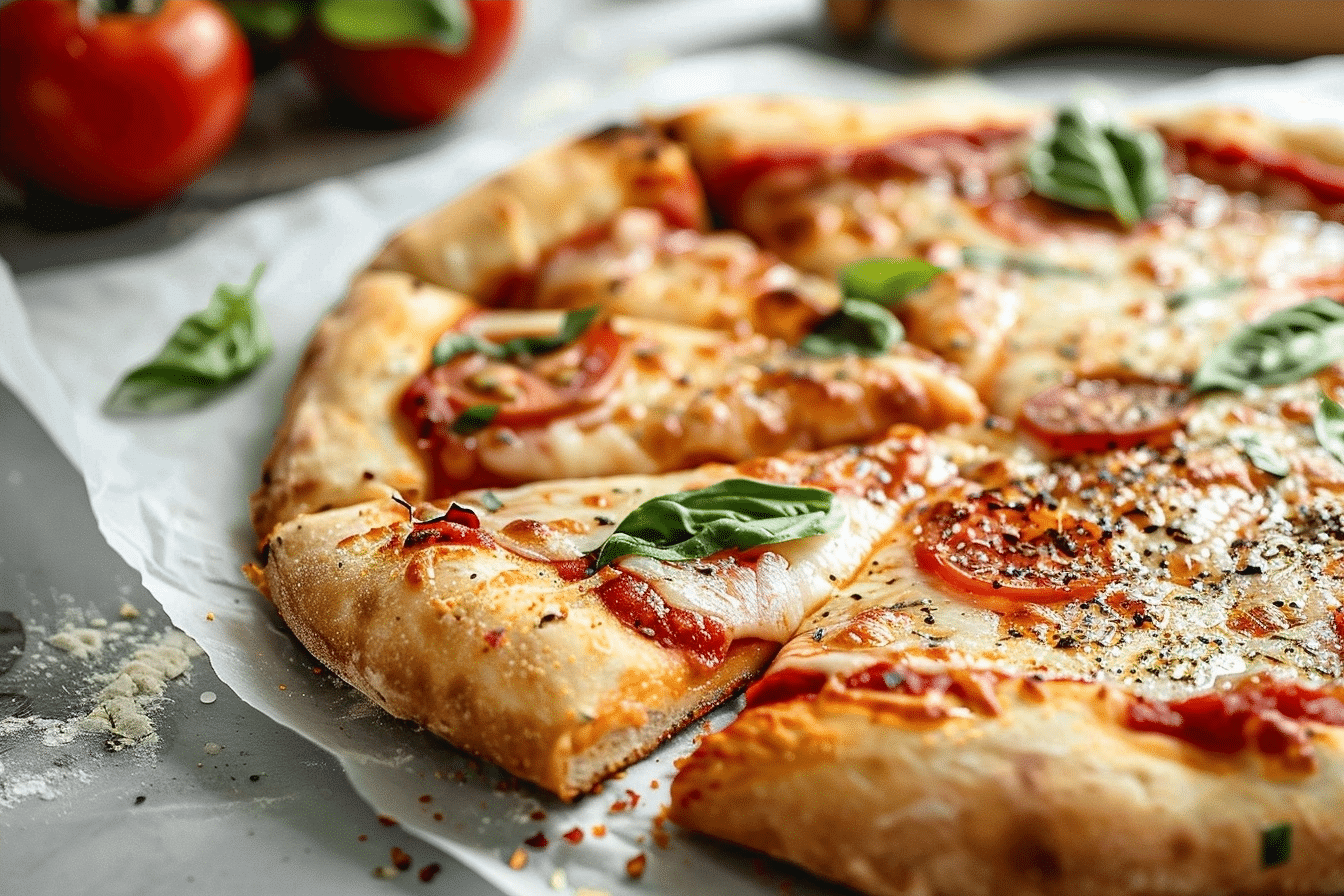
Easy Gluten Free Pizza Dough | Best Homemade Pizza Crust is a soft, chewy gluten free pizza base that yields a crisp edge and tender interior. This recipe uses instant yeast and xanthan gum in a reliable gluten free all-purpose flour blend to create an easy, quick homemade crust. Follow the method for consistent rise, workable dough, and a pizza ready for any topping combination.
| Prep Time | Cook Time | Total Time | Servings | Difficulty | Cuisine |
|---|---|---|---|---|---|
| 1 hr 35 mins | 20-24 mins | ~2 hrs | 1 12″ pizza (4 servings) | Easy | Italian-American |
Why This Recipe Works
This recipe delivers a reliable, tender gluten free crust because the instant yeast, xanthan gum, and vinegar create structure and a good rise. I tested this dough multiple times and found that the short first rise and brief chill before rolling produce a workable, not crumbly dough.
I use olive oil and an egg to add moisture and elasticity, which keeps the crust soft inside while the initial blind bake crisps the exterior. These simple ingredients yield a dough that tolerates a variety of toppings and holds up well to home ovens.
Image ALT text suggestion: “Close-up of golden homemade gluten free pizza crust before toppings”
Ingredients
This ingredient list gives precise measurements for one 12-inch pizza crust and suggests easy swaps for dietary needs.
| Ingredient | Quantity | Notes/Alternatives |
|---|---|---|
| Instant yeast | 1 packet | Active dry yeast can be used; dissolve in warm water first |
| Warm water | ¾ cup + 2 tablespoons | Heat to 110-115°F for yeast activation |
| White sugar | 1 tablespoon | Feeds yeast; honey can substitute for slightly different flavor |
| Gluten free all-purpose baking flour* (with xanthan gum) | 2 ½ cups | Use blend labeled 1:1 for best results; add 1 tsp xanthan gum if missing |
| Salt | 1 teaspoon | Fine sea salt recommended |
| Baking powder | 1 teaspoon | Helps with lift and texture |
| Olive oil | 5 tablespoons | Use extra virgin for flavor; neutral oil works too |
| Egg | 1 | Room temperature for easier mixing; flax egg for vegan option (texture change) |
| Vinegar (white or apple cider) | 1 teaspoon | Acid helps with rise and crumb |
Image ALT text suggestion: “Ingredients measured in bowls for gluten free pizza dough”
Step-by-Step Instructions
Follow these step-by-step directions exactly to activate the yeast, mix, proof, roll, and bake a consistent gluten free crust. Each step focuses on a single action to keep the process predictable and easy to follow.
Phase 1: Activate the yeast
- Microwave the water for about 30 seconds or until it reaches 110-115 degrees Fahrenheit.
- Stir in the sugar and one packet of yeast, stir together and let sit for 5 minutes.
Phase 2: Mix the dough
- Whisk together the flour, baking powder and salt.
- Add the whisked egg, vinegar, olive oil and the water/yeast mixture to the dry ingredients.
- Mix together with a wooden spoon or rubber spatula until a dough forms. It will likely be a bit sticky at this point.
Phase 3: First rise and chill
- Cover with plastic wrap then cover with a towel and let sit in a warm place for 1 hour to rise. I like to put it in the oven.
- Preheat the oven to 425°F after the hour, then let the dough sit in the fridge for 15 minutes. This will make it easier to roll out.
Phase 4: Shape and bake
- Knead the dough on a floured piece of parchment paper, adding 1-2 more tablespoons of flour until it forms into a smooth ball. Avoid adding too much flour, just enough until a ball dough forms and the dough isn’t as sticky.
- Roll the dough with a floured rolling pin into a roughly 12-inch circle. Keep the crust fairly thick for a sturdy base, or roll thinner for a crispier crust.
- Brush the top of the crust generously with olive oil and bake for 12 minutes.
- Remove from the oven, add sauce and any desired toppings and bake an additional 8-12 minutes. Feel free to bake longer for a crispier crust or shorter for a softer interior.
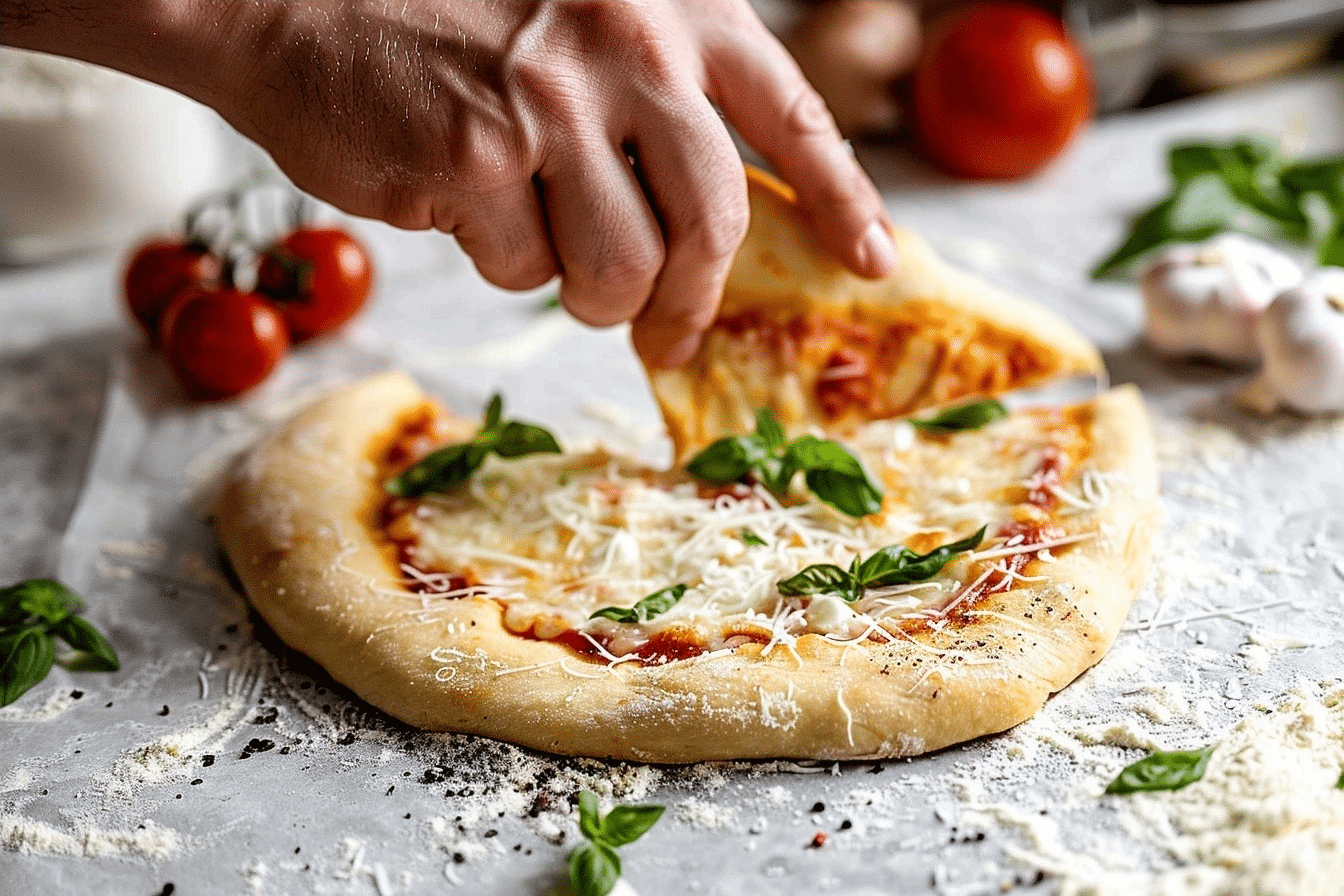
- Remove from the oven and let cool for a few minutes, then slice and enjoy!
Image ALT text suggestion: “Rolling out gluten free pizza dough on parchment paper”
Chef Tips for Perfect Results
Use these professional tips to improve texture, timing, and handling for consistent results.
- Check yeast temperature precisely; water at 110-115°F activates yeast without killing it, so use an instant-read thermometer for accuracy.
- Keep the dough slightly sticky; adding too much extra flour dries the interior and makes the crust dense. Aim for tacky but manageable dough when kneading.
- Use parchment when rolling and baking to prevent sticking and make transfer to the oven simple and clean.
- Blind bake the oiled crust first to set the structure, which prevents sogginess once toppings are added.
- Allow the dough to rest in the fridge for 15 minutes before rolling; chilling firms the fats and makes rolling easier without overworking the dough.
Image ALT text suggestion: “Baked gluten free pizza crust brushed with olive oil”
Common Mistakes to Avoid
Recognizing common problems helps you avoid them and correct issues quickly the next time you bake.
- Using water too hot kills the yeast; check temperature and cool slightly if needed to keep yeast active and reliable.
- Adding excessive flour during kneading makes the crust dry and crumbly; add only 1-2 tablespoons as recommended to reach smoothness.
- Skipping the initial bake leads to a soggy center; pre-baking the oiled crust sets the structure and prevents sogginess under sauce and toppings.
- Not chilling the dough before rolling makes it sticky and hard to handle; cool for 15 minutes to firm the dough and simplify shaping.
- Overloading toppings increases bake time and can undercook the crust; use a balanced topping amount for even cooking and a crisp base.
Image ALT text suggestion: “Sliced gluten free pizza with golden crust and toppings”
Variations and Substitutions
These substitutions let you adapt the recipe for dietary needs or taste preferences while understanding texture changes.
| Ingredient | Substitution | Flavor/Texture Impact |
|---|---|---|
| Egg | Flax egg (1 tbsp flax + 3 tbsp water) | Produces a slightly denser crust and different crumb; use if vegan |
| Olive oil | Avocado oil or neutral vegetable oil | Milder flavor with a similar texture; olive oil gives best flavor |
| White sugar | Honey or maple syrup | Slightly different sweetness and browning; use less honey for balance |
| Gluten free AP flour blend | Single-grain mixes (rice blend + xanthan gum added) | May alter crumb; blends labeled for 1:1 substitution perform best for texture |
Image ALT text suggestion: “Bowls showing substitution options for gluten free dough”
Serving Suggestions and Pairings
This pizza crust pairs well with vibrant salads, simple sides, and drinks that complement the toppings. Serve the pizza with a crisp arugula salad dressed in lemon and olive oil for a fresh counterpoint.
Pair with sparkling water, a citrusy non-alcoholic spritzer, or herbal iced tea for easy entertaining. Try these options for occasions and pairings:
- Side dishes: Garlic roasted vegetables, caprese salad, or a lemony arugula salad.
- Drinks: Sparkling water with lemon, non-alcoholic ginger beer, or iced herbal tea.
- Sauces and garnishes: Classic tomato sauce, pesto, fresh basil, chili flakes, and extra virgin olive oil drizzle.
- Serving occasions: Casual weeknight dinner, family pizza night, or a gluten free holiday gathering.
Internal links: homemade pizza sauce, gluten free sides, crust troubleshooting guide
Image ALT text suggestion: “Served gluten free pizza sliced with salad and drink”
Storage and Reheating
This dough and finished pizza store well when handled correctly, and reheating restores crispness without drying the crust.
| Method | Duration | Instructions |
|---|---|---|
| Raw dough, refrigerated | 24 hours | Wrap tightly in plastic and store in the fridge; bring to room temperature before rolling. |
| Raw dough, frozen | Up to 3 months | Flash freeze dough ball, wrap well, thaw overnight in the refrigerator before using. |
| Baked pizza, refrigerated | 3-4 days | Store covered; reheat in oven at 375°F for 6-8 minutes to crisp the crust. |
| Baked pizza, frozen | 1-2 months | Freeze slices on a tray, then store airtight; reheat from frozen at 375°F for 12-15 minutes. |
Image ALT text suggestion: “Sliced pizza reheated on a baking sheet”
Nutritional Information
Approximate nutrition for one quarter of a 12-inch pizza crust with minimal toppings is listed below. Values are estimates and will vary with specific ingredients and toppings.
| Nutrient | Amount per Serving |
|---|---|
| Calories | 320 |
| Protein | 8 g |
| Fat | 12 g |
| Carbohydrates | 42 g |
| Fiber | 3 g |
| Sugar | 3 g |
| Sodium | 600 mg |
Approximate values.
Image ALT text suggestion: “Nutritional facts graphic for gluten free pizza slice”
Frequently Asked Questions
Answers below address common long-tail search queries about gluten free pizza dough substitutions, doneness, troubleshooting, make-ahead options, and storage.
Can I substitute the egg in Easy Gluten Free Pizza Dough?
Yes, you can substitute the egg with a flax egg or commercial egg replacer to make the dough egg-free. Use 1 tablespoon ground flax mixed with 3 tablespoons water, let thicken five minutes, and add to the dough. Expect a slightly denser texture and adjust hydration if the dough seems dry.
How do I know when the gluten free pizza crust is done?
You know the crust is done when the edges are golden and the center no longer looks wet under the toppings. The bottom should be lightly browned and crisp when tested with a spatula. If the crust still seems soft, bake for a few more minutes until desired crispness is achieved.
What should I do if my gluten free dough is too sticky or crumbly?
If the dough is too sticky, add 1 tablespoon of flour at a time while kneading until it forms a smooth ball. If the dough is crumbly, add 1 teaspoon of warm water or a small drizzle of olive oil and knead gently to hydrate. Adjust gradually and avoid over-flouring to maintain tender texture.
Can I make this gluten free pizza dough ahead of time?
Yes, you can make the dough ahead and refrigerate it for up to 24 hours in a well-wrapped container. Bring it to room temperature before rolling to ease handling. For longer storage, freeze the dough ball and thaw overnight in the refrigerator before use.
How should I store leftover gluten free pizza crust or baked pizza?
Store leftover baked pizza in an airtight container in the refrigerator for 3-4 days to maintain freshness. Reheat in an oven at 375°F for 6-8 minutes to restore crispness and avoid microwave reheating that makes the crust soggy.
External resources: Celiac Disease Foundation, King Arthur Baking Company
Conclusion
This Easy Gluten Free Pizza Dough | Best Homemade Pizza Crust recipe produces a dependable, tasty crust that bakes crisp outside and tender inside. Follow the yeast activation, short rise, and brief chill steps for the best handling and texture. Grab your favorite toppings and enjoy the satisfying flavors of homemade gluten free pizza tonight.
Image ALT text suggestion: “Finished gluten free pizza slice with bubbling cheese and fresh basil”
Easy Gluten Free Pizza Dough | Best Homemade Pizza Crust
Ingredients
- 1 packet instant yeast
- ¾ cup + 2 tablespoons warm water (110-115°F)
- 1 tablespoon white sugar
- 2½ cups gluten-free all-purpose baking flour (with xanthan gum)
- 1 teaspoon salt
- 1 teaspoon baking powder
- 5 tablespoons olive oil
- 1 egg (room temperature)
- 1 teaspoon vinegar (white or apple cider)
Instructions
- Dissolve instant yeast in warm water; let rest 5 minutes
- Add sugar, gluten-free flour, salt, and baking powder to a bowl
- Pour in yeast mixture, olive oil, egg, and vinegar
- Mix until smooth, then chill 30 minutes
- Roll dough to 12-inch size and pre-bake 8-10 minutes at 475°F
- Add toppings and bake 10-12 minutes more until golden
Notes
Use flax egg (1 tbsp ground flax + 3 tbsp water) for vegan option
Check water temperature to activate yeast properly
Dough can be refrigerated up to 3 days