
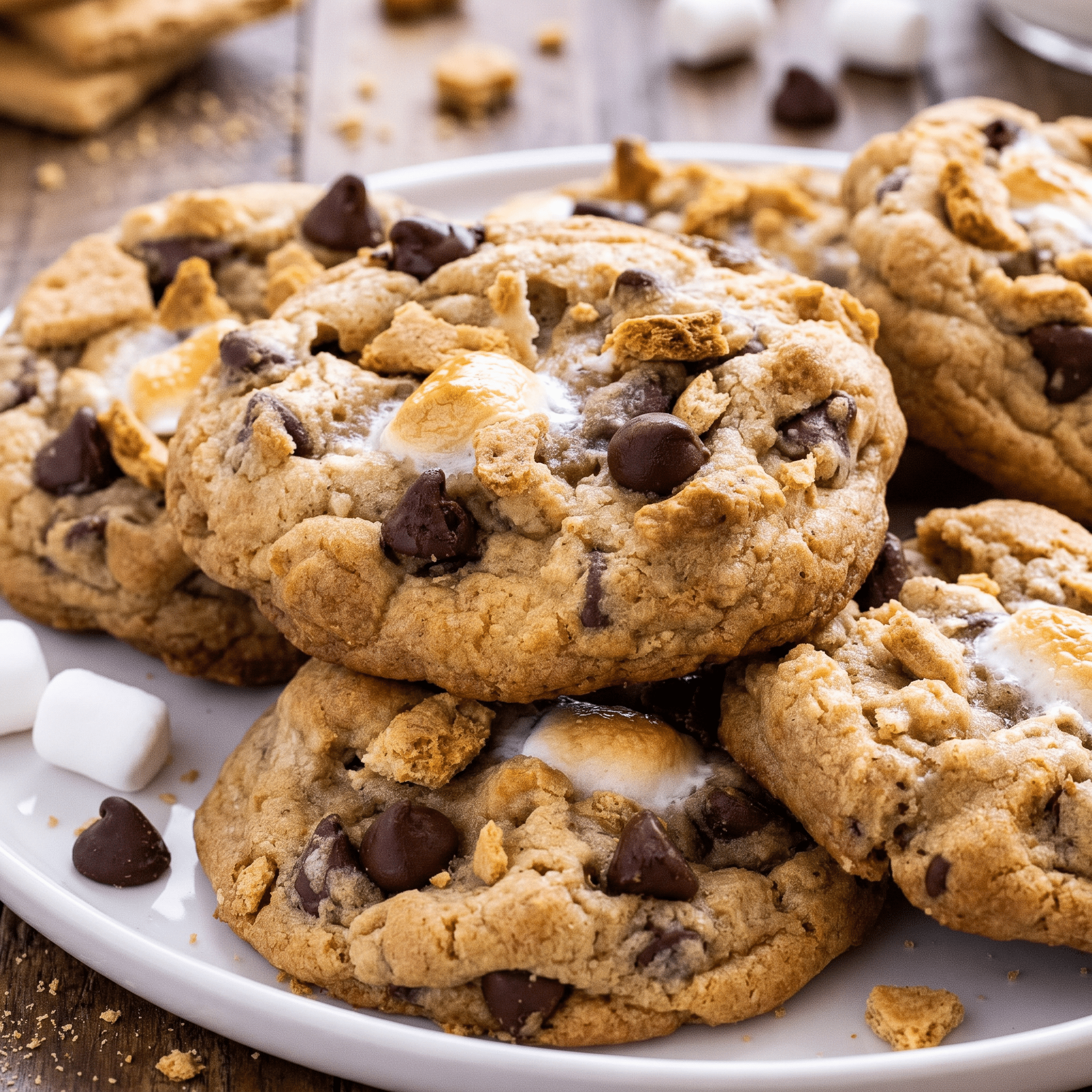
Best S’mores Cookies Recipe produces soft, chewy cookies that capture the toasted marshmallow, melted dark chocolate, and crunchy graham flavor of classic s’mores in a handheld cookie. This recipe centers on browned butter, a blend of cake and bread flours, and focused mixing to deliver consistent rise and chew. Follow the steps for reliably gooey centers and crisp edges.
| Prep Time | Cook Time | Total Time | Servings | Difficulty | Cuisine |
|---|---|---|---|---|---|
| 45 minutes (includes chilling) | 10–12 minutes per tray | 1 hour 15 minutes | 16 cookies | Moderate | American |
Why This Recipe Works
This recipe works because browned butter, a flour blend, and repeated whisking create a stable, flavorful dough that bakes into chewy, well-textured cookies. I have tested these cookies across multiple ovens and pan types, and the technique delivers reliable spread control and deep toasted flavor.
I prefer the combination of cake flour and bread flour because cake flour lightens the crumb while bread flour adds chew and strength. Browned butter adds nutty complexity that balances the dark chocolate, while the graham and marshmallow pockets recreate s’mores layers without collapsing during baking.
Image ALT text suggestion: Close-up of a split s’mores cookie showing toasted marshmallow and melted dark chocolate.
Ingredients
These ingredients make 16 cookies with chewy centers, toasted marshmallow pockets, and melty chocolate.
| Ingredient | Quantity | Notes/Alternatives |
|---|---|---|
| Cake flour | 2 cups minus 2 tablespoons | For tender crumb; substitute with all-purpose minus 2 tbsp per cup for similar texture |
| Bread flour | 1 ⅓ cups | Adds chew; use all-purpose for slightly less chew |
| Baking soda | 1 ¼ teaspoons | Leavening; ensure fresh |
| Baking powder | 1 ½ teaspoons | Helps lift and even browning |
| Sea salt | 1 ½ teaspoons | Enhances sweetness; flaky sea salt for finishing |
| Unsalted butter | 1 ¼ cups, softened (14 pieces called out below) | Brown 10 tbsp then stir in remaining 4 tbsp off heat |
| Light brown sugar | 1 ¼ cups packed | Moisture and caramel notes; dark brown sugar for deeper flavor |
| Granulated sugar | 1 cup plus 2 tablespoons | For structure and crisp edges |
| Large eggs | 2 (one whole + one yolk) | Eggs must be room temperature for emulsification |
| Pure vanilla extract | 2 teaspoons | Use vanilla paste for stronger flavor |
| Dark chocolate chips | 1 bag, 20 ounces | Use quality dark chips for balanced sweetness |
| Graham crackers | 8 full-size, broken into 16 squares (plus 3/4 cup crushed) | Reserve 3/4 cup crushed for dry mix and 1/4 cup for finishing |
| Hershey chocolate bars | 4 full-size, broken into 16 pieces | Each cookie gets one 1/4-bar piece for melty center |
| Regular marshmallows | 15 | Press one marshmallow into each dough ball center; use mini if preferred |
| Flaky sea salt | For finishing | Sprinkle after baking for contrast |
Image ALT text suggestion: Overhead shot of measured ingredients on a prep counter, including flours, sugars, butter, and chocolate.
Step-by-Step Instructions
Follow these instructions to bake reliable, bakery-style s’mores cookies with melty centers and toasted marshmallows.
Prepare and Preheat
- Preheat the Oven – Adjust the oven rack to the middle position and heat to 375°F (191°C).
- Line Baking Sheets – Cover two baking sheets with parchment or silicone liners and set aside.
Mix Dry Ingredients
- Whisk Dry Mix – In a medium bowl, whisk together 2 cups minus 2 tablespoons cake flour, 1 ⅓ cups bread flour, 1 ¼ teaspoons baking soda, 1 ½ teaspoons baking powder, and 1 ½ teaspoons sea salt.
- Add Crushed Graham – Stir in 3/4 cup crushed graham crackers into the dry mix, then set the bowl aside.
Brown the Butter
- Cut Butter – Cut the 1 ¼ cups unsalted butter into 14 even-sized pieces for even melting.
- Melt and Brown – In a medium skillet, melt 10 tablespoons of butter over medium-high heat, swirling to melt evenly. Stir and cook, scraping the bottom of the pan with a spatula, until the butter becomes golden brown and emits a nutty aroma, about 1 to 2 minutes.
- Finish Off Heat – Turn off the heat and remove the pan from the stove. Stir in the remaining 4 tablespoons of butter until completely melted.
Combine Sugars and Eggs
- Add Butter to Mixer – Attach the whisk to a stand mixer and add the melted browned butter to the mixing bowl.
- Whisk Sugars and Flavor – Add 1 ¼ cups packed light brown sugar, 1 cup plus 2 tablespoons granulated sugar, 1 ½ teaspoons sea salt, and 2 teaspoons pure vanilla extract. Whisk on medium speed (setting 5) for 30 seconds until combined.
- Add Eggs in Stages – Add one whole egg plus one yolk to the bowl and whisk on medium-high speed (setting 8) until smooth with no sugar lumps, about 30 seconds. Let the mixture stand for 3 minutes.
- Repeat Whisking – Repeat the 30-second mixing and 3-minute rest cycle three more times for a total of four cycles. After the final cycle, the mixture should be thick, smooth, and shiny.
Finish Dough and Chill
- Fold in Dry Ingredients – Using a rubber spatula or wooden spoon, stir in the flour mixture until just combined, about 1 minute. Avoid overmixing.
- Add Chocolate and Marshmallows – Stir in 1 ¼ cups chocolate chips and mini marshmallows until evenly distributed.
- Chill the Dough – Transfer the mixing bowl to the refrigerator for 30 minutes or the freezer for 15 minutes, or chill until the dough firms to around 65 to 70°F (18 to 21°C). The dough should not feel overly sticky.
Shape, Stuff, and Bake
- Make Dough Balls – Divide the dough into 16 portions of about 3 tablespoons (approximately 60 grams each) and roll into balls. If dough warms, refrigerate the tray for 15 minutes.
- Enhance Appearance – For a rustic look, tear each dough ball in half and press the lumpy halves together with torn sides up to expose chips. Press one regular marshmallow into the center of each ball, then press some of the remaining 1/4 cup chocolate chips and 1/4 cup crushed graham crackers so they protrude from the surface.
- Arrange on Sheets – Place dough balls at least 2 inches apart on lined baking sheets, fitting 8 per tray. Ensure dough is at 65 to 70°F (18 to 21°C) for even baking.
- Bake and Rotate – Bake one tray at a time in the center position for 5 minutes. Rotate the baking sheet and continue baking until edges are golden brown and centers look slightly underdone, about 5 to 7 additional minutes.
- Cool and Finish – Remove the tray and let cookies cool on the baking sheet on a wire rack until they reach room temperature, 20 to 30 minutes. Sprinkle flaky sea salt on top while warm.
- Return Oven Temperature – Make sure the oven returns to 375°F (191°C) before baking the next tray.
Image ALT text suggestion: Baker pressing a marshmallow and chocolate piece into a cookie dough ball before baking.
Chef Tips for Perfect Results
Apply these chef-tested tips to get consistent, perfect cookies every time.
- Brown the Butter Precisely: Watch the butter closely at medium-high heat and stop when small brown bits form and the aroma turns nutty; residual heat continues browning if left in the pan. Transfer to a cool bowl to avoid overbrowning.
- Control Temperature: Chill the dough to 65–70°F (18–21°C) for optimal spread. Warmer dough spreads excessively and colder dough underbakes in the center.
- Use a Scale or Cookie Scoop: Measure each portion to roughly 60 grams for uniform baking. Consistency prevents uneven bake times and helps stacking on trays.
- Layer Marshmallow and Chocolate: Press marshmallows and a 1/4-bar piece of Hershey into the dough to create molten pockets. If marshmallows brown too much, tent cookies loosely with foil in the last minute.
- Rotate Baking Sheets: Rotate trays halfway through baking to ensure even browning across hot spots in your oven. Bake one sheet at a time on the center rack when possible.
- Finish with Flaky Salt: Sprinkle flaky sea salt immediately after baking to enhance the chocolate’s depth and balance the brown butter sweetness.
Image ALT text suggestion: A tray of freshly baked s’mores cookies cooling with flaky sea salt sprinkled on top.
Common Mistakes to Avoid
Avoid these common mistakes to prevent dense, greasy, or flat cookies and ensure consistent results.
- Overbrowning Butter: Browned butter that burns imparts bitterness. Stop cooking the butter at the first deep golden flecks and transfer it to a cool bowl to halt cooking.
- Skipping Rest Cycles: Skipping the repeated whisk-rest cycles prevents emulsification; the dough will not become glossy and structured. Follow the 30-second mixing and 3-minute rest rhythm for proper texture.
- Using Hot Dough: Baking overly warm dough leads to excessive spread and thin cookies. Chill dough to around 65–70°F (18–21°C) for best results.
- Overmixing After Flour: Mixing too long after adding dry ingredients activates gluten, creating tough cookies. Fold until just combined and stop.
- Incorrect Oven Position: Baking on the top or bottom rack causes uneven color and texture. Use the middle rack and rotate trays for consistent browning.
Image ALT text suggestion: Close-up of an overbrowned cookie beside a perfectly baked cookie to illustrate mistakes.
Variations and Substitutions
Use these variations and substitutions to adapt the flavor or dietary needs without sacrificing texture.
| Ingredient | Substitution | Flavor/Texture Impact |
|---|---|---|
| Cake flour | All-purpose flour (reduce 2 tbsp per cup) | Slightly denser crumb and less tender but still chewy |
| Bread flour | All-purpose flour | Less chew and slightly softer structure |
| Dark chocolate chips | Milk chocolate or chocolate chunks | Milk chocolate boosts sweetness and melty pull |
| Regular marshmallows | Mini marshmallows or vegan marshmallows | Mini yields more even distribution; vegan keeps cookies vegetarian-friendly |
| Graham crackers | Digestive biscuits or graham-style gluten-free crumbs | Different sweetness and texture; gluten-free option available |
Image ALT text suggestion: Three plated s’mores cookie variations showing milk chocolate, vegan marshmallow, and gluten-free graham crumbs.
Serving Suggestions and Pairings
Serve these cookies warm with complementary beverages or toppings to create memorable dessert moments.
Pair the cookies with a cold glass of whole milk, a hot cup of coffee, or a non-alcoholic spiced hot chocolate for contrast. Offer a small ramekin of salted caramel or extra melted dark chocolate for dipping. Garnish with extra crushed graham and flaky sea salt when serving at backyard gatherings, summer parties, or holiday dessert spreads.
Suggested occasions include camping-themed parties, movie nights, summer cookouts, and holiday cookie exchanges. For a plated dessert, serve two warm cookies with a scoop of vanilla ice cream and a drizzle of chocolate sauce.
Image ALT text suggestion: Two warm s’mores cookies served with a small scoop of vanilla ice cream and a ramekin of chocolate sauce.
Storage and Reheating
Store and reheat cookies using these methods to preserve texture and minimize stale or gummy results.
| Method | Duration | Instructions |
|---|---|---|
| Room temperature | 2 days | Store in an airtight container with parchment between layers; keep away from heat. |
| Refrigerate | Up to 5 days | Place in airtight container; bring to room temperature or warm briefly in 300°F oven for 3–4 minutes before serving. |
| Freeze (baked) | Up to 3 months | Flash-freeze on a tray, then store in freezer-safe bag. Reheat from frozen at 325°F for 8–10 minutes. |
| Freeze (dough) | Up to 1 month | Form dough balls and freeze on a tray, then bag. Bake from frozen, adding 1–2 minutes to bake time. |
Image ALT text suggestion: A stack of frozen cookie dough balls in a labeled freezer bag ready for later baking.
Nutritional Information
Here is a per-serving nutrition estimate for these cookies based on typical ingredient values.
| Nutrient | Amount per Serving |
|---|---|
| Calories | ~320 kcal |
| Protein | 4 g |
| Fat | 16 g |
| Carbohydrates | 41 g |
| Fiber | 2 g |
| Sugar | 24 g |
| Sodium | 180 mg |
Approximate values.
Image ALT text suggestion: Nutrition facts overlay next to a single s’mores cookie on a small plate.
Frequently Asked Questions
Find definitive answers to common questions about substitutions, doneness, troubleshooting, make-ahead, and storage for s’mores cookies.
What are good s’ores cookies substitutions for graham crackers?
Use digestive biscuits or graham-style gluten-free crumbs as substitutes for graham crackers. They will produce a similar crunchy, slightly sweet base, though the flavor will shift slightly depending on the alternative chosen. Adjust the amount to match volume because different crumbs vary in density.
How do I know when s’mores cookies are done baking?
S’mores cookies are done when the edges are golden brown and the centers still appear slightly underdone. The centers will continue to set on the baking sheet as they cool for 20 to 30 minutes. When cooled to room temperature, the cookies should be set with a soft, chewy center.
What troubleshooting steps fix flat or greasy s’mores cookies?
Flat or greasy cookies usually result from overly warm dough, too much butter, or insufficient chilling. Prevent this by chilling dough to 65 to 70°F, measuring butter accurately, and avoiding overmixing after adding flour. If cookies flatten mid-bake, reduce oven temperature by 10–20°F and slightly increase chilling time next batch.
Can I make-ahead s’mores cookie dough for later baking?
You can make-ahead cookie dough by forming dough balls and freezing them on a sheet tray, then storing in a sealed freezer bag for up to one month. Bake from frozen and add 1 to 2 minutes to the bake time, rotating trays as usual. Thawing before baking is optional but warming slightly helps uniform oven spring.
How should I store leftover s’mores cookies to maintain texture?
Store leftover s’mores cookies in an airtight container at room temperature for up to two days or refrigerate up to five days to preserve texture. Separate layers with parchment to prevent sticking and preserve the toasted marshmallow pockets. For longer storage, freeze baked cookies up to three months and reheat before serving.
Image ALT text suggestion: FAQ section image showing labeled containers for storing cookies at room temperature, refrigerator, and freezer.
Conclusion
This Best S’mores Cookies Recipe yields reliably chewy, toasty treats that capture classic s’mores flavors in cookie form. Use browned butter, chilled dough, and careful assembly for the best melty centers and crisp edges. Try the method, adapt one of the variations, and serve warm for maximum impact; the toasted marshmallow notes linger beautifully with each bite.
Image ALT text suggestion: Final plated s’mores cookie split to reveal molten chocolate and toasted marshmallow center.
Related recipes and resources: Best Chocolate Chip Cookies, Browned Butter Recipes, Holiday Cookie Ideas. External resources: King Arthur Baking, USDA Food Safety.