
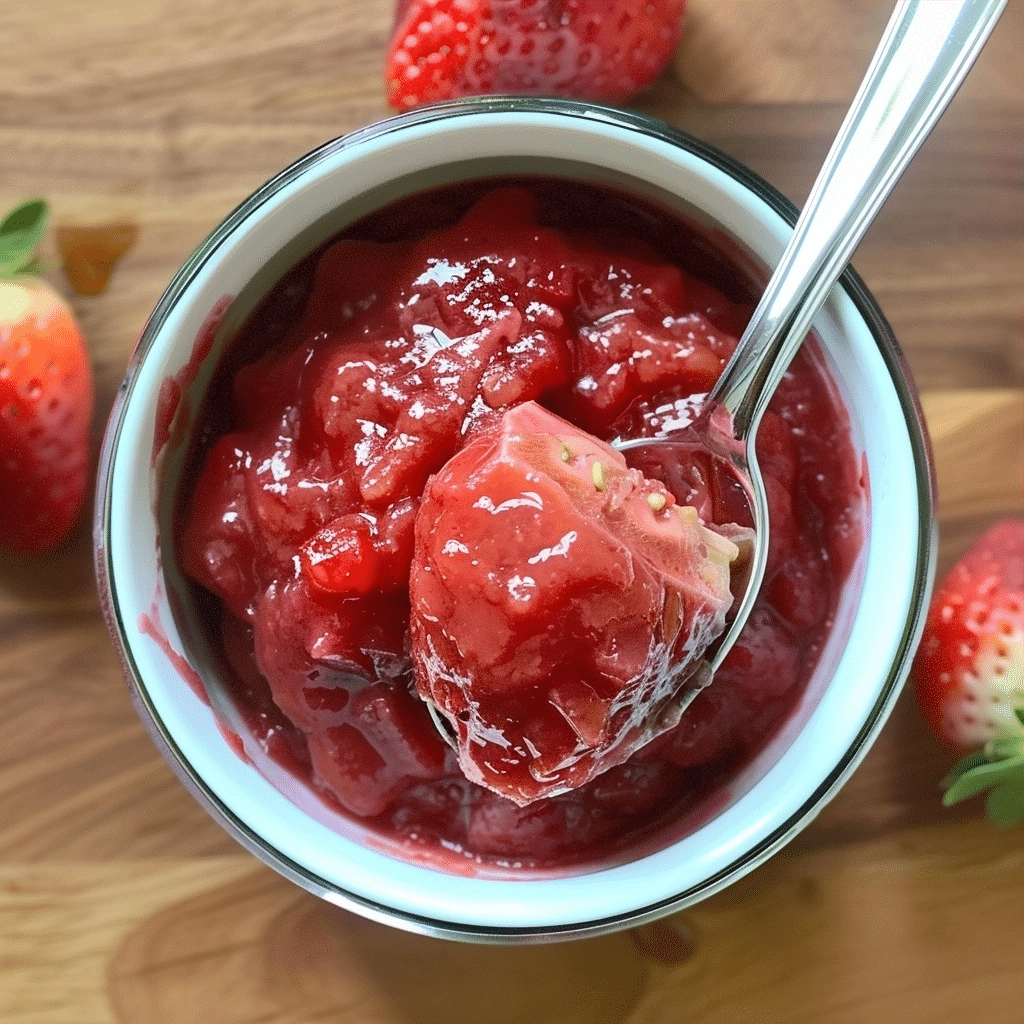
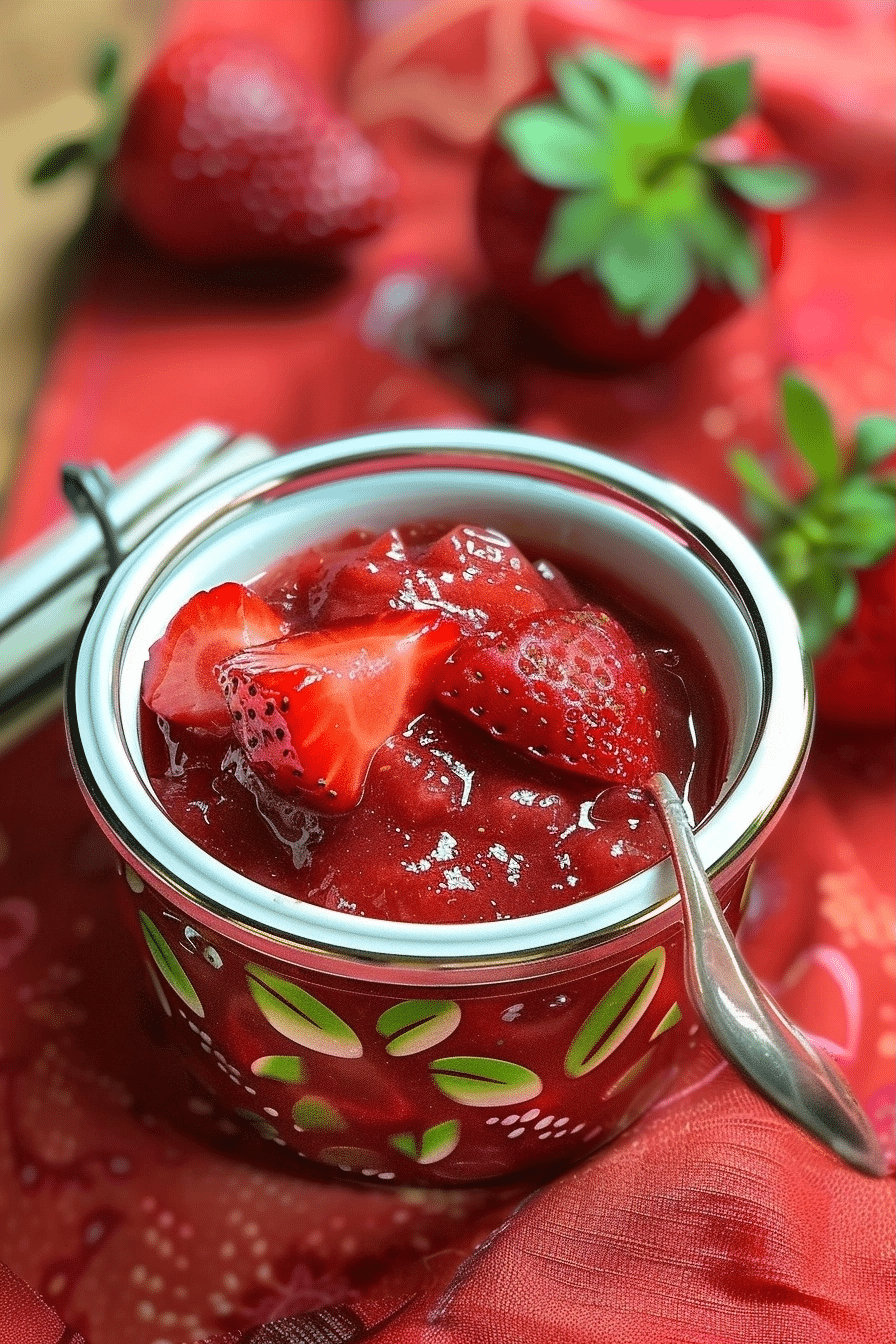
Strawberry-Rhubarb Compote delivers a vibrant, spoonable preserve made from fresh fruit, sugar, and a pinch of salt. The compote cooks down into a glossy, slightly tart spread that balances strawberry sweetness with rhubarb bite perfectly. Use this versatile fruit compote to top yogurt, pancakes, toast, or to fold into desserts for lively seasonal flavor.
| Prep Time | Cook Time | Total Time | Servings | Difficulty | Cuisine |
|---|---|---|---|---|---|
| 15 minutes | 20 minutes | 45 minutes | About 8 (2 tbsp each) | Easy | American / British-inspired |
Why This Recipe Works
Strawberry-Rhubarb Compote works because the natural pectin and juices release during gentle cooking to form a balanced, spoonable preserve. I have made this compote many times when both strawberries and rhubarb arrive at the market, and the simple method consistently yields glossy, flavorful results. The small ratio of brown sugar enhances caramel notes while allowing rhubarb acidity to shine through, which creates a well-rounded finished compote.
Strawberries soften quickly and rhubarb needs slightly longer to break down, so controlled simmering produces even texture and prevents overcooking the strawberries. From my experience, letting the fruit rest after adding sugar speeds juice release and shortens active cooking time, which preserves fresh fruit brightness in the final compote.
Ingredients
Strawberry-Rhubarb Compote uses four simple pantry and market ingredients to achieve its signature bright flavor. These ingredients deliver a quick, small-batch preserve you can make on any busy morning or leisurely afternoon.
| Ingredient | Quantity | Notes |
|---|---|---|
| Fresh strawberries, hulled and chopped | 2 cups | Use ripe but firm berries; frozen strawberries work in a pinch after thawing and draining slightly. |
| Fresh rhubarb, trimmed and chopped | 2 cups | Choose crisp stalks; substitute 1 1/2 cups for less tartness, or use stalks of similar thickness. |
| Brown sugar | 1/3 cup | Light or dark brown sugar both work; substitute coconut sugar for subtle caramel notes and reduced molasses flavor. |
| Salt | 1/8 teaspoon | Regular table salt or fine sea salt; omit only if on a sodium-free diet. |
Step-by-Step Instructions
Follow the steps below to make a consistent, flavorful Strawberry-Rhubarb Compote with minimal fuss and great texture. Organize the work into prep, cooking, and cooling phases to keep timing and texture predictable.
Prep
- Combine the chopped strawberries and chopped rhubarb in a medium saucepan, tossing to distribute fruit evenly across the pan surface.
- Add the brown sugar and the salt to the fruit, then stir gently to coat every piece of fruit with the sugar evenly.
- Let the fruit and sugar mixture sit at room temperature until the fruit releases its juices, which takes about 10 minutes.
Cook
- Bring the fruit mixture to a light boil over medium heat, watching closely so the mixture does not scorch in the pan.
- Reduce heat to medium-low and simmer the compote, stirring occasionally so the fruit softens and the liquid reduces properly.
- Simmer until the fruit is soft and the mixture has thickened to a spoonable consistency, which takes about 20 minutes of gentle cooking.
Cool and Store
- Remove the saucepan from the heat and let the compote cool undisturbed for about 30 minutes to allow further thickening as it cools.
- Transfer the cooled compote into a clean jar or storage container and refrigerate promptly; store refrigerated for up to one week.
Chef Tips for Perfect Results
Use these precise tips to achieve consistent texture, bright color, and balanced sweetness in your compote every time. Each tip reflects a practical technique I use in my home kitchen to produce reliably excellent outcomes.
- Measure fruits by packed cups to maintain the proper strawberry to rhubarb ratio for balanced sweetness and acidity.
- Cut rhubarb into uniform pieces to ensure even cooking and to avoid large fibrous bits that can affect mouthfeel.
- Stir frequently during the final minutes of simmering to prevent sticking and to judge thickness accurately by texture.
- Skim any foam with a spoon for a clearer, glossier compote and to avoid cloudiness in the finished preserve.
- Cool uncovered at room temperature for thirty minutes before sealing to reduce condensation trapped in the jar.
Common Mistakes to Avoid
Recognize common errors early to fix texture or flavor issues before they ruin your batch of compote. Each mistake listed below explains why it happens and how to correct it effectively.
- Overcooking the fruit causes a dull, jam-like texture and loss of fresh flavor; reduce simmer time and remove from heat when pieces still hold some shape.
- Undercooking results in thin, watery compote that lacks cohesion; continue simmering gently until juices reduce and coating becomes thicker.
- Using underripe strawberries yields flat flavor and excess acidity; pick ripe, fragrant berries or add a teaspoon of lemon juice to brighten taste safely.
- Skipping the rest period after adding sugar prevents sufficient juice release and prolongs cooking; let fruit sit ten minutes to soften and release liquids.
- Cooking at too high heat creates uneven texture and scorching; maintain medium to medium-low heat for controlled reduction and consistent results.
Variations and Substitutions
Adapt Strawberry-Rhubarb Compote to your pantry and preferences using these substitutions and know how they will affect flavor and texture. Small changes can create a compote with different sweetness, body, or aromatic profile while preserving the basic method.
| Ingredient | Substitution | Impact on Flavor |
|---|---|---|
| Brown sugar | Coconut sugar or light brown honey (non-alcoholic) | Coconut sugar adds subtle caramel notes and less molasses sweetness; honey increases floral undertones and moist texture. |
| Strawberries | Frozen strawberries, thawed and drained | Frozen fruit yields a softer texture and slightly more water release, which may require longer simmering to thicken. |
| Rhubarb | Use slightly less rhubarb or add diced apples | Reducing rhubarb softens acidity; apples introduce sweetness and pectin, which can improve set without extra sugar. |
| Salt | Omit or use a pinch of citrus zest | Omitting salt reduces flavor contrast; citrus zest enhances brightness without adding sodium. |
Serving Suggestions and Pairings
Strawberry-Rhubarb Compote pairs well with dairy, baked goods, and breakfast dishes to add bright acidity and fruit sweetness to many meals. Use the serving ideas below to match the compote to specific occasions and recipes.
- Spoon warm compote over Greek yogurt with a sprinkle of granola for breakfast or a quick afternoon snack.
- Layer compote with whipped cream or mascarpone between cake layers to create a rustic, fruit-forward shortcake for gatherings.
- Serve as a accompaniment to vanilla ice cream for an easy summer dessert with contrasting temperatures and textures.
- Glaze warm scones or spread on toast for brunch, or pair with pancakes at a leisurely weekend breakfast.
For more recipe inspiration, see our quick jam recipes and seasonal strawberry guides for helpful timing and sourcing tips.
Storage and Reheating
Store Strawberry-Rhubarb Compote promptly in the refrigerator to maintain freshness, and reheat gently when necessary for serving. The table below outlines safe storage durations and reheating methods to preserve texture and flavor.
| Method | Duration | Instructions |
|---|---|---|
| Refrigerator | Up to 1 week | Keep in a sealed jar or container and refrigerate; stir before serving and use within seven days. |
| Freezer | Up to 3 months | Freeze in an airtight container leaving headspace; thaw overnight in the refrigerator before reheating gently. |
| Reheating | As needed | Warm on low heat in a small saucepan, stirring to loosen texture, and do not bring to a roaring boil. |
Nutritional Information
Approximate values shown below reflect a small serving size typical for a compote used as a topping or garnish. Values are estimates per serving and assume eight servings per batch made from the ingredients listed above.
| Nutrient | Amount per Serving |
|---|---|
| Calories | Approximately 40 kcal |
| Protein | Approximately 0.3 g |
| Fat | Approximately 0.1 g |
| Carbohydrates | Approximately 10 g |
| Fiber | Approximately 1.2 g |
| Sugar | Approximately 8 g |
| Sodium | Approximately 60 mg |
Frequently Asked Questions
Find concise answers to common questions about substitutions, doneness, troubleshooting, make-ahead strategies, and serving ideas for this compote. Each answer is direct and practical so you can get back to cooking quickly.
Can I substitute frozen fruit for fresh in strawberry-rhubarb compote?
Yes, you can substitute frozen fruit for fresh in this recipe without compromising flavor significantly. Use thawed fruit and drain any excess water before cooking to avoid diluting the compote excessively. Increase simmer time slightly to evaporate extra liquid and achieve the desired thickness consistently.
How do I know when the compote is done cooking?
Cook until the fruit is soft and the liquid has reduced to a syrupy, spoon-coating consistency, which typically takes twenty minutes. Test doneness by spooning a small amount onto a chilled plate and letting it cool; it should wrinkle slightly at the edges. Remove from heat once the texture is syrupy, remembering it will thicken further as it cools.
What should I do if my compote is too runny?
Continue simmering the compote gently over medium-low heat to evaporate extra liquid and thicken the mixture. Stir frequently to prevent sticking and test thickness periodically on a chilled plate to assess progress. If desired, mash some fruit against the pan wall to release pectin and body without adding thickeners.
Can I make the compote ahead of time for an event?
Yes, you can make this compote up to one week in advance and refrigerate it in a sealed container for convenience. For longer storage, freeze portions in airtight containers for up to three months and thaw overnight in the refrigerator. Reheat gently before serving to restore spoonable warmth and loosen texture if chilled solidly.
What are the best ways to serve strawberry-rhubarb compote at a brunch?
Serve the compote warm over pancakes, waffles, or buttermilk biscuits to add bright fruit flavor to a brunch menu. Offer alongside plain yogurt, ricotta, or mascarpone for guests to create fruit-and-dairy combinations. Provide spoons and small jars for self-service to keep presentation neat and appealing.
Conclusion
Strawberry-Rhubarb Compote offers a simple, reliable way to capture seasonal fruit brightness in a versatile preserve you can use across meals. The method requires minimal hands-on time and produces consistently balanced sweetness and tartness with clear, fresh fruit character. Make this compote regularly to enjoy its lively, signature flavor on breakfast, desserts, and baked goods.
For further reading and food safety guidance, consult authoritative resources such as the USDA and BBC Good Food, and explore our internal guides at /recipes/compote-uses.
Strawberry-Rhubarb Compote: Bright Spring Fruit Preserves
Ingredients
- 2 cups fresh strawberries, hulled and chopped
- 2 cups fresh rhubarb, trimmed and chopped
- 1/3 cup brown sugar
- 1/8 teaspoon salt
Instructions
- Chop strawberries and rhubarb into 1/2-inch pieces
- In a large saucepan, combine fruit, sugar, and salt
- Let sit 15 minutes to release juices
- Bring to a gentle simmer over medium heat
- Stir occasionally, reduce heat to prevent boiling if strawberries soften too quickly
- Cook 15-20 minutes until mixture thickens and coats a spoon
- Transfer to sterilized jars to cool
Notes
Frozen strawberries work if thawed and drained
Substitute 1 1/2 cups rhubarb for milder tartness
Coconut sugar yields a cleaner caramel flavor
Store in fridge up to 2 weeks or freeze for 3 months
Omit salt if on a sodium-free diet