
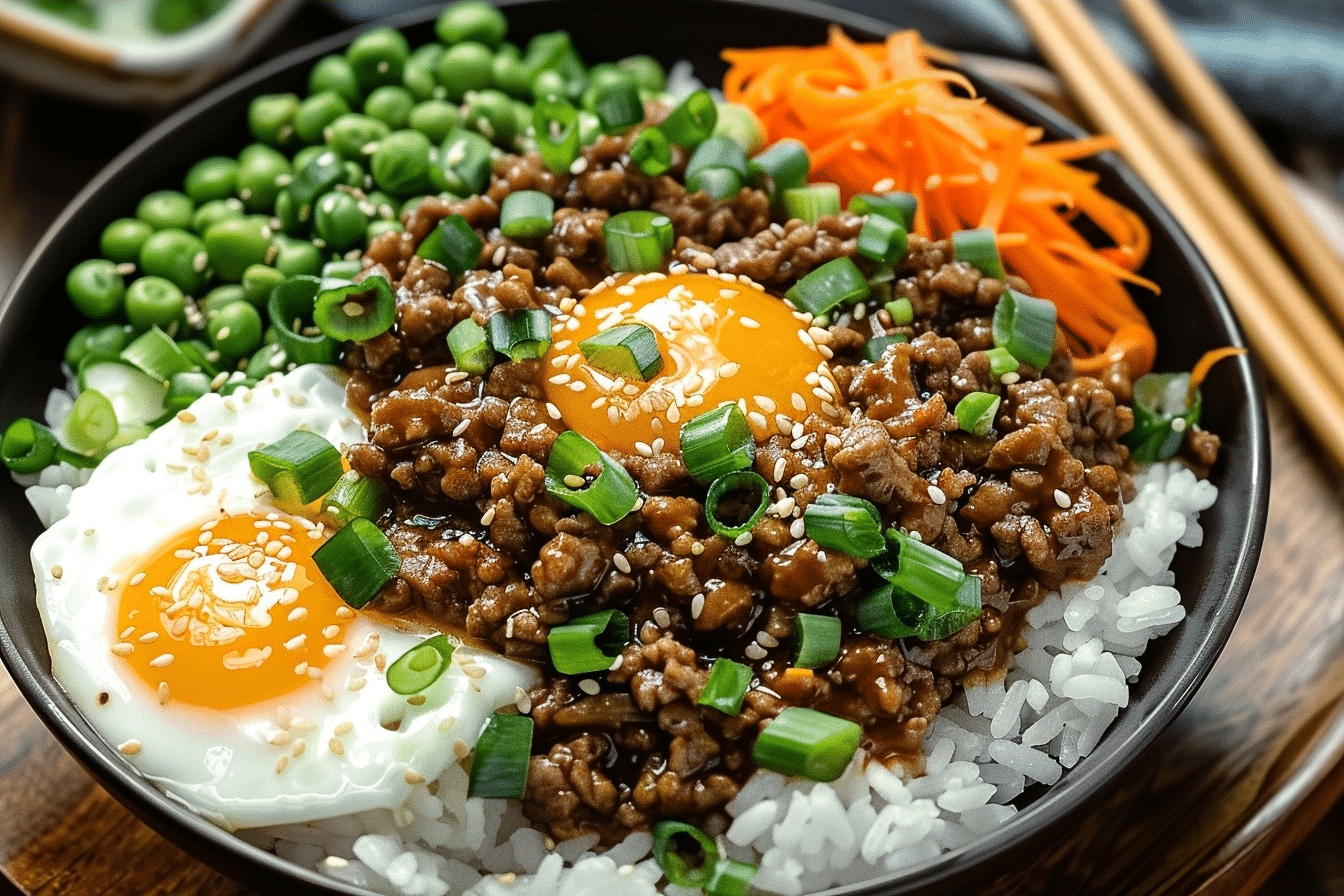
This Korean Ground Beef Bowl is a fast, savory rice bowl built around seasoned ground beef, a glossy savory sauce, and bright peas. Korean Ground Beef Bowl | 25-Minute Healthy Dinner Recipe cooks in about twenty-five minutes and delivers big flavor with minimal fuss. The finished bowls come together with a fried egg and sliced green onion for contrast and texture.
| Prep Time | Cook Time | Total Time | Servings | Difficulty | Cuisine |
|---|---|---|---|---|---|
| 10 minutes | 15 minutes | 25 minutes | 2-3 | Easy | Korean-inspired |
Image ALT text suggestion: Close-up of a Korean ground beef bowl with peas, scallions, and a fried egg on top.
This recipe works because bold umami sauce, quick cooking beef, and fresh garnishes balance each bite.
I rely on this Korean Ground Beef Bowl when I need dinner on the table fast and satisfying. The combination of cornstarch-thickened sauce and a splash of toasted sesame oil gives a concentrated, glossy glaze that clings to each bite of beef.
I appreciate the texture contrast here: tender crumbled beef, sweet-tender peas, and a runny fried egg create variety without extra effort. The marinade step seasons the beef deeply while the short skillet cook time keeps the meat juicy and flavorful.
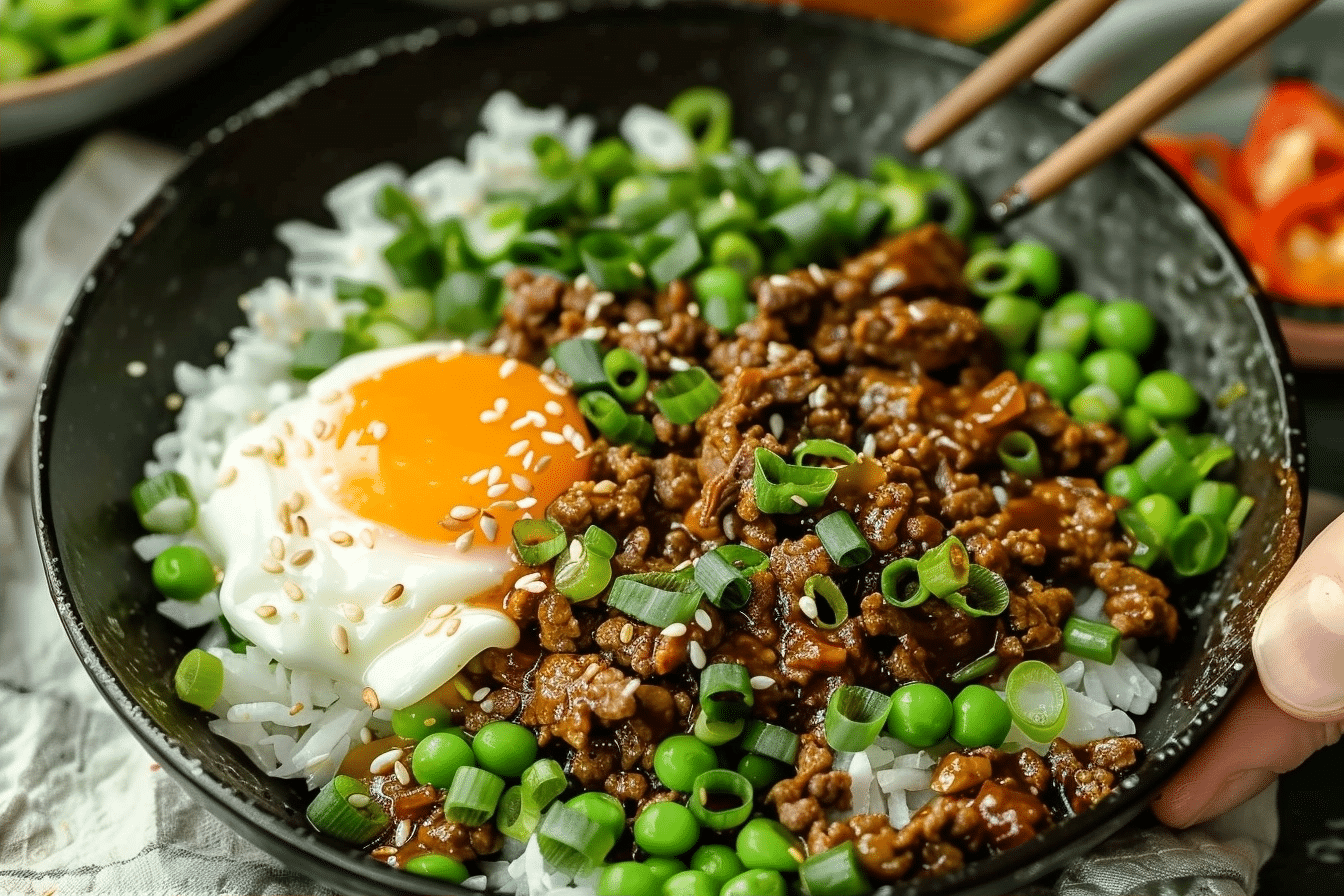
Image ALT text suggestion: Cooked ground beef coated in glossy Korean-style sauce resting beside a bowl of rice.
This ingredients list gives precise amounts and practical alternatives to make the bowl your own.
| Ingredient | Quantity | Notes/Alternatives |
|---|---|---|
| Frozen peas | 1 cup | Substitute with edamame or frozen mixed veg for more color |
| Onions (diced) | ½ cup (approx. 1 small onion) | Use yellow or sweet onion; shallot for milder flavor |
| Garlic (finely chopped) | ½ teaspoon (approx. 1 clove) | Use garlic paste if preferred; add more for stronger garlic flavor |
| Dried bay leaf | 1 leaf | Add during simmer for subtle background aroma; remove before serving |
| Ground beef (lean to medium) | 1 lb | Use 80/20 for richer bowls and less oil; turkey for leaner option |
| Cornstarch (for marinade) | 1 tablespoon | Helps tenderize and bind juices; potato starch works as substitute |
| Soy sauce (for marinade) | 1 tablespoon | Low-sodium soy if watching salt; tamari for gluten-free |
| Water (for marinade) | 2½ tablespoons | Room temperature water to help distribute cornstarch |
| Oil (for cooking) | 1-2 tablespoons | Use less oil with fattier beef; neutral oil or avocado oil |
| Soy sauce (for sauce) | 2½ tablespoons | Low-sodium or regular depending on preference |
| Cornstarch (for sauce) | 2½ tablespoons | Thickens sauce quickly; adjust for desired gloss |
| Sugar | ½ teaspoon | Balances saltiness; honey or maple syrup as alternatives |
| Oyster sauce | 2 tablespoons | For depth and umami; vegetarian mushroom oyster sauce for plant-based option |
| Toasted sesame oil | 1 teaspoon | Add at end for aroma; do not cook too long to preserve flavor |
| Cold water (for sauce) | 1 cup | Cold water helps slurry form without lumps |
| Chinese five spice (optional) | ⅛ teaspoon | Adds warm spice notes; omit if unfamiliar |
| Green onion (garnish) | 1 stalk | Thinly sliced; adds freshness and color |
| Fried egg | 1 per serving | Soft-yolk fried egg recommended; omit for vegan option |
Image ALT text suggestion: Ingredients arrayed on a counter including peas, onions, garlic, ground beef, and sauces.
This step-by-step instruction set walks you through prep, marinade, cooking, and finishing for reliable results.
Phase 1: Prepare the Ingredients
- Measure out 1 cup frozen peas and set it aside for later.
- Dice ½ cup onions into small, uniform pieces.
- Finely mince or grate ½ teaspoon garlic and set it aside with the diced onions.
- Finely chop 1 stalk green onion into small pieces; set them aside for garnish at the very end.
Image ALT text suggestion: Chopped onions, minced garlic, and a small bowl of frozen peas ready for cooking.
Phase 2: Marinate the Beef
- Combine 1 lb ground beef with 1 tablespoon cornstarch, 1 tablespoon soy sauce, and 2½ tablespoons water in a bowl.
- Mix thoroughly until the cornstarch dissolves and the marinade evenly coats the beef.
- Let the beef rest for 5 minutes while you assemble the sauce and heat the pan.
Phase 3: Make the Sauce
- Whisk together 2½ tablespoons soy sauce, 2½ tablespoons cornstarch, ½ teaspoon sugar, 2 tablespoons oyster sauce, 1 teaspoon toasted sesame oil, 1 cup cold water, and ⅛ teaspoon Chinese five spice powder in a measuring cup.
- Stir until the cornstarch is fully incorporated and the slurry is smooth and lump-free.
Phase 4: Cook the Bowl
- Heat a large skillet over medium-high heat and add 1-2 tablespoons oil depending on the beef’s fat content.
- Add the marinated ground beef and spread it across the pan to sear for 1-2 minutes.
- Break the beef into small pieces and cook until no longer pink, about 3-4 minutes total.
- Push the beef to one side, add the diced onions and minced garlic, and sauté until fragrant and translucent, about 1-2 minutes.
- Pour the prepared sauce into the pan and stir constantly until it thickens and becomes glossy, about 1-2 minutes. Add the bay leaf during this step and remove it before serving.
- Stir in the reserved 1 cup frozen peas and cook until heated through, about 1 minute.
Phase 5: Finish and Serve
- Prepare steamed rice or your grain of choice in bowls.
- Scoop the sauced ground beef and peas over the rice.
- Top each bowl with a fried egg and sprinkle with chopped green onion.
- Serve immediately while hot, breaking the egg yolk into the bowl for extra richness.
This section lists chef tips to ensure consistent texture, seasoning, and visual appeal.
- Use a hot skillet to sear the beef quickly; that initial contact creates browned flavor without overcooking. Aim for medium-high heat and avoid stirring constantly for the first minute.
- Choose 80/20 ground beef for juicier bowls, and reduce oil if you use a higher-fat meat. Drain excess grease if the pan becomes too oily before adding the sauce.
- Add the cornstarch slurry cold and stir vigorously to prevent lumps; adding sauce to a hot pan while stirring helps it thicken evenly and shine.
- Cook peas just until heated; overcooking will make them mushy and dull the color. Frozen peas typically need only 30–60 seconds in the hot sauce.
- Finish with toasted sesame oil off the heat to preserve its aroma. A tiny drizzle at the end makes a pronounced impact.
- Fry eggs to order: cook whites through but keep yolks runny for the best finishing texture. Use a nonstick pan and a little oil for clean edges.
Image ALT text suggestion: A skillet with finished Korean ground beef and peas in glossy sauce ready to serve.
This list highlights common mistakes and explains why they occur and how to prevent them.
- Overcooking the beef: This happens when the pan is too hot for the chosen fat level, leading to dry meat. Fix by using a slightly lower heat and cook until just no longer pink.
- Gritty or lumpy sauce: This occurs when cornstarch is added directly to hot liquid without creating a slurry. Prevent by dissolving cornstarch in cold water first and whisking continuously when adding to the pan.
- Mushy peas: This happens if peas cook too long in the sauce. Prevent by stirring them in at the end and heating only until warmed through for the best texture.
- Greasy final bowl: Excess fat from fatty beef can pool in the sauce and make it slippery. Fix by draining or blotting excess fat before adding the sauce, or using leaner beef.
- Underseasoned base: Relying solely on soy without balancing sweetness and umami can leave the dish flat. Add the sugar and oyster sauce as specified, then taste and adjust with a splash more soy or a pinch of salt as needed.
This table shows easy swaps and how they change flavor or texture so you can adapt confidently.
| Ingredient | Substitution | Flavor/Texture Impact |
|---|---|---|
| Ground beef | Ground turkey or chicken | Leaner, milder flavor; add a touch more oil and seasoning for richness |
| Oyster sauce | Mushroom oyster sauce or hoisin | Less marine umami with mushroom option; hoisin adds sweetness |
| Soy sauce | Tamari or coconut aminos | Tamari keeps saltiness without gluten; coconut aminos are milder and slightly sweeter |
| Frozen peas | Edamame or mixed vegetables | Edamame adds firmer texture and nuttier flavor; mixed veg increases variety |
| Fried egg | Soft-boiled egg or tofu slice | Soft-boiled keeps a runny yolk; tofu for a vegetarian protein alternative |
Image ALT text suggestion: Three variations of the bowl showing turkey, edamame, and tofu topping options.
This section lists complementary sides, drinks, garnishes, and occasions to serve the bowl.
Serve the Korean Ground Beef Bowl with steamed white rice, brown rice, or cauliflower rice for a low-carb option. Add a side of quick kimchi or pickled cucumber for acidity and crunch.
Pair the bowls with a cold green tea or sparkling water with a lime wedge. Garnish with extra toasted sesame seeds, sliced cucumber, or gochujang on the side for heat. These bowls work well for weeknight dinners, meal prep lunches, or casual dinner parties.
Image ALT text suggestion: A served bowl with rice, kimchi, and a glass of iced green tea on the side.
This table provides safe storage and reheating guidance to maintain texture and flavor.
| Method | Duration | Instructions |
|---|---|---|
| Refrigerator | 3-4 days | Store cooled beef and sauce in an airtight container. Reheat gently in a skillet over medium heat, stirring until hot. |
| Freezer | 2-3 months | Freeze in portioned containers without the fried egg. Thaw overnight in the fridge and reheat in a skillet over low-medium heat. |
| Microwave Reheat | Immediate use only | Cover loosely and reheat in 30-second intervals, stirring in between to prevent cold spots. Add a splash of water if sauce thickens too much. |
Image ALT text suggestion: Leftover Korean ground beef in a meal-prep container ready to reheat.
This nutritional table provides approximate values per serving for basic dietary planning.
| Nutrient | Amount per Serving |
|---|---|
| Calories | 520 kcal |
| Protein | 32 g |
| Fat | 28 g |
| Carbohydrates | 34 g |
| Fiber | 3 g |
| Sugar | 5 g |
| Sodium | 920 mg |
Approximate values.
This FAQ section answers five common questions about substitutions, doneness, troubleshooting, make-ahead, and storage.
Can I substitute ground beef for ground turkey in this Korean ground beef bowl?
Yes, you can substitute ground turkey for a leaner version of this bowl. Turkey has a milder flavor and needs a touch more oil or sauce to reach the same richness. Adjust seasonings and consider adding an extra teaspoon of oyster sauce or a small pat of butter for depth.
How do I know when the ground beef is cooked through and safe to eat?
Cooked ground beef is done when it is uniformly brown with no pink remaining. Use a meat thermometer to confirm an internal temperature of 160°F (71°C) if you prefer an exact measure. Drain excess juices if the pan has pooled fat before adding the sauce to prevent a greasy finish.
Why did my sauce become lumpy and how do I fix it for a smoother finish?
The sauce lumps when cornstarch isn’t mixed into cold water first or is added to boiling liquid too quickly. Fix by whisking the sauce vigorously in the pan and simmering briefly to dissolve small lumps. For future batches, always create a cold slurry and pour it slowly while stirring continuously.
Can I make this Korean ground beef bowl ahead of time for meal prep?
You can make the beef and sauce ahead and store it in the refrigerator for up to four days. Keep rice separate and reheat beef gently in a skillet before serving to preserve texture. Assemble bowls with a freshly cooked fried egg when ready to serve for best results.
How should I store leftovers and reheat them without losing texture?
Store leftovers in airtight containers in the refrigerator for up to 3-4 days or freeze for 2-3 months. Reheat in a skillet over low-medium heat, stirring and adding a splash of water to restore sauce consistency. Avoid microwaving straight from frozen; thaw overnight for best texture.
Image ALT text suggestion: A vertical layout showing FAQ topics alongside small photos of meal prep containers and reheated bowls.
This Korean Ground Beef Bowl recipe is a fast, reliable weeknight favorite that balances savory sauce, tender beef, and fresh garnishes.
The bowl finishes in about twenty-five minutes and adapts easily to what you have on hand. Try the suggested swaps or stick to the original for a dependable family meal. Enjoy the contrast of a glossy, savory beef topping with the bright pop of peas and a silky egg yolk to finish.
Image ALT text suggestion: Final plated Korean ground beef bowl steaming with a glossy sauce, peas, and a fried egg for finishing flavor.
Internal links: Quick dinners, Easy beef recipes, Meal prep tips.
External authority links: USDA food safety, Serious Eats techniques.
Korean Ground Beef Bowl | 25-Minute Healthy Dinner Recipe
Ingredients
- 1 cup frozen peas
- ½ cup diced onions (approx. 1 small onion)
- ½ teaspoon finely chopped garlic (1 clove)
- 1 dried bay leaf
- 1 lb ground beef (lean to medium)
- 1 tablespoon cornstarch
- 1 tablespoon soy sauce
- 2½ tablespoons water
- 1 tablespoon toasted sesame oil
- 2 cups cooked rice
- Sliced green onion for garnish
- Fried egg (optional)
Instructions
- Preheat skillet over medium-high heat. Add ground beef and cook until browned, 5-7 minutes
- Add finely chopped garlic and sauté 1 minute
- Add diced onions and cook until softened, 2-3 minutes
- Add frozen peas in a single layer and stir-fry until tender
- Whisk together cornstarch, soy sauce, and water; pour into skillet
- Add dried bay leaf and bring sauce to a simmer
- Stir in 1 tablespoon toasted sesame oil
- Serve beef mixture over cooked rice with sliced green onion and fried egg
- Remove bay leaf before serving
Notes
Use edamame or mixed vegetables for peas
Tamari works for gluten-free version
Add more green onion/pineapple for brightness