
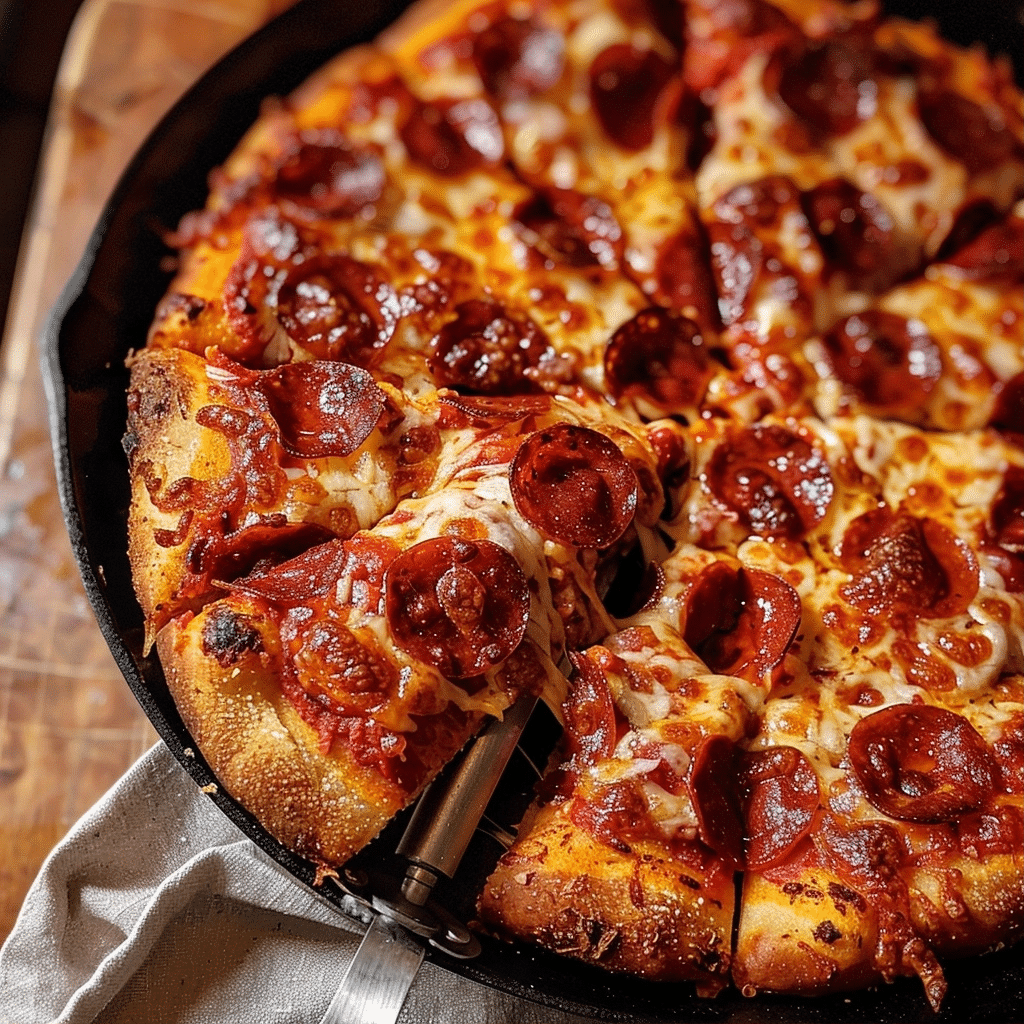
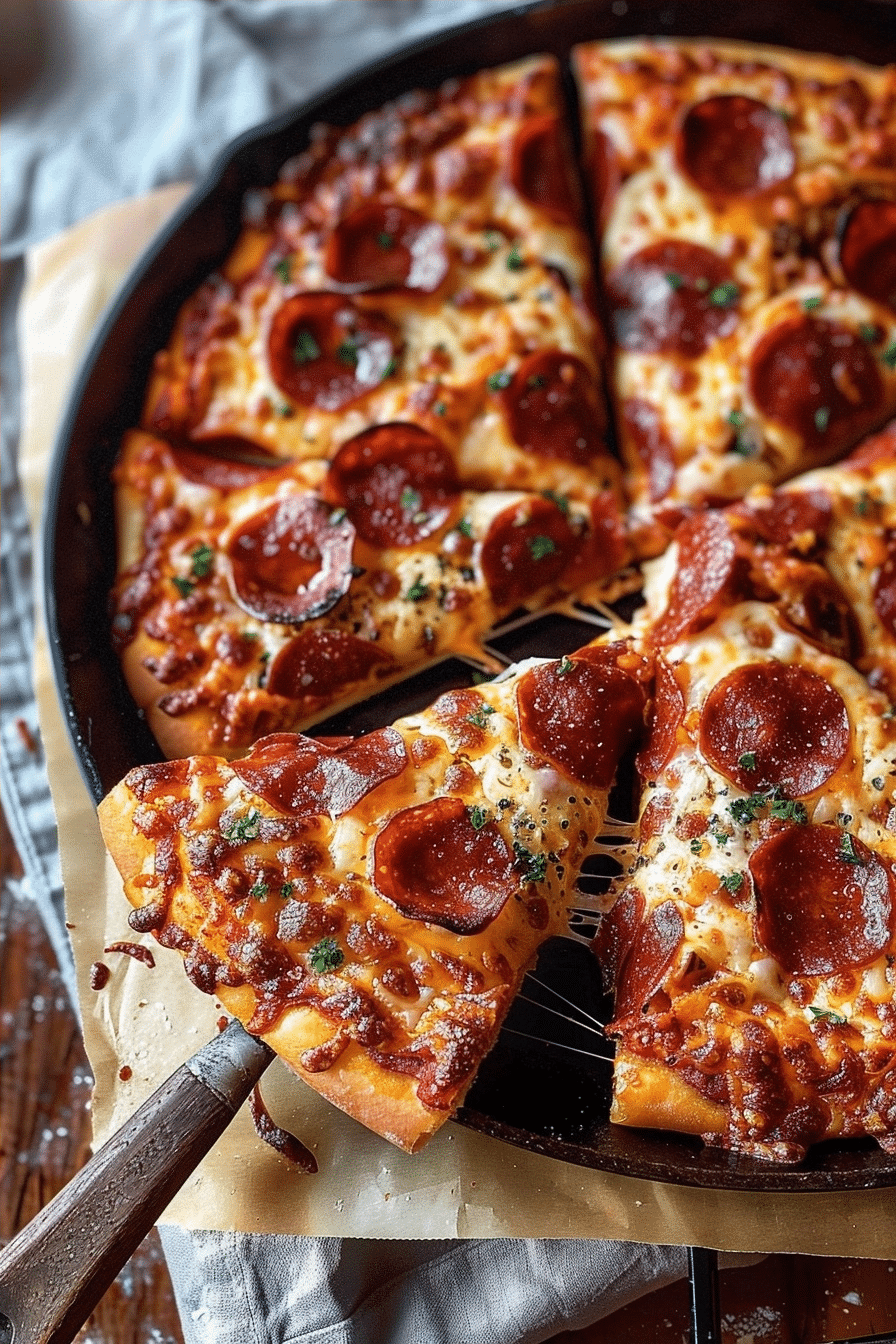
Crispy Cast Iron Skillet Pizza is a pan-style pizza that delivers a blistered, crunchy bottom and a tender, flavorful crumb inside. This version uses a slow-room-temperature dough, a bright homemade tomato sauce, and a three-cheese blend topped with turkey pepperoni and spicy poultry Italian sausage. The method emphasizes high heat, a well-oiled skillet, and short, intense baking time for maximum crispness and melted cheese. Expect a restaurant-quality skillet pizza with clear, savory flavor and satisfying texture.
| Prep Time | Cook Time | Total Time | Servings | Difficulty | Cuisine |
|---|---|---|---|---|---|
| 15 minutes active, 4-6 hours proofing | 20-25 minutes | 4 hours 35 minutes to 6 hours 35 minutes | 4-6 slices | Intermediate | American-Italian |
Why This Recipe Works
Crispy Cast Iron Skillet Pizza works because the cast iron concentrates and retains heat to sear the dough into a deeply caramelized crust. I rely on this pan method often because it produces a crunchy base and a tender interior that oven stone methods sometimes miss. The slow room-temperature proof develops nuanced gluten structure and flavor, giving the crust more chew and complexity. I prefer a three-cheese topping and a bright tomato sauce because they balance fat and acidity while the meat adds savory depth.
This recipe also benefits from a high oven temperature and preheated pan approach, which together create immediate oven spring and fast browning. My technique of oiling the skillet and allowing the dough to relax before final shaping prevents tearing and produces an evenly stretched round. The paired cheeses melt uniformly and brown attractively, while turkey pepperoni and spicy poultry sausage deliver the spicy, meaty notes families expect. I test this method regularly and adjust bake times slightly for different oven idiosyncrasies.
Ingredients
Use quality bread flour, room-temperature water, and a modest amount of olive oil for the ideal dough texture. Choose low-moisture mozzarella and stable melting cheeses to avoid a greasy, waterlogged pizza top.
| Ingredient | Quantity | Notes with alternatives |
|---|---|---|
| Bread flour | 2 3/4 cups (375 g) | High-protein flour for chew; use all-purpose plus 2 tbsp if needed |
| Kosher salt | 3/4 teaspoon (6 g) | Fine salt possible, reduce to 1/2 teaspoon |
| Active dry yeast | 1 teaspoon (3 g) | Instant yeast can substitute at 3/4 teaspoon |
| Olive oil (dough) | 2 tablespoons (25 g) | Extra-virgin for flavor, light olive oil for neutral taste |
| Water, room temperature | 1 cup + 1 Tablespoon (245 g) | Tap water acceptable; adjust by tablespoon if dough feels dry |
| Homemade pizza sauce | 1 recipe | See directions below; canned crushed tomatoes or strained tomato purée work |
| Shredded whole milk low-moisture mozzarella | 1 cup | Low-moisture prevents excess pooling; fresh mozzarella will add moisture |
| Fontina cheese, shredded | 1/2 cup | Use young fontina for melt; aged fontina adds nuttiness |
| Provolone cheese, shredded | 1/2 cup | Mild provolone complements mozzarella; smoked provolone will alter flavor |
| Turkey pepperoni slices | 2 oz | Use turkey or beef pepperoni to avoid pork; adjust quantity as desired |
| Spicy Italian sausages (meat removed) | 2 sausages | Use chicken or turkey spicy sausages to avoid pork; crumble after browning |
| Freshly grated Parmesan | For sprinkling | Parmigiano-Reggiano or Grana Padano both work well |
| Olive oil (for skillet) | More as needed | Use neutral oil sparingly for high heat, or EVOO for flavor |
Step-by-Step Instructions
Follow the instructions in three clean phases: Make the dough, make the sauce, assemble and bake. Each phase has clear actions and resting times for best texture and flavor.
Make the Pizza Dough
- Combine flour, salt, and yeast in the bowl of a stand mixer and stir to mix thoroughly.
- Pour water and olive oil over the top and mix with the dough hook until the dough forms, about two to three minutes.
- Transfer the dough to a greased bowl or large plastic container, turning to coat the surface with oil evenly.
- Cover with a lid or plastic wrap and let rise at room temperature for four to six hours to develop flavor fully.
- Transfer the dough to the refrigerator for the remainder of proofing if the dough is rising too quickly at room temperature.
Make the Pizza Sauce
- Heat olive oil in a medium saucepan over low heat and add garlic, oregano, and crushed red pepper, stirring for one minute.
- Add crushed tomatoes and sugar to the pan, increase to medium heat, and cook while stirring occasionally until thickened and darker, about fifteen minutes.
- Season the sauce with salt and pepper to taste, then remove from heat and cool to room temperature before using.
- Store leftover sauce in the refrigerator for up to one week in an airtight container.
Assemble and Bake
- Mix the mozzarella, fontina, and provolone in a bowl and set aside with other pizza components prepared for assembly.
- Cook the spicy poultry sausage in a small skillet over medium heat, breaking it up into pieces, until browned, then set aside.
- Drizzle two tablespoons of olive oil into a twelve to thirteen inch cast iron skillet, turning the pan to distribute the oil evenly.
- Remove the proofed dough from its container and press it into the oiled skillet, stretching gently toward the edges.
- Allow the gluten to relax five minutes if the dough resists stretching, then continue until it reaches the pan edges completely.
- Cover the stretched dough with plastic wrap and allow it to rise for twenty minutes before topping.
- Preheat your oven to five hundred degrees Fahrenheit with the rack in the upper third position for best browning.
- Spread a thin, even layer of tomato sauce over the dough, then sprinkle the cheese blend across the surface evenly.
- Top with turkey pepperoni slices and browned sausage crumbles, and add a light sprinkle of dried oregano if desired.
- Bake the pizza twenty to twenty-five minutes until the top is evenly browned and the bottom lifts golden when checked with a spatula.
- Remove the pizza from the oven and cool in the skillet for about five minutes, then transfer to a cutting board and slice into portions.
- Sprinkle freshly grated Parmesan over the slices before serving to add savory finish.
Chef Tips for Perfect Results
This section gives precise advice to guarantee a crisp bottom and well-developed flavor in the skillet crust. Follow these tested tips to avoid soggy or underbaked centers.
- Preheat the oven to 500 degrees Fahrenheit and place the oven rack on the upper third position to encourage top browning while the cast iron holds base heat.
- Allow the dough to proof four to six hours at room temperature for flavor development; refrigerate only if the rise accelerates too quickly.
- Use low-moisture mozzarella and measure cheeses by weight to prevent excess moisture pooling on the surface during baking.
- Oil the skillet generously and spread the dough to the edges to allow even contact and consistent browning across the entire bottom surface.
- Check the bottom early at twenty minutes by lifting with a sturdy spatula; extend baking by two to five minutes if the bottom is still pale and soft.
- Let the pizza rest five minutes after baking to settle the cheese and prevent toppings from sliding when you slice the pie.
Common Mistakes to Avoid
This section identifies typical errors homeowners make and offers corrective actions to ensure a crispy, well-cooked pizza. Avoid these pitfalls to deliver consistent results every bake.
- Using high-moisture fresh mozzarella: it releases excess water, which makes the center soggy; swap for low-moisture mozzarella or pat fresh mozzarella dry and use sparingly.
- Underproofing the dough: the crust will lack flavor and oven spring; allow the full four to six hour rise at room temperature for optimal gluten and flavor development.
- Insufficient skillet oiling: dough can stick and tear during stretching; coat the pan well and rotate the skillet to distribute oil before placing dough.
- Baking at low temperature: the crust will cook slowly and lose crispness; always preheat the oven to 500 degrees and use the hot cast iron for immediate browning.
- Overloading with sauce or toppings: heavy toppings insulate the dough and prevent base crisping; apply sauce thinly and use a moderate amount of toppings for even baking.
Variations and Substitutions
Substitute thoughtfully to adapt this recipe for dietary needs or ingredient availability while maintaining core texture and flavor characteristics. Each substitution below explains the expected impact on the finished pizza.
| Ingredient | Substitution | Impact on Flavor |
|---|---|---|
| Turkey pepperoni | Beef pepperoni or sliced mushrooms | Beef pepperoni keeps spice and chew; mushrooms reduce salt and add umami without pork. |
| Spicy Italian sausages (poultry) | Vegetarian sausage crumbles or seasoned ground chicken | Vegetarian options reduce meat richness; seasoned chicken approximates spice with lighter fat. |
| Low-moisture mozzarella | Fresh mozzarella, well-drained and patted dry | Fresh mozzarella adds creaminess but risks extra moisture; drain well to minimize sogginess. |
| Bread flour | All-purpose flour plus 2 tablespoons per cup of AP | Lower protein yields slightly less chew but still acceptable crust texture for home bakers. |
Serving Suggestions and Pairings
Serve Crispy Cast Iron Skillet Pizza hot from the pan with complementary sides and beverages for casual gatherings or weeknight meals. Pairings enhance the savory toppings and balance the crisp crust for a pleasing meal experience.
- Salad: Arugula with lemon vinaigrette for a peppery, bright counterpoint to the rich cheese and meats.
- Appetizer: Garlic-roasted broccoli or charred shishito peppers to add smoky vegetables before pizza arrives.
- Occasion: Game-night or casual Friday dinner where hand slices and informal serving encourage communal sharing.
- Beverage: Sparkling water with lemon or a classic iced tea to cleanse the palate between bites.
- Dessert: Light olive oil cake or lemon sorbet to finish with a refreshing contrast to the savory main dish.
Storage and Reheating
Store leftover pizza properly to preserve texture and reheat using high heat methods for best crisp restoration. Use the table below for method-specific guidance and safe durations.
| Method | Duration | Instructions |
|---|---|---|
| Refrigerator | Up to 3 days | Wrap slices tightly in plastic wrap or store in an airtight container; cool completely before refrigeration. |
| Freezer | Up to 1 month | Par-freeze slices on a tray, then transfer to freezer bags; thaw overnight in the fridge before reheating. |
| Reheat in oven or skillet | 5-10 minutes | Preheat oven to 425 degrees F and bake on a sheet for 6-8 minutes or crisp in a skillet over medium heat for 3-5 minutes. |
| Reheat in toaster oven | 4-6 minutes | Use medium-high setting and monitor to prevent burning; cover briefly with foil if cheese browns too fast. |
Nutritional Information
Approximate values per serving are provided to help estimate macronutrients for planning meals and calories. These values are estimates and will vary based on exact brands and portion sizes used.
| Nutrient | Amount per Serving (Approximate values) |
|---|---|
| Calories | Approximately 520 kcal |
| Protein | About 28 g |
| Fat | Roughly 24 g |
| Carbohydrates | Approximately 48 g |
| Fiber | About 2 g |
| Sugar | Approximately 5 g |
| Sodium | Roughly 980 mg |
Frequently Asked Questions
Can I substitute fresh mozzarella for low-moisture mozzarella?
Yes, you can substitute fresh mozzarella for low-moisture mozzarella when needed. Fresh mozzarella adds creaminess but releases more water, which risks a soggier crust if not well drained. Pat the fresh mozzarella dry and use it sparingly to reduce moisture transfer during baking. Alternatively, combine fresh with low-moisture to balance texture and melt.
How do I know when the skillet pizza is done and the bottom is crispy?
Check doneness by lifting the pizza edge with a sturdy spatula to inspect the bottom color directly. A golden-brown to deep amber base indicates a properly crisped crust and sufficient caramelization. The top should be evenly browned and cheese fully melted with slight blistering for ideal finish. If the bottom is pale, return to the oven for two to five additional minutes and test again.
What should I do if my dough tears when stretching in the skillet?
Relax the dough for five to ten minutes to allow gluten to rest and become more extensible. Press gently from the center outward and avoid excessive pulling near the edges where tears commonly occur. Apply a small dusting of flour to your fingers rather than stretching aggressively to prevent sticking. If a tear happens, pinch the dough together and smooth with your fingers, then continue to shape carefully.
Can I make the dough ahead and refrigerate it overnight?
Yes, you can refrigerate the dough overnight after its initial mix to develop flavor over a slow cold-ferment. Perform the first brief rise at room temperature for one to two hours, then refrigerate up to twenty-four hours; bring to room temperature before shaping. Longer fridge fermentation will deepen flavor but may require a shorter room-temperature proof before baking. Always allow the dough time to relax and warm slightly for easier stretching.
What is the best way to serve skillet pizza for a casual gathering?
Serve skillet pizza sliced into wedges directly from the cutting board to encourage sharing and casual serving. Offer simple sides like arugula salad and marinated olives to complement the rich cheese and spicy meat. Provide parchment-lined serving trays and sturdy plates for easy passing and cleanup. Keep extra Parmesan and chili flakes on the table for guests to customize their slices.
For additional resources on dough handling and pizza techniques, see our internal guides: How to Knead Dough, Cheese Melting Guide, and Cast Iron Care Tips. For authoritative background on food safety and nutrient data, consult the USDA food database USDA FoodData Central and a trusted pizza technique resource at Serious Eats.
===RECIPE_CARD_START===
{“title”:”Crispy Cast Iron Skillet Pizza with Golden Crispy Crust”,”description”:”Pan-style pizza with a crisp, caramelized bottom, tender interior, homemade tomato sauce, and a three-cheese topping with turkey pepperoni and spicy poultry sausage.”,”ingredients”:”Pizza Dough:\n\n2 3/4 cups (375 g) bread flour\n3/4 teaspoon (6 g) kosher salt\n1 teaspoon (3 g) active dry yeast\n2 tablespoons (25 g) olive oil\n1 cup + 1 Tablespoon (245 g) water , at room temperature\nToppings:\n1 recipe homemade pizza sauce\n1 cup shredded whole milk low moisture mozzarella\n1/2 cup shredded fontina cheese , grated\n1/2 cup shredded provolone cheese , grated\n2 oz turkey pepperoni slices (natural casings are best)\n2 spicy Italian sausages (use poultry sausages), meat removed from casings\nfreshly grated parmesan (for sprinkling)\nmore olive oil (for the skillet)”,”instructions”:”Make the Pizza Dough\nIn the bowl of a stand mixer, combine flour, salt, and yeast and stir to combine. Pour water and olive oil over the top and mix with the dough hook until combined, about 2-3 minutes. Transfer to a greased bowl or large plastic container, cover with a lid or plastic wrap, and let rise at room temperature for 4-6 hours. This is important for developing flavor, don’t rush the process! If your dough is rising too quickly, transfer it to the fridge for the remainder of the proofing time.\nMake the Pizza Sauce\nIn a medium saucepan, heat olive oil over low heat. Add garlic, oregano, and crushed red pepper and cook for 1 minute, stirring constantly. Add crushed tomatoes and sugar. Cook over medium heat, stirring occasionally, until thickened and darker in color, about 15 minutes. Season to taste with salt and pepper. Cool to room temperature before using, can be stored in the fridge for up to 1 week.\nAssemble and Bake\nMix the cheeses together in a bowl and gather other pizza ingredients. In a small skillet over medium heat, add the Italian sausage and cook until browned, breaking it up into pieces as it cooks. Set aside.\nDrizzle 2 tablespoons of olive oil into a 12-13 inch cast iron skillet or cake pan, turning to evenly distribute the oil. Remove the proofed dough from its container and press it into the skillet. If the dough won\u2019t stretch to the edges, give it 5 minutes for the gluten to relax and then continue stretching. Once it reaches the edges, cover it with plastic wrap, and allow it to rise for 20 minutes.\nPreheat an oven to 500 degrees F. Spread the top with the tomato sauce. Sprinkle with cheese and top with pepperoni and sausage crumbles. Sprinkle the top with dried oregano if desired. Bake for 20-25 minutes until the top is browned and when lifted with a spatula, the bottom is golden brown.\nRemove pizza from the oven. Allow it to cool for 5 minutes or so then transfer to a cutting board and cut into slices. Sprinkle with parmesan cheese if desired.”,”prep_time”:”15 minutes active, 4-6 hours proofing”,”cook_time”:”20-25 minutes”,”total_time”:”4 hours 35 minutes to 6 hours 35 minutes”,”yield”:”4-6 servings”,”category”:”Main”,”cuisine”:”American-Italian”,”calories”:”Approximately 520″,”protein”:”About 28 g”,”fat”:”Roughly 24 g”,”carbohydrates”:”Approximately 48 g”,”fiber”:”About 2 g”,”sugar”:”Approximately 5 g”,”sodium”:”Roughly 980 mg”}
===RECIPE_CARD_END===
Try this Crispy Cast Iron Skillet Pizza for your next gathering or weeknight feast and enjoy reliably crisp crust and balanced, savory toppings. The method rewards the patient baker with a crunchy bottom and melty, golden top that highlights the sauce and three-cheese blend. Make the dough ahead or the sauce in advance to streamline assembly on busy days, and finish slices with grated Parmesan to emphasize the signature flavor.
Crispy Cast Iron Skillet Pizza with Golden Crispy Crust
Ingredients
- 2 3/4 cups (375g) bread flour
- 3/4 teaspoon (6g) kosher salt
- 1 teaspoon (3g) active dry yeast
- 2 tablespoons (25g) olive oil (dough)
- 2 cups homemade tomato sauce (see note)
- 3/4 cup (150g) low-moisture mozzarella
- 1/4 cup (25g) grated Parmesan cheese
- 2 tablespoons (10g) provolone cheese (or pre-shredded three-cheese blend)
- 8 oz (225g) turkey pepperoni slices
- 8 oz (225g) spicy poultry Italian sausage
Instructions
- In a large bowl, mix flour, salt, yeast, and olive oil until a shaggy dough forms. Knead for 8-10 minutes until smooth and elastic. Cover and let rest at room temperature for 4-6 hours until nearly doubled in size.
- Preheat oven to 500°F (260°C). Generously oil a 10-inch cast iron skillet and place it in the oven to preheat for 15 minutes.
- Turn dough onto a floured surface. Stretch into a 9-inch round shape, keeping the edges thinner. Transfer to the hot skillet and score the crust with a knife. Bake for 5 minutes.
- Remove skillet from oven, add a thin layer of tomato sauce, followed by cheese, turkey pepperoni, and sausage. Return to the oven and bake for 10-12 minutes until cheese melts and crust is golden-brown and crispy. Let rest 5 minutes before slicing into 6 wedges.
Notes
For active dry yeast, reduce to 3/4 teaspoon if using.
Adjust bake time based on oven performance. Add additional cheese only if using a stronger melt like provolone. A pre-shredded three-cheese blend (e.g., mozzarella, Parmesan, and provolone) can be used for convenience. Serve with a side salad or garlic knots for a complete meal.