
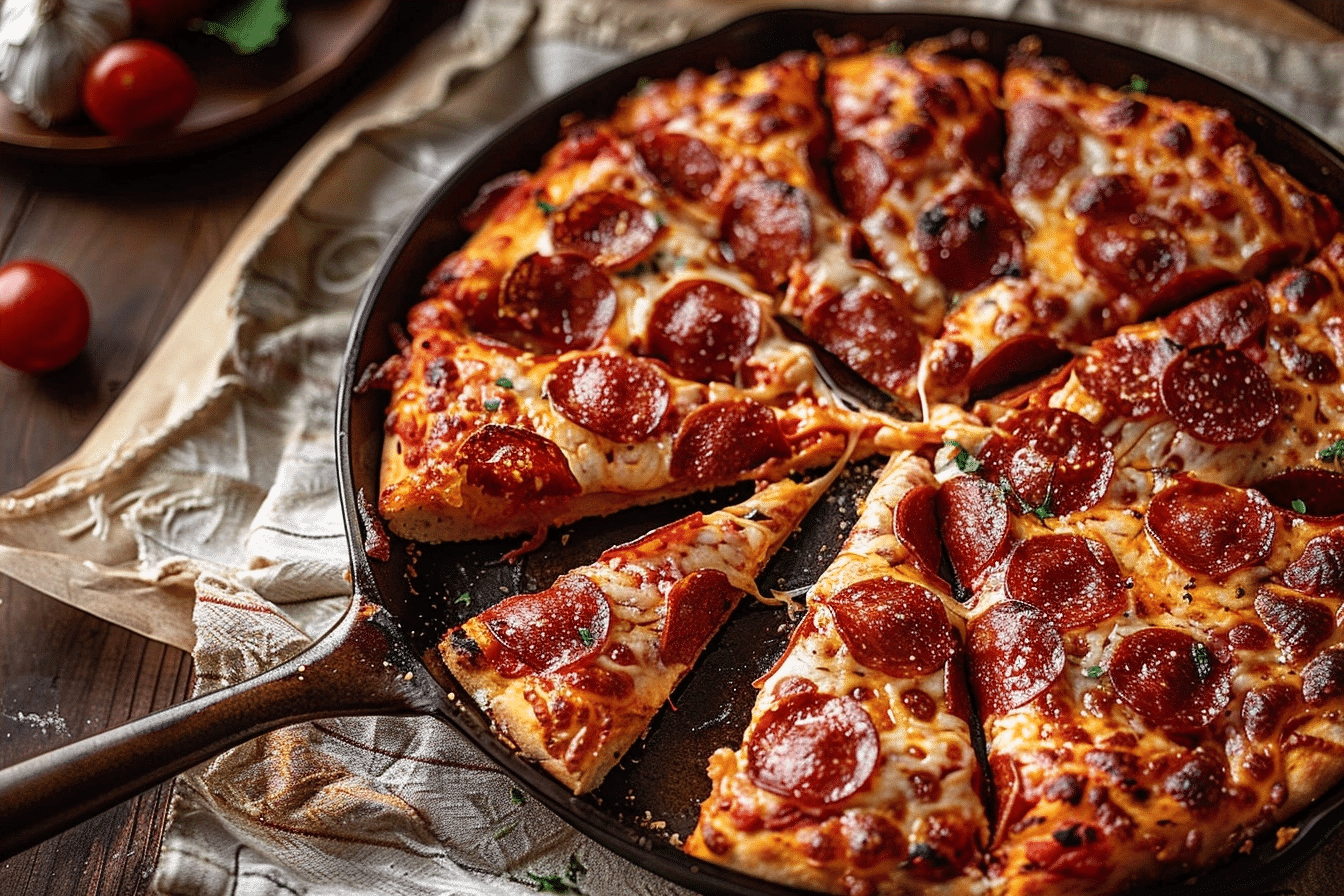
Best Skillet Pizza Recipe | Easy Crispy Homemade Pizza is a pan-baked pizza cooked in a hot cast-iron skillet that yields a crackling, golden-bottom crust with bubbling, browned cheese and well-seasoned toppings. This straightforward method produces reliable texture and deep flavor from a simple dough and a bright, slow-simmered tomato sauce, perfect for weeknight dinners and casual entertaining.
| Prep Time | Cook Time | Total Time | Servings | Difficulty | Cuisine |
|---|---|---|---|---|---|
| 15 minutes (plus 4-6 hr rise) | 20-25 minutes | 4-6 hours (including proof) + 40 minutes active | 8 slices (serves 3-4) | Easy | Italian-American |
This skillet pizza works because the hot cast-iron creates an evenly browned, ultra-crisp bottom while the dough proof builds flavor and chew: Why This Recipe Works
I rely on the interplay of a long room-temperature proof and intense oven heat to create a crust that snaps and bubbles while remaining tender inside. Over years of testing, I learned that a 4-6 hour proof at room temperature develops complex yeast flavor and improves stretchability, which helps the dough form a perfect pan crust that browns uniformly.
The sauce is cooked low and slow to concentrate acidity and sweetness, so it stands up to the rich blend of whole-milk mozzarella, fontina, and provolone. Browning the sausage and using high heat for baking guarantee a nicely caramelized topping and melty interior, making this method simple, repeatable, and reliably delicious.
Image alt text suggestion: Close-up of a golden-bottom skillet pizza with bubbling cheese and browned edges.
This recipe uses a simple, pantry-friendly ingredient list with easy substitutions: Ingredients
| Ingredient | Quantity | Notes/Alternatives |
|---|---|---|
| Bread flour | 2 3/4 cups (375 g) | Use high-protein all-purpose if needed; crust will be slightly less chewy. |
| Kosher salt | 3/4 teaspoon (6 g) | Adjust if using fine table salt (use less). |
| Active dry yeast | 1 teaspoon (3 g) | Instant yeast can be used straight into the flour. |
| Olive oil | 2 tablespoons (25 g) + 2 tbsp for skillet | Extra-virgin for flavor; neutral oil okay for higher smoke point. |
| Water, room temperature | 1 cup + 1 tablespoon (245 g) | Hydration tuned for easy handling; warmer water speeds proofing slightly. |
| Homemade pizza sauce | 1 recipe | See sauce instructions below; jarred crushed tomatoes can substitute in a pinch. |
| Whole milk low-moisture mozzarella | 1 cup, shredded | Grate fresh to avoid clumps; low-moisture melts best for skillet pizza. |
| Fontina cheese | 1/2 cup, grated | Gives nuttiness. Swap with gouda or young cheddar. |
| Provolone cheese | 1/2 cup, grated | For mild sharpness. Omit for milder profile. |
| Turkey or beef pepperoni slices | 2 oz | Use turkey/beef for halal-friendly option; arrange for even coverage. |
| Spicy Italian chicken sausages | 2 sausages, meat removed from casings | Use poultry or beef sausages to avoid pork; crumble and brown before topping. |
| Parmesan, freshly grated | To taste for sprinkling | Finish for brightness and umami. |
Image alt text suggestion: Ingredients laid out on a counter including flours, cheeses, sausages, and a bowl of homemade sauce.
This section gives precise, step-by-step directions to make the dough, sauce, and bake the pizza: Step-by-Step Instructions
Make the Pizza Dough
- Combine dry ingredients: In the bowl of a stand mixer, combine flour, salt, and yeast and stir to combine.
- Mix wet ingredients: Pour water and olive oil over the top and mix with the dough hook until combined, about 2-3 minutes.
- Transfer dough: Transfer to a greased bowl or large plastic container, cover with a lid or plastic wrap, and let rise at room temperature for 4-6 hours.
- Manage proofing: This is important for developing flavor, don’t rush the process! If your dough is rising too quickly, transfer it to the fridge for the remainder of the proofing time.
- Pre-shape and rest: After the initial rise, gently deflate and shape into a round; rest on the counter while you prepare the sauce and toppings.
Make the Pizza Sauce
- Heat infused oil: In a medium saucepan, heat olive oil over low heat.
- Sauté aromatics: Add garlic, oregano, and crushed red pepper and cook for 1 minute, stirring constantly.
- Add tomatoes and sugar: Add crushed tomatoes and sugar.
- Simmer to thicken: Cook over medium heat, stirring occasionally, until thickened and darker in color, about 15 minutes.
- Season and cool: Season to taste with salt and pepper. Cool to room temperature before using, can be stored in the fridge for up to 1 week.
Assemble and Bake
- Mix cheeses: Mix the cheeses together in a bowl and gather other pizza ingredients.
- Cook sausage: In a small skillet over medium heat, add the Italian sausage and cook until browned, breaking it up into pieces as it cooks. Set aside.
- Oil the pan: Drizzle 2 tablespoons of olive oil into a 12-13 inch cast iron skillet or cake pan, turning to evenly distribute the oil.
- Press dough into skillet: Remove the proofed dough from its container and press it into the skillet. If the dough won’t stretch to the edges, give it 5 minutes for the gluten to relax and then continue stretching.
- Second rise: Once it reaches the edges, cover it with plastic wrap, and allow it to rise for 20 minutes.
- Preheat oven: Preheat an oven to 500 degrees F.
- Add toppings: Spread the top with the tomato sauce. Sprinkle with cheese and top with pepperoni and sausage crumbles. Sprinkle the top with dried oregano if desired.
- Bake the pizza: Bake for 20-25 minutes until the top is browned and when lifted with a spatula, the bottom is golden brown.
- Rest and serve: Remove pizza from the oven. Allow it to cool for 5 minutes or so then transfer to a cutting board and cut into slices. Sprinkle with parmesan cheese if desired.
Image alt text suggestion: Step-by-step sequence of assembling the skillet pizza and placing it into an oven.
These chef tips deliver crisp crust, even cooking, and melty cheese every time: Chef Tips for Perfect Results
- Preheat the oven fully: Heat to 500 F and let the oven stabilize for at least 30 minutes for consistent top heat and crust browning.
- Use a heavy skillet: Choose a 12-13 inch cast-iron skillet to retain heat for a crispy bottom; lighter pans won’t brown as well.
- Room-temperature dough: Allow the dough to come to room temperature after chilling so it stretches without snapping back; 20 minutes is usually enough.
- Drain excess moisture from sauce: If your sauce seems very watery, simmer longer until thicker; excess moisture makes the crust soggy.
- Cheese distribution: Mix cheeses for even melt and sprinkle heavier cheeses near the edge to encourage browning without overloading the center.
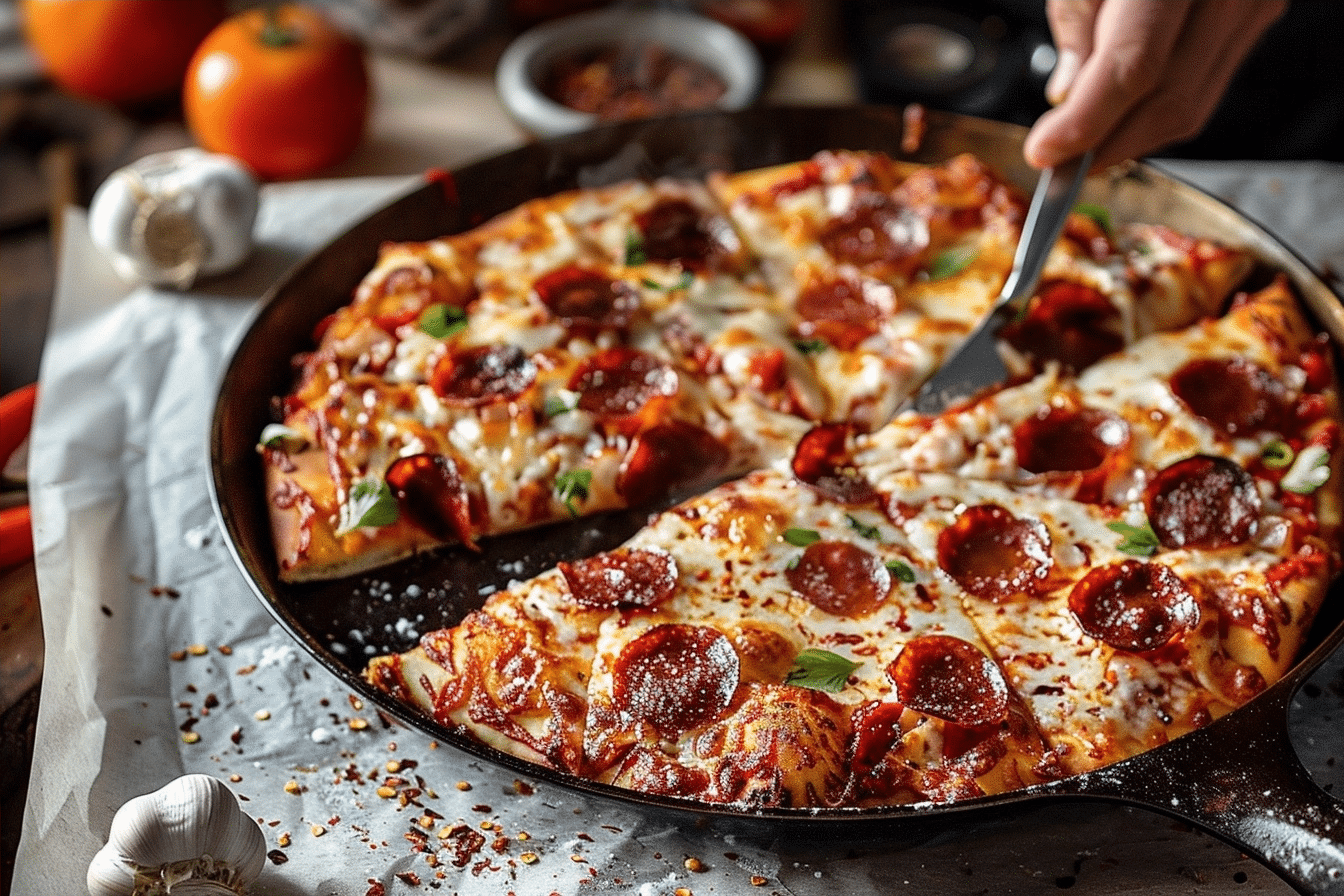
- Watch the bottom: Lift the pie with a spatula in the last five minutes to confirm a deep golden bottom before pulling from the oven.
Image alt text suggestion: Close-up of a spatula lifting the pizza to show a golden-brown bottom crust.
These are the most common mistakes and how to fix them: Common Mistakes to Avoid
- Underproofing the dough: This causes dense texture and weak flavor because the yeast did not ferment enough. Fix by giving the dough the full 4-6 hours at room temperature or refrigerate for a slow overnight proof for more flavor.
- Overly wet sauce: Excess water can make the crust soggy because the liquid soaks into the dough during baking. Prevent this by simmering the sauce until reduced and using a thinner layer on the pizza.
- Cold skillet: Placing dough into a cold pan prevents immediate crust formation and results in a pale bottom. Always preheat the oven and let the pan get warm with the oven heat before adding the dough and oil.
- Too much cheese: Overloading cheese traps heat and prevents crust from crisping properly. Use the suggested amounts and spread cheese evenly for balanced melt without sogginess.
- High-topped overload: Piling on too many toppings cools the oven locally and prevents browning. Brown wet toppings like sausage first and keep topping amounts moderate.
Image alt text suggestion: A checklist graphic showing common skillet pizza mistakes with correction tips.
This table shows simple swaps to change flavor and texture: Variations and Substitutions
| Ingredient | Substitution | Flavor/Texture Impact |
|---|---|---|
| Bread flour | All-purpose flour | Softer crumb and slightly less chew; still crisp on bottom if baked hot. |
| Turkey/beef pepperoni | Vegetarian pepperoni or sliced mushrooms | Less fatty, leaner top; mushrooms add umami and moisture. |
| Spicy Italian chicken sausage | Sweet Italian chicken or plant-based sausage | Less heat or fully vegetarian; adjust seasonings to compensate. |
| Whole milk mozzarella | Part-skim mozzarella or shredded provolone | Lower fat; less creamy melt but still workable for skillet pizza. |
Image alt text suggestion: Three small pizzas showing variation in toppings and crust styles.
This section lists ideal side dishes, drinks, and occasions for serving: Serving Suggestions and Pairings
Serve the skillet pizza with a crisp green salad dressed in lemon vinaigrette to cut the cheese richness, alongside roasted garlic broccoli or charred asparagus for a vegetable contrast. Offer a simple appetizer of marinated olives and a light antipasto platter to start, and finish with a bright citrus sorbet for cleansing the palate.
Pair with non-alcoholic Italian sodas, sparkling water with lemon, or a chilled iced tea for casual meals. This pizza works well for game nights, casual Friday dinners, family-style Sunday suppers, and small gatherings where warm, shareable food is ideal.
Image alt text suggestion: A serving setup with sliced skillet pizza, a green salad, and sparkling water on the table.
This table gives safe storage and reheating methods for leftovers: Storage and Reheating
| Method | Duration | Instructions |
|---|---|---|
| Refrigerator | 3-4 days | Store slices in an airtight container or wrapped tightly in foil. Reheat in a 375 F oven for 8-10 minutes until warmed through. |
| Freezer | Up to 1 month | Wrap slices individually in plastic wrap and foil. Thaw overnight in the fridge and reheat in a 375 F oven for 12-15 minutes. |
| Skillet reheat | Best for same-day leftovers | Warm a skillet over medium-low, add pizza slice, cover for 3-4 minutes then uncover to crisp the bottom for another 1-2 minutes. |
Image alt text suggestion: Leftover pizza slices arranged on a plate with a foil-wrapped slice next to them.
This nutritional table shows approximate nutrient values per serving: Nutritional Information
| Nutrient | Amount per Serving |
|---|---|
| Calories | 520 kcal |
| Protein | 24 g |
| Fat | 26 g |
| Carbohydrates | 45 g |
| Fiber | 2 g |
| Sugar | 5 g |
| Sodium | 820 mg |
Approximate values.
Image alt text suggestion: Nutrition facts summary card alongside a slice of pizza.
This FAQ section answers five common questions about making and storing skillet pizza: Frequently Asked Questions
Can I substitute all-purpose flour for bread flour in skillet pizza dough?
Yes, you can substitute all-purpose flour for bread flour with minor texture changes. The crust will be slightly less chewy and may brown differently, but it will still crisp nicely when baked in a hot skillet. Adjust handling slightly as the dough may feel softer; add a touch more flour if it becomes too sticky during shaping.
How do I know when skillet pizza is fully cooked and not underdone?
Check that the top is browned and the bottom is a deep golden color when lifted with a spatula. The cheese should be bubbling and slightly browned, and the edges should feel firm to the touch. If the center seems soft, return to the oven for a few minutes and monitor the bottom to avoid burning.
What should I do if my skillet pizza crust turns out soggy?
A soggy crust usually indicates excess moisture from the sauce or toppings or insufficient oven heat. Fix by simmering the sauce to reduce excess liquid, draining very wet toppings, and ensuring the oven and skillet are hot before baking. For a quick remedy, finish the pizza under the broiler for a minute to evaporate surface moisture, watching closely to prevent burning.
Can I make this skillet pizza ahead of time for a party?
Yes, you can make elements ahead for easy assembly on party day. Prepare the dough and refrigerate for an overnight slow proof, and make the sauce up to a week in advance. Cook the sausage and grate the cheeses ahead, then assemble and bake just before serving for best texture.
How should I store leftover skillet pizza to keep it crispy?
Store leftover slices in the refrigerator in an airtight container for up to four days. Reheat in a hot oven or a skillet rather than microwaving to restore crispness; preheat to 375 F and reheat until the bottom crisps and the cheese is warmed through.
Image alt text suggestion: A question mark icon next to a skillet pizza slice representing frequently asked questions.
This recipe delivers a reliably crisp, flavorful skillet pizza that works for weeknights and gatherings: Conclusion
The Best Skillet Pizza Recipe | Easy Crispy Homemade Pizza combines a long, flavorful dough proof with a high-heat cast-iron bake to produce a crackling bottom and melted, golden cheese. Follow the step-by-step dough, sauce, and assembly directions and use the chef tips to avoid common pitfalls. Try this method tonight for a dependable, delicious pizza that emphasizes texture and honest flavor — your family will notice the crunch.
Image alt text suggestion: Final plated skillet pizza slice with a crisp crust and melted, browned cheese.
Internal links: Homemade Pizza Sauce Guide, No-Knead Dough Variations, Cast-Iron Cooking Tips.
External resources: USDA Food Safety, NYT Cooking Techniques.
Best Skillet Pizza Recipe | Easy Crispy Homemade Pizza
Ingredients
- 2 3/4 cups bread flour
- 3/4 teaspoon kosher salt
- 1 teaspoon active dry yeast
- 2 tablespoons olive oil, plus 2 tablespoons for the skillet
- 1 cup + 1 tablespoon room temperature water
- 1 recipe homemade pizza sauce (or jarred crushed tomatoes as substitute)
- 2 cups shredded whole-milk mozzarella cheese
- 1 cup shredded fontina cheese
- 1/2 cup shredded provolone cheese
- 1 tablespoon olive oil for sautéing toppings (optional)
- Toppings of choice, such as diced vegetables or halal sausage (optional)
Instructions
- Mix bread flour, kosher salt, and active dry yeast in a large bowl.
- Add 2 tablespoons of olive oil and the room temperature water to the flour mixture and stir until a shaggy dough forms.
- Knead the dough by hand or using a stand mixer for about 8-10 minutes, until smooth and elastic.
- Place the dough in a clean bowl, drizzle with a little additional olive oil to coat, cover with plastic wrap, and let rest at room temperature for 4-6 hours.
- Heat the cast-iron skillet over medium heat and add 2 tablespoons of olive oil to coat the bottom.
- Once the skillet is hot, shape the dough into a round or oval shape and gently press it into the skillet to form an even thickness with a 1/2-inch border. Press a little inward to form a thicker crust.
- Dollop the pizza sauce or crushed tomatoes in even layers over the base of the dough, followed by the mozzarella, fontina, and provolone cheeses.
- Add desired toppings such as vegetables or browned halal sausage.
- Transfer the skillet to a cold oven, then immediately preheat the oven to 475°F (245°C). Bake the pizza for 20-25 minutes or until the crust is golden and crispy with a browned cheese layer.
- Remove from the oven and let the pizza rest for 5 minutes before slicing into 8 pieces.
Notes
If using halal sausage, brown it in a separate pan before topping the pizza.
Crust proofing is essential for flavor development and better texture.
Leftover pizza should be stored in a resealable container in the refrigerator for up to 3 days.