
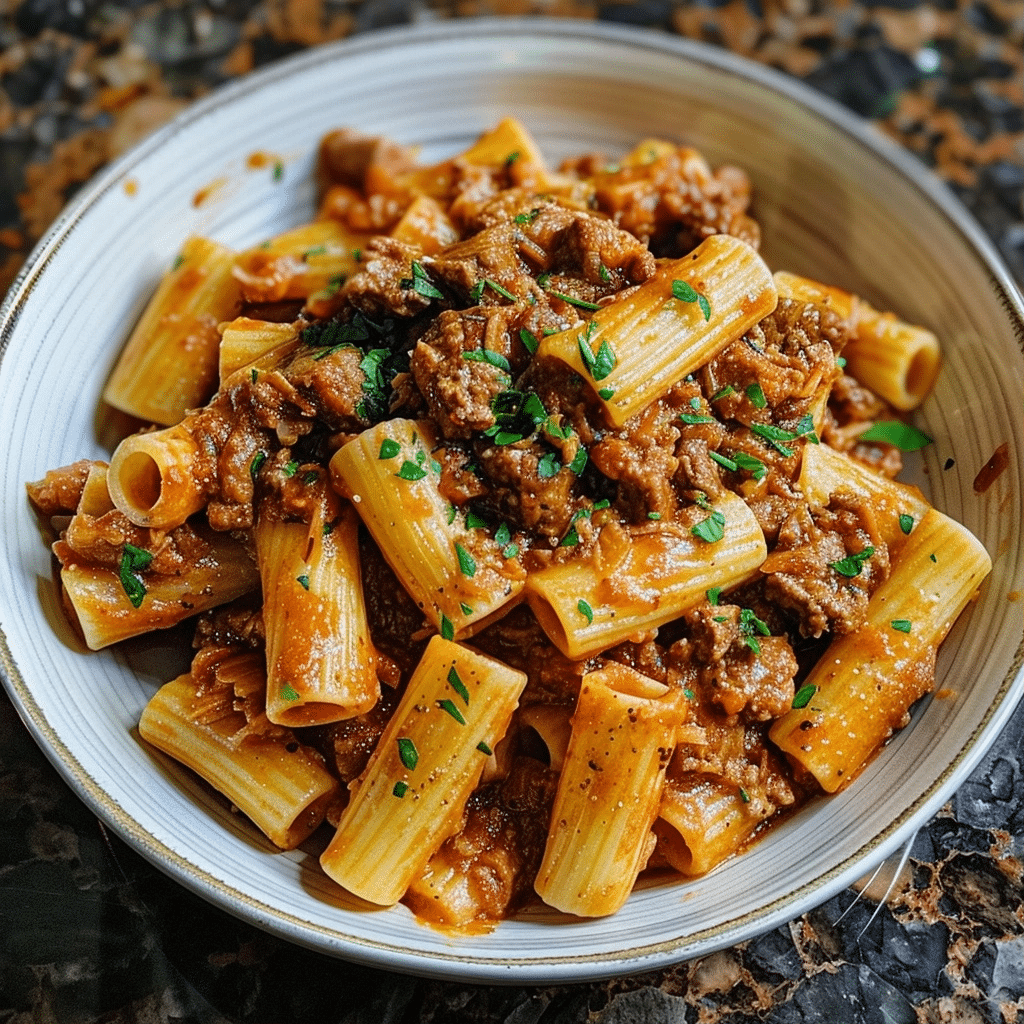
This Beef Pasta Recipe in Tomato Sauce – Beef Ragu Pasta is a hearty, straightforward skillet meal featuring lean ground beef and a rich tomato ragu.
| Prep Time | 10 minutes |
|---|---|
| Cook Time | 30-40 minutes |
| Total Time | 40-50 minutes |
| Servings | 4 |
| Difficulty | Easy |
| Cuisine | Italian-inspired |
Why This Recipe Works
This Beef Pasta Recipe in Tomato Sauce – Beef Ragu Pasta works because it balances savory beef with concentrated tomato and Italian herbs for depth.
I rely on lean ground beef and a short simmer to create a sauce that clings to rigatoni or penne without overwhelming the pasta texture.
Ingredients
This ingredients list gives straightforward amounts and simple swaps that preserve the hearty character of the ragu.
| Ingredient | Quantity | Notes |
|---|---|---|
| Rigatoni or penne pasta | 12 oz | Cook to al dente; use gluten-free pasta if needed |
| Olive oil | 2 tablespoons | Use extra-virgin for flavor; light olive oil for high-heat cooking |
| Onion, finely chopped | 1 medium | Yellow or sweet onion both work; red gives milder taste |
| Garlic, minced | 2 cloves | Use 1 teaspoon jarred if fresh unavailable |
| Ground beef (lean) | 1 lb | Substitute ground turkey for lighter option |
| Carrot, finely diced | 1 (optional) | Adds sweetness and texture; omit if desired |
| Celery stalk, finely diced | 1 (optional) | Classic soffritto element; substitute bell pepper |
| Crushed tomatoes or tomato puree | 1 (28 oz) can | Use San Marzano style for sweeter, less acidic sauce |
| Tomato paste | 2 tablespoons | Concentrates flavor; cook briefly to remove raw edge |
| Beef broth or water | 1/2 cup | Broth adds meaty depth; use low-sodium for control |
| Dried oregano | 1 teaspoon | Substitute fresh oregano leaves, chopped, if available |
| Dried basil | 1 teaspoon | Fresh basil added at the end tastes brighter |
| Salt and black pepper | To taste | Season gradually and taste before serving |
| Fresh parsley, chopped | For garnish | Flat-leaf parsley preferred for brightness |
| Freshly grated Parmesan cheese | For serving | Use vegetarian rennet Parmesan if avoiding animal rennet |
Step-by-Step Instructions
This section provides clear, sequential steps to cook the pasta and build the beef ragu, ensuring consistent results.
Cook the Pasta
- Fill a large pot with cold water, add a pinch of salt, and bring the water to a rolling boil.
- Add the rigatoni or penne pasta and cook according to package instructions until al dente.
- Drain the pasta in a colander and set it aside, reserving a small cup of pasta water for adjusting sauce consistency.
Prepare the Beef Ragu Sauce
- Heat olive oil in a large skillet or saucepan over medium heat until shimmering and warm.
- Add the chopped onion and sauté for about four to five minutes until the onion becomes softened and translucent.
- Add the minced garlic, diced carrot, and diced celery, and cook two to three minutes until the vegetables begin to soften.
- Turn the heat to medium-high and add the ground beef, breaking it apart with a wooden spoon as it cooks.
- Brown the beef until no pink remains, about six to eight minutes, and then drain off any excess fat from the skillet.
- Stir in the tomato paste and cook for one minute to deepen and concentrate the tomato flavor.
- Add the crushed tomatoes, beef broth, dried oregano, and dried basil, and stir the mixture until evenly combined.
- Reduce the heat to low and let the sauce simmer gently, uncovered, for twenty to thirty minutes to thicken and develop flavor.
- Stir the sauce occasionally to prevent sticking and to meld flavors, adjusting heat to maintain a gentle simmer.
Combine and Serve
- Season the ragu with salt and freshly ground black pepper to taste, tasting to make small adjustments for balance.
- Toss the cooked pasta directly into the skillet with the sauce and stir to coat every piece evenly.
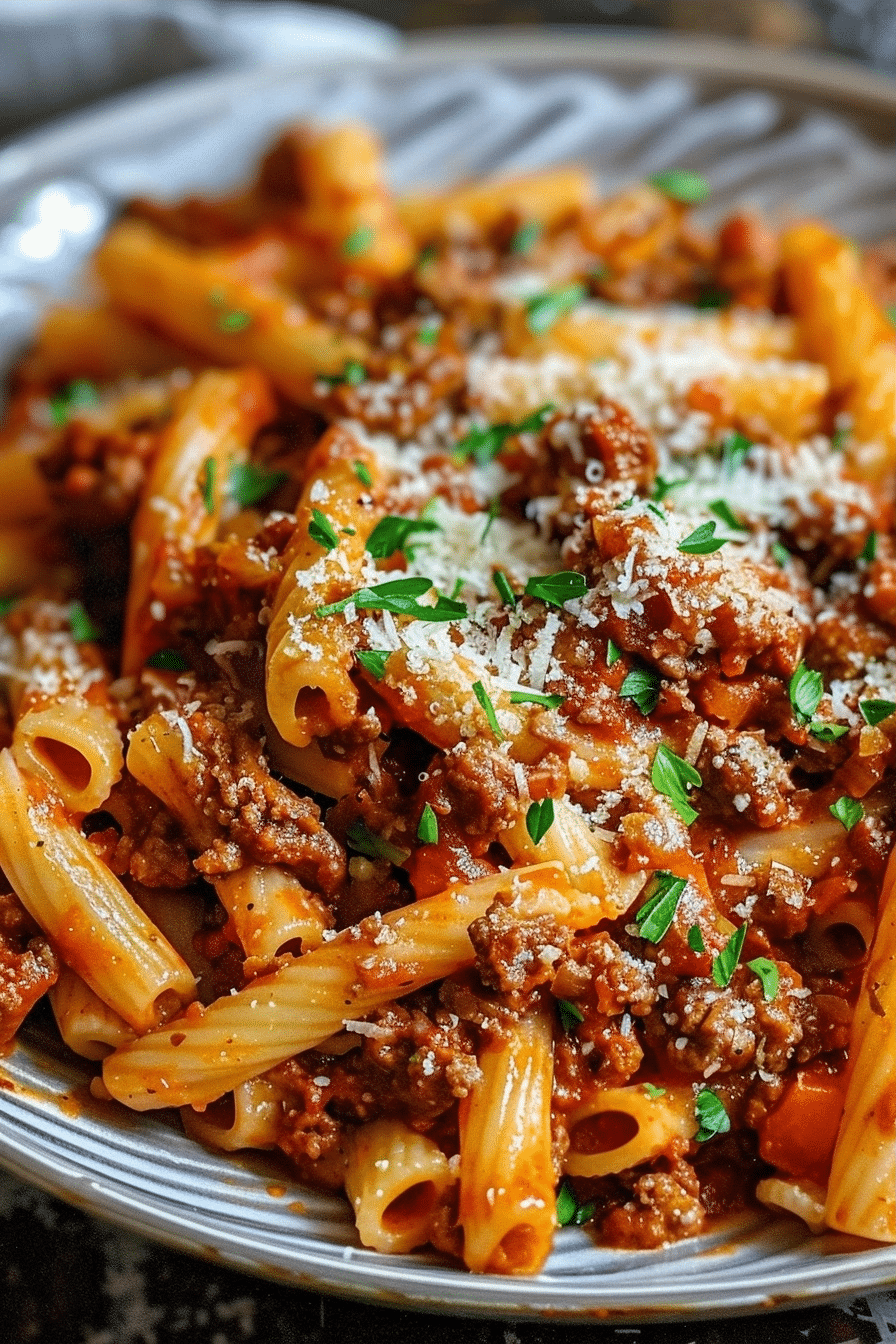
- Serve the beef ragu pasta hot, garnished with chopped fresh parsley and a generous sprinkling of grated Parmesan cheese.
Chef Tips for Perfect Results
This list provides precise, practical tips to refine texture, seasoning, and presentation for consistent outcomes.
- Brown the beef thoroughly until slightly caramelized to add richer umami and prevent a flat meat flavor.
- Cook pasta one minute under package time if you plan to finish it in the sauce for true al dente texture.
- Use reserved pasta water sparingly to loosen the sauce; starch helps the ragu cling to the pasta without watering it down.
- Simmer uncovered to reduce acidity and concentrate flavors; stir occasionally to avoid scorch and ensure even reduction.
- Add tomato paste early and cook briefly to remove its raw brightness and to deepen the sauce profile for balance.
Common Mistakes to Avoid
This section outlines frequent errors with clear explanations of why they matter and specific fixes to implement immediately.
- Skipping browning the beef: browning builds flavor through Maillard reaction; fix by giving meat space and time to brown undisturbed.
- Overcooking the pasta: mushy pasta ruins texture; fix by cooking to al dente and finishing briefly in the sauce if needed.
- Using too much liquid: thin sauce lacks cling and richness; fix by simmering longer uncovered to concentrate and thicken the ragu.
- Under-seasoning early: bland sauce fails to develop; fix by seasoning in layers and tasting before serving for final adjustments.
- Adding cheese to the sauce while boiling: cheese will break down and separate; fix by grating fresh Parmesan at serving for best mouthfeel.
Variations and Substitutions
This table offers easy swaps that maintain the dish character while adapting to diet preferences and pantry limits.
| Ingredient | Substitution | Impact on Flavor |
|---|---|---|
| Ground beef | Ground turkey or plant-based mince | Less fattiness and slightly milder flavor; plant-based adds more vegetal notes |
| Crushed tomatoes | Chopped tomatoes plus a splash of tomato paste | Chunkier texture and slightly fresher tomato brightness |
| Beef broth | Vegetable broth or water with a bouillon cube | Less meaty depth; bouillon adds umami when beef broth unavailable |
| Rigatoni or penne | Spaghetti, fettuccine, or gluten-free pasta | Different bite and sauce adhesion; rigatoni holds ragu best |
| Parmesan cheese | Pecorino Romano or nutritional yeast | Pecorino adds saltier, tangy sharpness; nutritional yeast for vegan nuttiness |
Serving Suggestions and Pairings
This pasta pairs well with bright, crunchy sides and robust salads, creating a balanced meal for various occasions.
- Serve with a crisp Caesar salad for a classic Italian-inspired dinner shared with family.
- Pair with garlic bread or toasted ciabatta for casual weeknight meals that need comforting carbs.
- Offer a simple arugula, lemon, and shaved Parmesan salad for lighter weeknight entertaining.
- Enjoy on a cozy Sunday supper or weeknight family dinner when you want reliable, hearty comfort food.
Storage and Reheating
This table covers proper refrigeration, freezing, and reheating steps to preserve texture and flavor safely.
| Method | Duration | Instructions |
|---|---|---|
| Refrigerate | 3 to 4 days | Cool to room temperature, store in airtight container, reheat gently on stovetop adding splash of water or broth |
| Freeze | Up to 3 months | Portion into freezer-safe containers, thaw overnight in fridge before reheating to avoid texture loss |
| Reheat (microwave) | Immediate | Heat in short intervals, stirring between bursts and adding a tablespoon of water to loosen sauce |
| Reheat (stovetop) | Immediate | Warm over low heat with a splash of broth, stirring until evenly heated and glossy |
Nutritional Information
This table provides approximate nutrition per serving for typical ingredient choices and serving sizes.
| Nutrient | Amount per Serving (Approximate values) |
|---|---|
| Calories | 560 kcal |
| Protein | 32 g |
| Fat | 18 g |
| Carbohydrates | 62 g |
| Fiber | 6 g |
| Sugar | 10 g |
| Sodium | 680 mg |
Frequently Asked Questions
This FAQ section answers five common, specific questions about substitutions, doneness, troubleshooting, make-ahead, and serving techniques.
Can I substitute ground beef with another meat for beef ragu?
Yes, you can substitute ground beef with ground turkey or a plant-based mince without altering the method used here.
Ground turkey yields a leaner ragu while plant-based mince provides vegetarian texture and umami when seasoned well.
How do I know when the pasta is perfectly al dente for this recipe?
Cook the pasta until it offers a firm bite with slight resistance at the center, which is al dente.
Test by biting a piece a minute before package time; finish cooking in the sauce for ideal texture and flavor adhesion.
What should I do if the ragu tastes too acidic after simmering?
Add a small pinch of sugar or a teaspoon of grated carrot to balance excess acidity quickly and effectively.
Simmer a few more minutes to integrate the adjustment and taste again before adding final seasoning and serving.
Can I make this beef ragu ahead of time and reheat it later?
Yes, you can prepare the ragu ahead and store it refrigerated for three to four days or freeze for up to three months.
Reheat gently on the stovetop with a splash of broth to restore sauce texture, then toss with freshly cooked pasta prior to serving.
What is the best way to serve beef ragu pasta for a dinner party?
Serve the ragu tossed with pasta on a warmed platter and finish with parsley and freshly grated Parmesan at the table.
Pair with garlic bread and a composed salad to create a satisfying, approachable menu for entertaining friends and family.
For related recipes and tips, see our internal guides for Pasta Sauce Basics, Weeknight Dinners, and Meat Selection Guide.
Refer to authoritative resources for food safety and ingredient sourcing at the USDA and for culinary technique guidance at BBC Good Food.
Conclusion
This Beef Pasta Recipe in Tomato Sauce – Beef Ragu Pasta delivers dependable, rich flavor with minimal fuss and approachable techniques for cooks at every level.
Follow the simple steps, use quality crushed tomatoes, and finish with fresh parsley and grated Parmesan for a memorable, signature flavor.
Beef Ragu Pasta
Ingredients
- 12 oz rigatoni or penne pasta
- 2 tablespoons olive oil
- 1 medium onion, finely chopped
- 2 cloves garlic, minced
- 1 lb lean ground beef
- 1 carrot, finely diced (optional)
- 1 celery stalk, finely diced (optional)
- 1 (28 oz) can crushed tomatoes or tomato puree
- 2 tablespoons tomato paste
- 1/2 cup beef broth or water
- 1 teaspoon dried oregano
- 1 teaspoon dried basil
- Salt and black pepper, to taste
- Fresh parsley, chopped (for garnish)
- Freshly grated Parmesan cheese (vegetarian rennet, optional)
Instructions
- Bring a large pot of salted water to a boil. Cook pasta to al dente, drain, and set aside.
- Heat olive oil in a skillet over medium heat. Sauté onion and garlic until softened, 3-4 minutes.
- Add ground beef, carrot, and celery (if using). Cook until beef is browned and crumbled.
- Stir in tomato paste, cook for 2 minutes to deepen flavor.
- Add crushed tomatoes, beef broth, oregano, basil, salt, and pepper. Simmer for 20-25 minutes, stirring occasionally.
- Taste and adjust seasoning. Toss cooked pasta into the skillet to combine with sauce.
- Garnish with fresh parsley and Parmesan (if desired). Serve immediately.
Notes
Bell peppers can substitute celery in the soffritto mix.
Store leftovers in an airtight container up to 3 days.
For richer flavor, simmer sauce overnight in the refrigerator before reheating.