
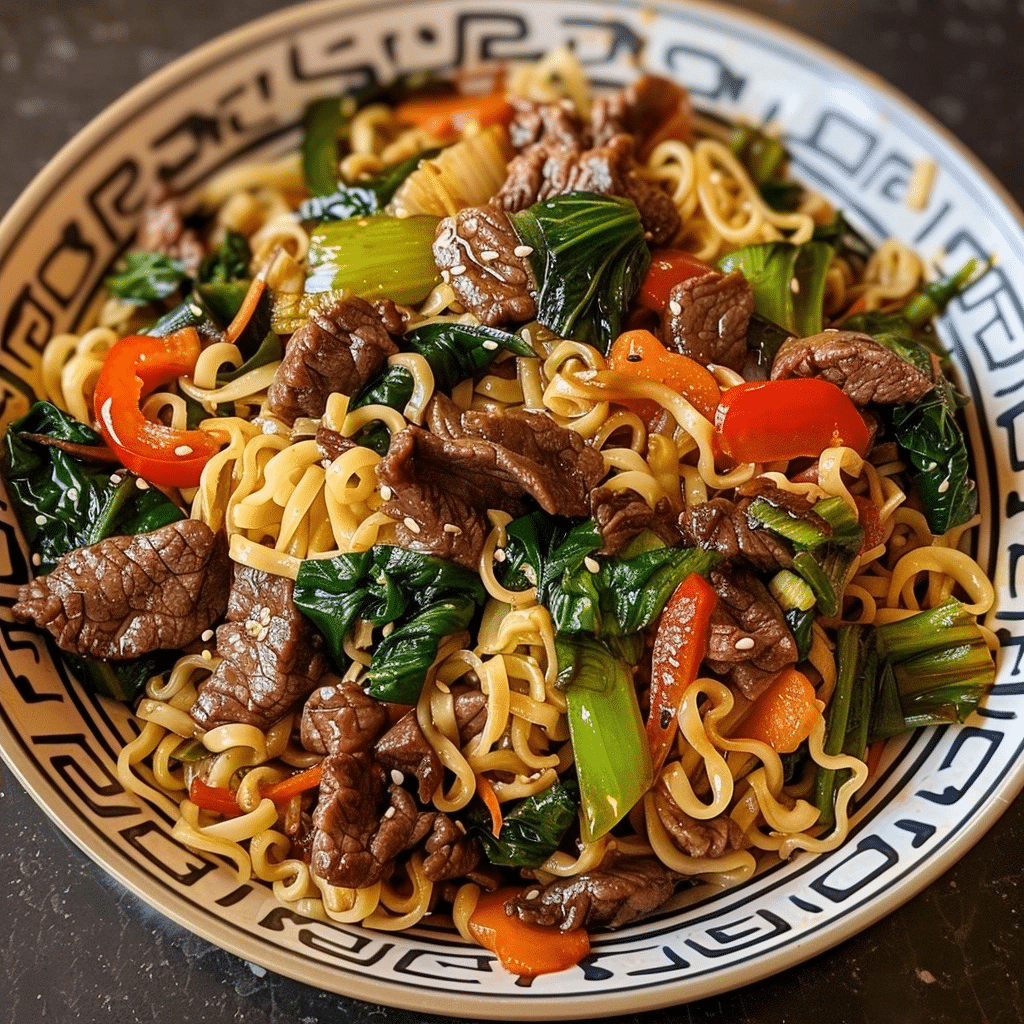
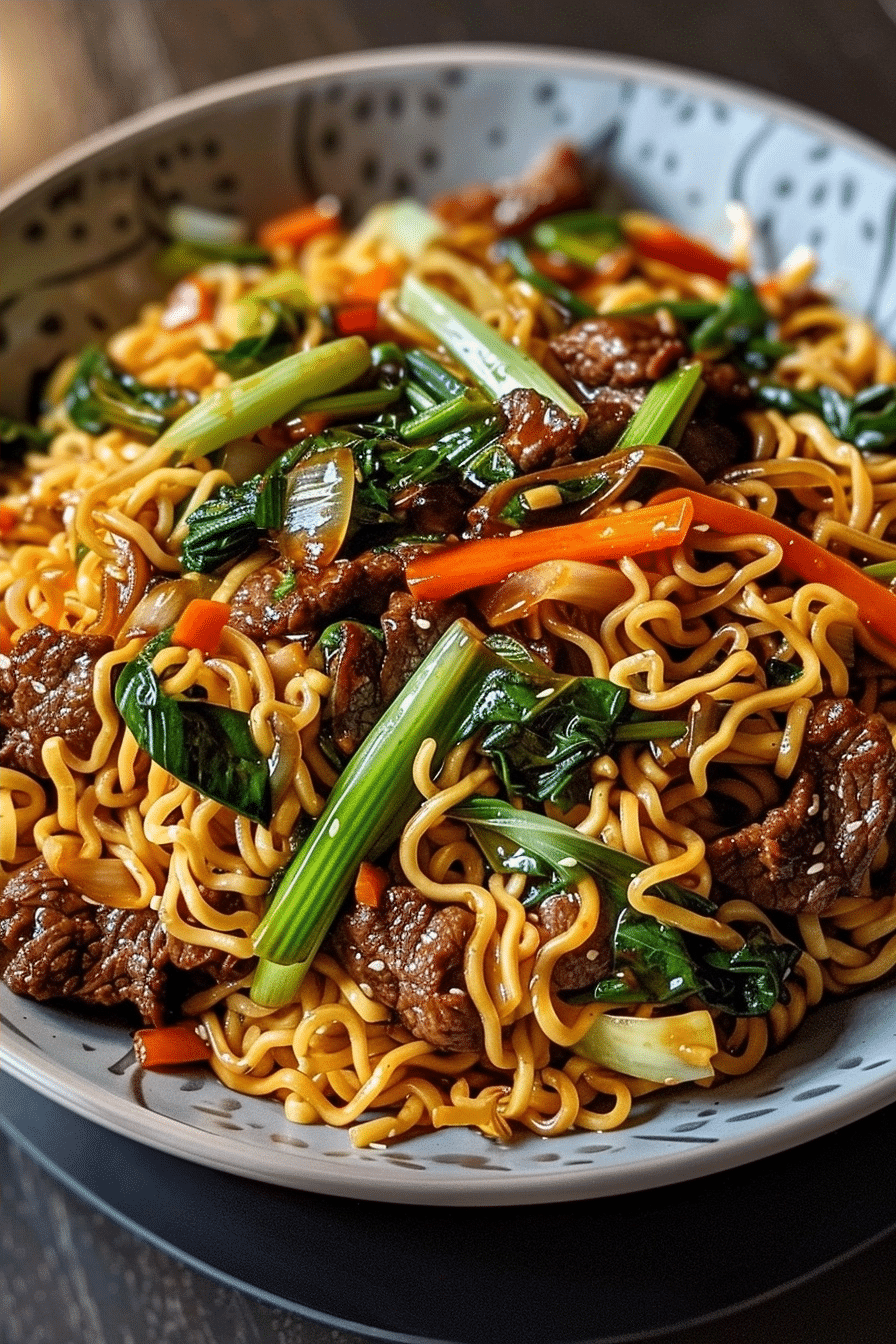
Beef Pan-Fried Noodles is a savory stir-fry featuring crispy fried noodles topped with tender marinated beef and crisp baby bok choy tossed in a rich sauce. This dish balances textures and bold umami, delivering a restaurant-quality meal made at home. The recipe uses low-sodium beef broth and cornstarch to ensure a glossy, thick sauce that clings to each ingredient.
| Prep Time | Cook Time | Total Time | Servings | Difficulty | Cuisine |
|---|---|---|---|---|---|
| 20 mins | 20 mins | 40 mins | 2-3 servings | Intermediate | Chinese |
Why This Recipe Works
This recipe works because the combination of a quick marinate, high-heat sear, and cornstarch-thickened sauce produces a glossy coating that clings to the beef and vegetables. I have tested the timing and heat levels to ensure the noodles crisp properly while the beef stays tender and juices remain flavorful.
The pan-fried noodle patty creates a satisfying contrast with the saucy stir-fry topping, and the baby bok choy adds freshness and crunch. From my experience, prepping ingredients upfront and stirring the sauce to dissolve cornstarch before adding it prevents lumps and yields consistent texture.
Ingredients
This ingredients list provides everything needed for balanced flavor, texture, and ease of execution.
| Ingredient | Quantity | Notes / Alternatives |
|---|---|---|
| Flank or skirt steak | 8 oz (225 g) | Slice thinly against the grain; sirloin works as an alternative |
| Low-sodium beef broth (marinade) | 2 tablespoons | Replaces Shaoxing wine; chicken broth okay for lighter flavor |
| Cornstarch (marinade) | 2 teaspoons | Helps tenderize and gives beef a glossy finish |
| Salt | 1/4 teaspoon | Adjust to taste |
| Low-sodium beef broth (sauce) | 1 cup | Creates savory base; vegetable broth suitable for lighter profile |
| Soy sauce | 2 tablespoons | Use low-sodium to control salt |
| Oyster sauce | 2 tablespoons | Provides umami; vegetarian oyster sauce available |
| Cornstarch (sauce) | 2 tablespoons | Dissolve fully to prevent lumps |
| Sugar | 1 teaspoon | Balances saltiness |
| Chinkiang vinegar | 1/4 teaspoon | Use rice vinegar with a pinch of molasses if unavailable |
| White pepper | 1/4 teaspoon | Use ground black pepper if necessary |
| Peanut oil | 4 tablespoons divided | Can use vegetable oil for nut-allergy-safe option |
| Baby bok choy | 4 heads quartered | Substitute with bok choy leaves or napa cabbage for texture variation |
| Garlic | 4 cloves minced | Fresh minced garlic gives the best aroma |
| Ginger | 1-inch piece minced | Use jarred ginger only in a pinch |
| Yellow onion | 1/2 sliced | Sweet onion or shallots provide milder flavor |
| Carrot | 1/2 sliced into strips | Use bell pepper for color variation |
| Fresh Hong Kong pan fry noodles | 8 oz (225 g) | Fresh thin noodles work best; dried thin noodles require rehydration |
Step-by-Step Instructions
Follow these clear steps to execute each phase precisely for optimal texture and flavor.
Marinate the Beef
- Combine the sliced beef, 2 tablespoons low-sodium beef broth, 2 teaspoons cornstarch, and 1/4 teaspoon salt in a medium bowl.
- Toss the beef to coat evenly and set aside while you prepare all other ingredients.
Make the Sauce
- Whisk together 1 cup beef broth, 2 tablespoons soy sauce, 2 tablespoons oyster sauce, 2 tablespoons cornstarch, 1 teaspoon sugar, 1/4 teaspoon Chinkiang vinegar, and 1/4 teaspoon white pepper in a bowl.
- Stir thoroughly until the cornstarch dissolves completely and the mixture looks smooth and homogeneous.
Cook the Noodles
- Prepare the fresh noodles according to package instructions, drain thoroughly, and let them sit to dry briefly.
- Heat 2 tablespoons peanut oil in a large heavy-bottomed pan over medium-high heat until shimmering.
- Arrange the noodles into a flat, round patty shape in the pan and press gently to compact them.
- Cook without flipping until the bottom side turns golden and crispy, approximately two to four minutes depending on heat and noodle moisture.
- Carefully flip the noodle patty and cook the other side until golden and crisp, adding a little extra oil if the pan looks too dry.
- Transfer the crispy noodle patty to a large serving plate and keep warm while you finish the stir-fry.
Cook the Beef
- Heat 1 tablespoon peanut oil in the same pan over medium-high heat until hot and shimmering.
- Spread the marinated beef in a single layer, letting it sear undisturbed for about thirty seconds to develop a golden brown crust.
- Flip the beef pieces and continue cooking until browned on the second side, then stir briefly and transfer the cooked beef to a plate.
Stir-Fry the Vegetables
- Add the remaining 1 tablespoon peanut oil to the pan and heat until hot.
- Toss in the sliced onion and carrot strips and stir-fry quickly to combine and soften slightly.
- Add the minced ginger and garlic and stir for about thirty seconds until fragrant and aromatic.
Add the Bok Choy
- Add the quartered baby bok choy to the pan and stir-fry for about one minute until it begins to soften but still retains a slight crunch.
Combine and Cook the Sauce
- Stir the sauce mixture once more to ensure the cornstarch is fully incorporated and pour it into the pan with the vegetables.
- Cook while stirring until the sauce comes to a boil and thickens to a glossy consistency that coats the vegetables.
Mix in the Beef
- Return the cooked beef to the pan and stir thoroughly to combine it with the vegetables and sauce, letting flavors meld for thirty seconds.
- Remove the pan from heat once the sauce reaches your desired thickness and everything is evenly coated.
Serve
- Pour the stir-fry mixture evenly over the crispy noodles on the serving plate and serve immediately as a hot main dish.
- Enjoy the contrast of textures and the savory, slightly tangy sauce with each bite.
Chef Tips for Perfect Results
Use these targeted tips to improve texture, prevent common issues, and enhance flavor consistently.
- Dry the noodles well before frying to maximize crispiness and avoid oil splatter during pan frying.
- Slice the beef thin against the grain to keep it tender; thicker slices will feel chewy when quickly seared.
- Stir the sauce until cornstarch dissolves fully to prevent gritty lumps once the sauce heats.
- Use a heavy-bottomed pan for even heat distribution to achieve a uniform, golden crust on the noodles.
- Maintain high heat for quick searing of beef to lock juices while preventing overcooking and drying.
Common Mistakes to Avoid
Avoid these pitfalls, understand why they happen, and apply the fixes recommended for consistent results.
- Overcrowding the pan: Overcrowding lowers pan temperature and causes steaming rather than searing; cook in batches to maintain high heat.
- Underdried noodles: Wet noodles prevent crisping and cause oil splatter; drain and air-dry briefly before frying.
- Undissolved cornstarch: Adding lumps of cornstarch creates a grainy sauce; whisk the sauce thoroughly before pouring into pan.
- Overcooking beef: Cooking beef too long makes it tough; sear quickly on high heat and remove once browned.
- Using low heat for noodles: Too low heat yields limp noodles instead of crisp ones; fry over medium-high heat for best texture.
Variations and Substitutions
Use these substitutions to adapt the recipe for dietary needs or pantry constraints while understanding flavor trade-offs.
| Ingredient | Substitution | Impact on Flavor |
|---|---|---|
| Flank steak | Chicken breast or tofu | Chicken gives milder flavor; tofu absorbs sauce and suits vegetarian diets |
| Oyster sauce | Vegetarian mushroom oyster sauce | Preserves umami with a slightly earthier profile |
| Peanut oil | Vegetable or canola oil | Neutral flavor; safer for peanut-allergic diners but slightly less aromatic |
| Chinkiang vinegar | Rice vinegar plus pinch of molasses | Provides similar sweet-tang balance though slightly lighter |
| Fresh Hong Kong noodles | Thin dried noodles rehydrated per package | Dried noodles require rehydration and may crisp differently but remain delicious |
Serving Suggestions and Pairings
Serve this dish hot as a main course, and pair it with light sides or complementary mains to round out a meal.
- Pair with hot jasmine rice for a comforting family dinner and to soak extra sauce.
- Serve alongside a light cucumber salad dressed with rice vinegar for a refreshing contrast.
- Offer steamed dumplings like vegetable or chicken potstickers at casual gatherings for variety.
- Present as the centerpiece at weeknight dinners, special occasions, or small dinner parties where bold flavor is welcome.
Storage and Reheating
Store leftovers properly and reheat to preserve texture while ensuring food safety.
| Method | Duration | Instructions |
|---|---|---|
| Refrigerate | 3 to 4 days | Store stir-fry and noodles separately in airtight containers to keep noodles from softening excessively. |
| Freeze | Up to 2 months | Freeze components separately; thaw overnight in refrigerator before reheating for best texture. |
| Reheat (stovetop) | 3 to 5 minutes | Toss stir-fry in a hot skillet with a splash of broth and briefly pan-fry noodles to restore crispness. |
| Reheat (microwave) | 1 to 2 minutes | Heat the stir-fry only; refresh noodles in a hot skillet after microwaving to regain texture. |
Nutritional Information
Approximate nutritional values are provided per serving and should be used as rough estimates only.
| Nutrient | Amount per Serving |
|---|---|
| Calories | Approximate values: 650 kcal |
| Protein | Approximate values: 36 g |
| Fat | Approximate values: 28 g |
| Carbohydrates | Approximate values: 64 g |
| Fiber | Approximate values: 4 g |
| Sugar | Approximate values: 6 g |
| Sodium | Approximate values: 900 mg |
Frequently Asked Questions
Can I substitute the beef with chicken or tofu in pan-fried noodles?
Yes, you can substitute beef with chicken or tofu for an alternative protein. Chicken breast yields a lighter flavor and requires slightly longer cooking to reach safe temperature, while firm tofu soaks up sauce nicely and suits vegetarian diets.
How do I know when the beef is properly cooked in the stir-fry?
Cook beef until it turns uniformly browned on the outside and juices run clear for thin slices. For safety and tenderness, sear quickly on high heat and remove once the outside is nicely browned but before overcooking dries the meat.
Why is my sauce lumpy or not thickening properly when making the noodles?
Lumps form when cornstarch is not dissolved thoroughly or when sauce hits a cold pan unexpectedly. Fix this by whisking the sauce until smooth before adding it to the hot pan and stirring constantly as it comes to a boil.
Can I make Beef Pan-Fried Noodles ahead of time for a party?
Yes, you can prepare components in advance by cooking the stir-fry and frying the noodles separately. Reheat the stir-fry gently and crisp the noodles in a hot skillet just before serving to preserve texture and freshness.
What should I serve with Beef Pan-Fried Noodles for a complete meal?
Serve the dish with light sides like a cucumber salad or steamed vegetables to balance richness. Add steamed rice or dumplings for variety when feeding a larger group or creating a more substantial spread.
For more stir-fry techniques and noodle recipes, see our stir-fry guide, noodle recipes, and vegetarian variations. For authoritative guidance on food safety and cooking temperatures, consult the USDA recommendations USDA and comprehensive technique articles from Serious Eats Serious Eats.
Conclusion
Beef Pan-Fried Noodles delivers crisp textures, tender marinated beef, and a glossy umami sauce that elevates weeknight dinners. Prepare components ahead and finish quickly for stress-free entertaining or a flavorful family meal. Enjoy the signature savory sauce and crisp noodle contrast with every satisfying bite.
Beef Pan-Fried Noodles with Crispy Bok Choy and Savory Sauce
Ingredients
- 8 oz (225 g) flank or skirt steak
- 2 tablespoons low-sodium beef broth (marinade)
- 2 teaspoons cornstarch (marinade)
- 1/4 teaspoon salt
- 1 cup low-sodium beef broth (sauce)
- 2 tablespoons soy sauce
- 2 tablespoons oyster sauce
- 2 tablespoons cornstarch (sauce)
- 1 teaspoon sugar
- 1/4 teaspoon Chinkiang vinegar or substitute with rice vinegar + 1/8 teaspoon molasses
- 2 cloves garlic, minced
- 1 tablespoon ginger, grated
- 2 baby bok choy heads, halved
- 1 teaspoon sesame oil
- 1/4 cup chopped green onions
Instructions
- Preheat oven to 300°F (150°C)
- Pat beef dry and slice into 1/4-inch strips against the grain
- Whisk marinade ingredients (beef broth, cornstarch, salt), add to beef, and let sit while prepping other components
- Heat 1 tablespoon oil in a large skillet over medium-high heat
- Add noodles in an even layer and pan-fry until golden and crispy (8-10 mins), flip halfway
- Transfer noodles to oven to maintain crispiness
- In same skillet, add remaining 1 tablespoon oil and sear beef in batches until browned (2-3 mins/ batch), set aside
- Add garlic, ginger, and bok choy halves, sauté until just tender (3-4 mins)
- Whisk sauce ingredients (broth, soy sauce, oyster sauce, cornstarch, sugar, vinegar) until smooth
- Return beef to pan, pour sauce over, and stir-fry until thickened and glossies
- Remove noodles from oven, spoon beef mixture evenly over noodles, top with green onions
Notes
Adjust soy sauce amount if using regular sodium
Ensure cornstarch dissolves completely into the sauce broth
Can substitute bok choy with shiitake mushrooms or snap peas
Store leftovers in an airtight container in the fridge for 3 days