
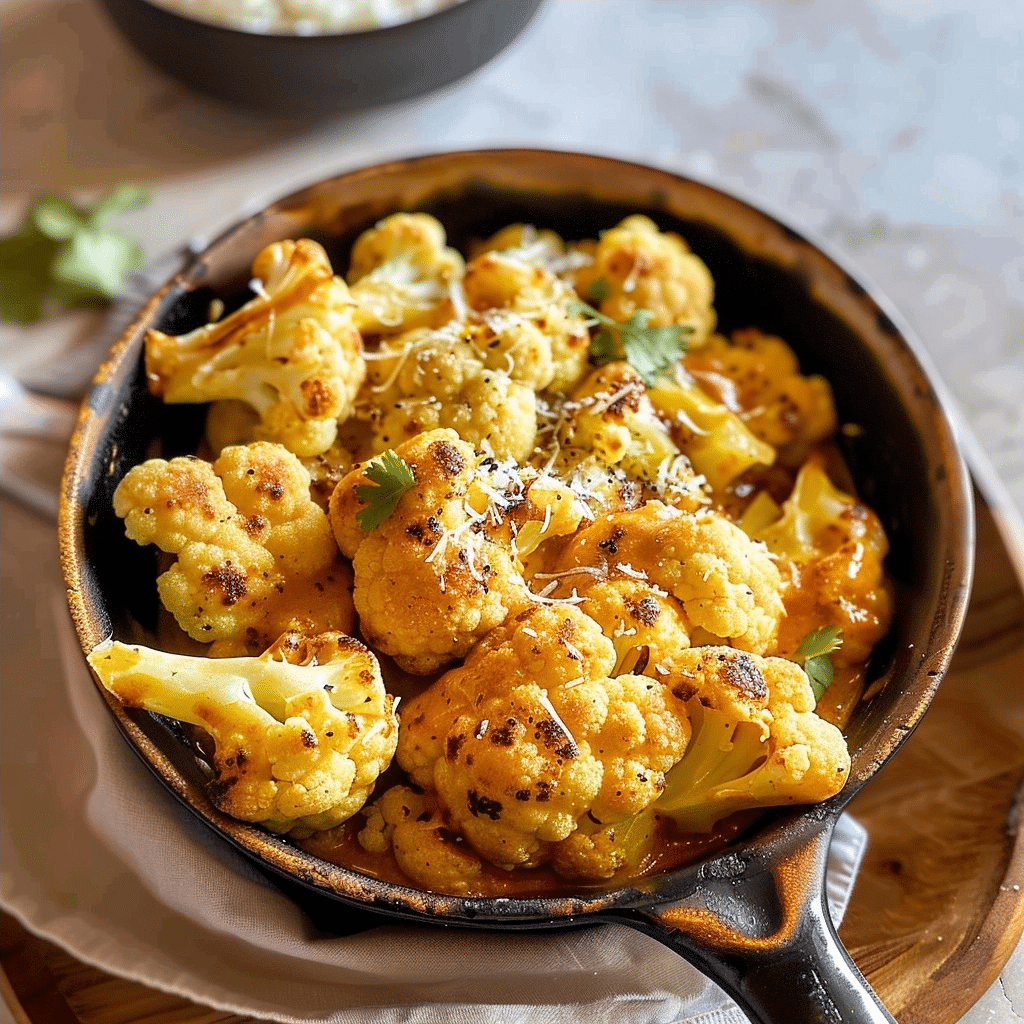
Butter Cauliflower is a rich, spiced vegetable curry featuring charred cauliflower in a creamy tomato and butter sauce.
This comforting, meatless main pairs aromatic garam masala, turmeric, and ginger for balanced warmth and bright lemon finish.
| Prep Time | Cook Time | Total Time | Servings | Difficulty | Cuisine |
|---|---|---|---|---|---|
| 15 minutes | 45 minutes | 1 hour | 4 | Easy | Indian-inspired |
Why This Butter Cauliflower Recipe Works
This recipe works because charred cauliflower adds smoky depth while the creamy tomato sauce balances spice and acidity.
I cook this version regularly because the two-stage browning concentrates flavor without overcooking the florets or losing texture.
I also appreciate the simple seasoning technique that uses a light corn starch coating to build a naturally thickened sauce finish.
Ingredients
This section lists every ingredient you need to make classic butter cauliflower with precise quantities and simple alternatives.
| Ingredient | Quantity | Notes with alternatives |
|---|---|---|
| Fresh lemon juice | 2 Tbsp. | Brightens the sauce; sub: 2 tsp apple cider vinegar for milder acidity |
| Corn starch | 2 tsp. | Helps coat cauliflower; sub: rice flour for gluten-free crisping |
| Ground cumin | 1/2 tsp. | Warm earthiness; sub: ground coriander in equal measure |
| Ground turmeric | 1 tsp. divided | Colour and mild peppery notes; sub: smoked paprika for depth |
| Garam masala | 3 tsp. divided | Signature warming spice blend; sub: curry powder (flavor will be different) |
| Salt | 1 1/2 tsp. divided | Enhances flavors; adjust to taste or use kosher salt |
| Olive oil | 2 Tbsp. divided | For browning; sub: neutral oil like avocado for higher smoke point |
| Cauliflower | 1 medium head, florets | Cut into even pieces for uniform cooking; broccoli is an acceptable swap |
| Unsalted butter | 3 Tbsp. | Finishes sauce with richness; sub: vegan butter for dairy-free option |
| Yellow onion | 1 medium, finely chopped | Provides sweetness; shallots work for a more delicate profile |
| Garlic cloves | 3, minced | Fresh garlic is best; sub: 1 tsp garlic powder if needed |
| Freshly grated ginger | 2 tsp. (sub ground ginger) | Gives sharp freshness; sub: 1 tsp ground ginger with slightly reduced intensity |
| Tomato paste | 2 Tbsp. | Concentrated tomato depth; sub: double tomato sauce for milder concentration |
| Paprika | 1 tsp. | Smoky sweetness; use sweet or smoked as preferred |
| Ground cinnamon | 1/4 tsp. | Adds warmth; omit for a less layered profile |
| Cayenne pepper | Pinch, optional | Adds heat; replace with red pepper flakes for texture |
| Tomato sauce | 1 8-oz. can | Saucy base; crushed tomatoes give chunkier texture |
| Vegetable broth | 2 cups | Creates simmering liquid; sub: low-sodium broth if watching salt |
| Heavy cream | 1/2 cup (sub full-fat canned coconut milk) | Adds creaminess; coconut milk keeps it dairy-free and slightly sweet |
| Basmati rice | For serving | Fragrant pairing; jasmine rice works for sticky texture |
| Fresh cilantro | For garnish | Bright herb finish; parsley is milder alternative |
| Whole-milk Greek yogurt | For garnish | Cooling dollop; use plain vegan yogurt for dairy-free serving |
Step-by-Step Instructions
This section walks you through each cooking phase to make the butter cauliflower with clear, timed actions.
Phase 1: Seasoning and Prep
- Combine lemon juice, corn starch, cumin, and 1/2 tsp each of turmeric, garam masala, and salt in a large bowl.
- Set aside the bowl for use after the first browning so the seasoning rests and bonds to the florets.
- Cut the cauliflower into uniform florets to ensure even browning and consistent texture across the dish.
Phase 2: Browning the Cauliflower
- Heat 1 Tbsp of the oil in a large skillet over medium-high heat until shimmering and slightly smoking.
- Cook cauliflower tossing occasionally until browned in places and beginning to soften, seven to eight minutes.
- Reduce heat to medium, and transfer cauliflower to the bowl with corn starch mixture and toss to coat.
- Return seasoned cauliflower to skillet and cook another seven to eight minutes until charred in spots and crisp-tender.
- Transfer cauliflower to a bowl and reserve for the sauce phase to prevent overcooking.
Phase 3: Building the Sauce
- Add remaining 1 Tbsp oil and butter to the same skillet and heat until butter melts and foams slightly.
- Add onions and cook until translucent, about eight minutes, stirring occasionally to prevent sticking.
- Stir in garlic, ginger, and tomato paste and cook two minutes until fragrant and the paste darkens slightly.
- Add remaining 1/2 tsp turmeric, 2 1/2 tsp garam masala, and 1 tsp salt along with paprika, cinnamon, and cayenne and cook one minute.
- Add tomato sauce and broth and bring the mixture to a boil over medium-high heat, stirring to combine.
Phase 4: Simmer, Finish and Serve
- Reduce the heat to a simmer, stir in cream, and gently return the cauliflower to the skillet for even coating.
- Simmer the mixture uncovered until the sauce thickens, about fifteen minutes, stirring occasionally to prevent sticking.
- Garnish with fresh cilantro and serve the butter cauliflower over basmati rice with a dollop of Greek yogurt.
Chef Tips for Perfect Results
Follow these precise tips to achieve charred texture, balanced spice, and a silky finish when cooking butter cauliflower.
- Brown in batches if necessary so florets sear rather than steam, ensuring crisp edges and concentrated flavor.
- Use full-fat cream or canned coconut milk for the best mouthfeel, avoiding low-fat options that thin the sauce.
- Add spices in two stages to build aroma and avoid bitter overcooked notes from ground spices cooked too long.
- Toast garam masala briefly in the pan before adding liquids to awaken the oils and intensify flavor.
- Rest the finished curry five minutes off heat; flavors meld and the sauce thickens slightly as it cools.
Common Mistakes to Avoid
These common mistakes can undermine the final dish; follow the corrections to keep your butter cauliflower vibrant and textured.
-
Mistake: Overcrowding the pan while browning cauliflower leads to steaming and soggy florets. WHY: Moisture trapped prevents proper searing and caramelization. HOW: Brown in batches and use a hot skillet so each floret develops char and crunch.
-
Mistake: Adding cream too early prevents proper simmer reduction which results in a thin sauce. WHY: High liquid content dilutes spice concentration and texture. HOW: Add cream after boiling down the tomato and broth mixture for a silky finish.
-
Mistake: Using low-fat dairy yields a thin, less satisfying sauce. WHY: Fat carries flavor and creates a luxurious mouthfeel. HOW: Use heavy cream or full-fat coconut milk for richness and stability when simmered.
-
Mistake: Skimping on salt flattens the complex spice layers. WHY: Salt enhances depth and balances acidity of tomato ingredients. HOW: Season in stages and taste before serving to adjust salt gradually.
-
Mistake: Omitting the lemon juice reduces brightness and leaves the dish heavy. WHY: Acid cuts through richness, sharpening flavors and lifting the palate. HOW: Add lemon juice in the initial coating and finish with a splash if needed.
Variations and Substitutions
These substitutions let you adapt the recipe for dietary needs and flavor preferences while maintaining the core profile of the dish.
| Ingredient | Substitution | Impact on Flavor |
|---|---|---|
| Heavy cream | Full-fat canned coconut milk | Introduces subtle coconut sweetness and keeps the dish dairy-free while preserving creaminess. |
| Butter | Vegan butter or additional olive oil | Reduces dairy richness slightly and yields a lighter mouthfeel while keeping the sauce cohesive. |
| Cauliflower | Broccoli or mixed vegetables | Changes texture and bite; broccoli gives earthier flavor and firmer florets after browning. |
| Garam masala | Curry powder | Alters spice profile with different balances of coriander and turmeric, producing a funkier curry note. |
Serving Suggestions and Pairings
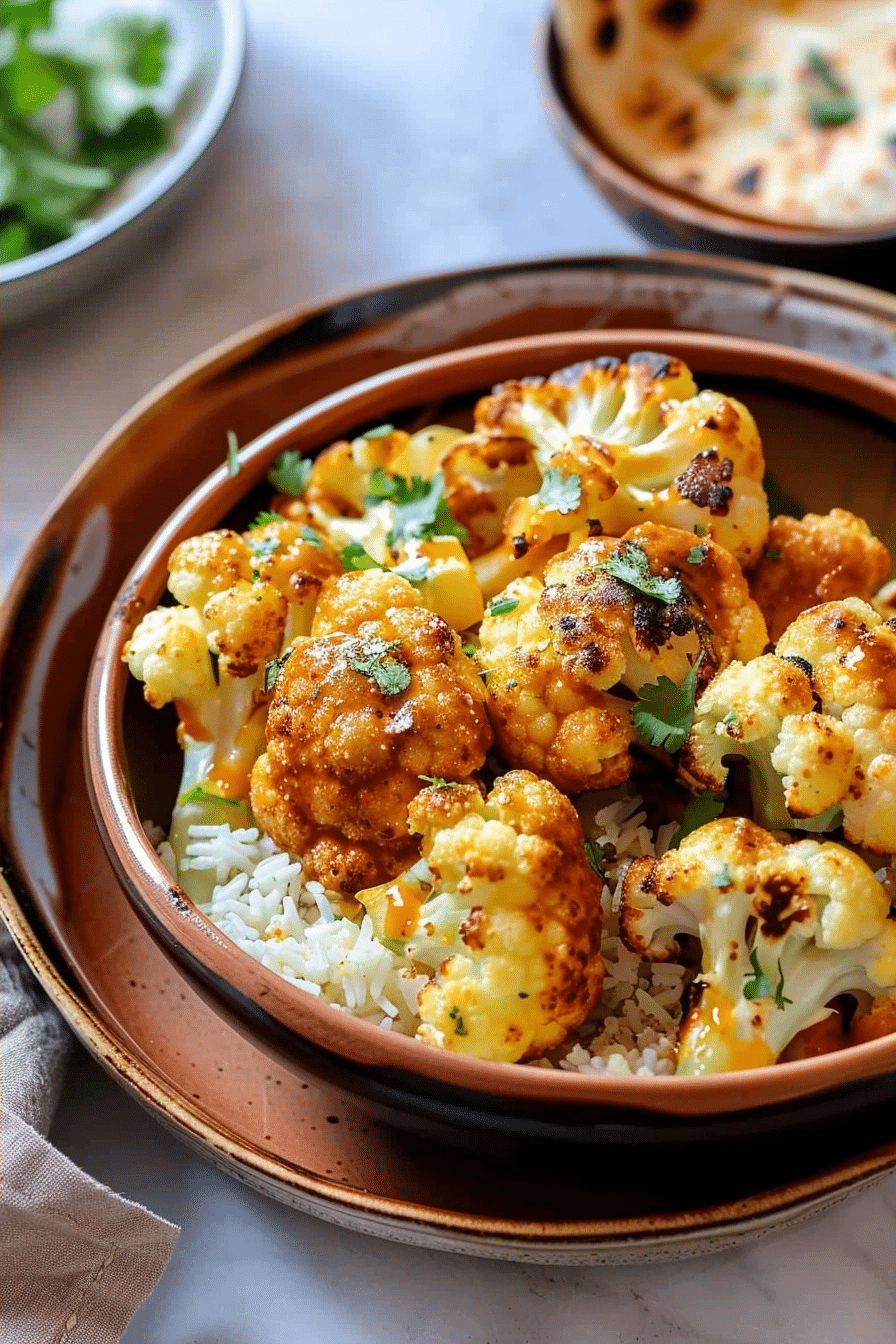
Serve this butter cauliflower hot over fragrant basmati rice and pair with cooling sides and breads for balanced meals.
- Serve the curry over steamed basmati rice for weeknight dinners or festive gatherings with simple plating.
- Pair with warm garlic naan or whole-wheat rotis to soak up the creamy tomato sauce at casual family meals.
- Add a side of cucumber raita or minted yogurt for cooling contrast at summer potlucks and barbecues.
- Offer spiced lentils or chana masala alongside for protein-rich vegetarian feasts during holiday dinners.
Storage and Reheating
You can refrigerate or freeze butter cauliflower and reheat gently to preserve texture and creaminess for later meals.
| Method | Duration | Instructions |
|---|---|---|
| Refrigerator | 3 to 4 days | Store in airtight container; reheat over low heat with a splash of water or broth to loosen sauce. |
| Freezer | Up to 3 months | Cool fully, freeze in portioned containers; thaw overnight in refrigerator before gentle reheating on low. |
| Reheating tips | N/A | Stir in a tablespoon of cream or coconut milk while reheating to refresh sauce texture and brightness. |
Nutritional Information
Approximate values below estimate calories and macronutrients per serving for standard portion sizes of the butter cauliflower.
| Nutrient | Amount per Serving |
|---|---|
| Calories | Approx. 420 kcal |
| Protein | Approx. 7 g |
| Fat | Approx. 28 g |
| Carbohydrates | Approx. 32 g |
| Fiber | Approx. 7 g |
| Sugar | Approx. 8 g |
| Sodium | Approx. 650 mg |
Frequently Asked Questions
These targeted answers address common concerns about substitutions, doneness, troubleshooting, make-ahead plans, and serving ideas.
Can I substitute heavy cream in butter cauliflower?
Yes, full-fat canned coconut milk is the recommended substitute for heavy cream in this recipe.
Coconut milk provides similar richness and maintains a silky sauce while keeping the dish dairy-free and flavorful.
Use the same volume and taste before serving to decide whether to add a small splash of lemon for brightness.
How do I know when the cauliflower is perfectly cooked?
Perfect cauliflower is browned on the edges and crisp-tender in the center after two searing phases.
Test a floret by piercing with a fork; it should give easily but still hold shape without collapsing into mush.
If florets need more texture, return them briefly to high heat to redevelop char before finishing in the sauce.
Why is my sauce too thin, and how can I fix it?
If the sauce remains thin, continue simmering uncovered to reduce liquid and concentrate flavors until it thickens.
You can also whisk together one teaspoon corn starch with two teaspoons cold water and stir it into the simmering sauce to speed thickening.
Be careful to simmer slowly after adding starch to avoid grainy texture and ensure a smooth, glossy finish.
Can I make butter cauliflower ahead of time?
Yes, make ahead by cooking fully, cooling, and refrigerating for up to four days in an airtight container.
Reheat gently over low heat with a splash of broth or cream to revive sauce texture and avoid drying out the cauliflower.
For longer storage freeze in portioned containers and thaw overnight in the refrigerator before reheating on low heat.
What should I serve with butter cauliflower for a complete meal?
Serve the butter cauliflower over basmati rice with a side of naan and a simple cucumber raita for a complete meal.
The rice soaks up the sauce while raita provides cooling contrast and naan offers a hands-on option to scoop the curry.
Add roasted or steamed greens to balance the meal with extra fiber and color for family dinners or entertaining.
For more related recipes, see Vegetarian Mains, Easy Curries, and Rice & Grains.
Trusted resources on spice blends and safe food handling include the USDA guidance on food safety at USDA Food Safety and BBC Good Food’s guide to Indian spices at BBC Good Food Spices.
Conclusion
Butter Cauliflower delivers smoky char, warm spices, and a silky tomato-cream sauce that satisfies vegetarians and meat-eaters alike.
Follow the browning and simmer steps precisely to preserve texture and build deep, balanced flavor in every spoonful.
Serve over basmati rice with cilantro and yogurt for a comforting, shareable meal that showcases the signature buttery flavor.

Butter Cauliflower Curry with Creamy Tomato Sauce
Ingredients
- 2 Tbsp fresh lemon juice
- 2 tsp corn starch
- 1/2 tsp ground cumin
- 1 tsp ground turmeric (divided)
- 3 tsp garam masala (divided)
- 1 1/2 tsp salt (divided)
- 2 Tbsp olive oil (divided)
- 1 medium head cauliflower (florets)
- 3 Tbsp unsalted butter (or vegan butter)
- 1 medium yellow onion (finely chopped)
- 3 garlic cloves (minced)
- 1 medium tomato (diced)
- 1/2 tsp smoked paprika (optional)
- 1/2 tsp chili powder (optional)
Instructions
- Preheat oven to 450°F (230°C). Toss cauliflower florets with 1 tsp turmeric, 1 tsp garam masala, and 1/2 tsp salt.
- Heat 1 Tbsp olive oil in a large skillet over medium-high heat. Sear cauliflower in batches until golden, 3-4 minutes per side. Transfer to a baking sheet and reserve.
- Reduce heat to medium. Add remaining olive oil, sauté onion with 1/4 tsp salt until caramelized. Add garlic, cook 30 seconds.
- Stir in diced tomato, remaining turmeric, and cumin. Simmer until thickened, 5-7 minutes.
- Deglaze with lemon juice, then create a corn starch slurry (mix 2 tsp corn starch with 2 Tbsp water). Whisk into sauce.
- Return cauliflower to skillet. Add butter and 1 Tbsp water to create a creamy finish. Simmer 5 minutes.
- Season with remaining garam masala and salt to taste.
Notes
Shallots or cherry tomatoes can replace yellow onion/regular tomato
Substitute 1 tsp apple cider vinegar for lemon juice if needed
For extra richness, stir in ghee substitute (optional)