
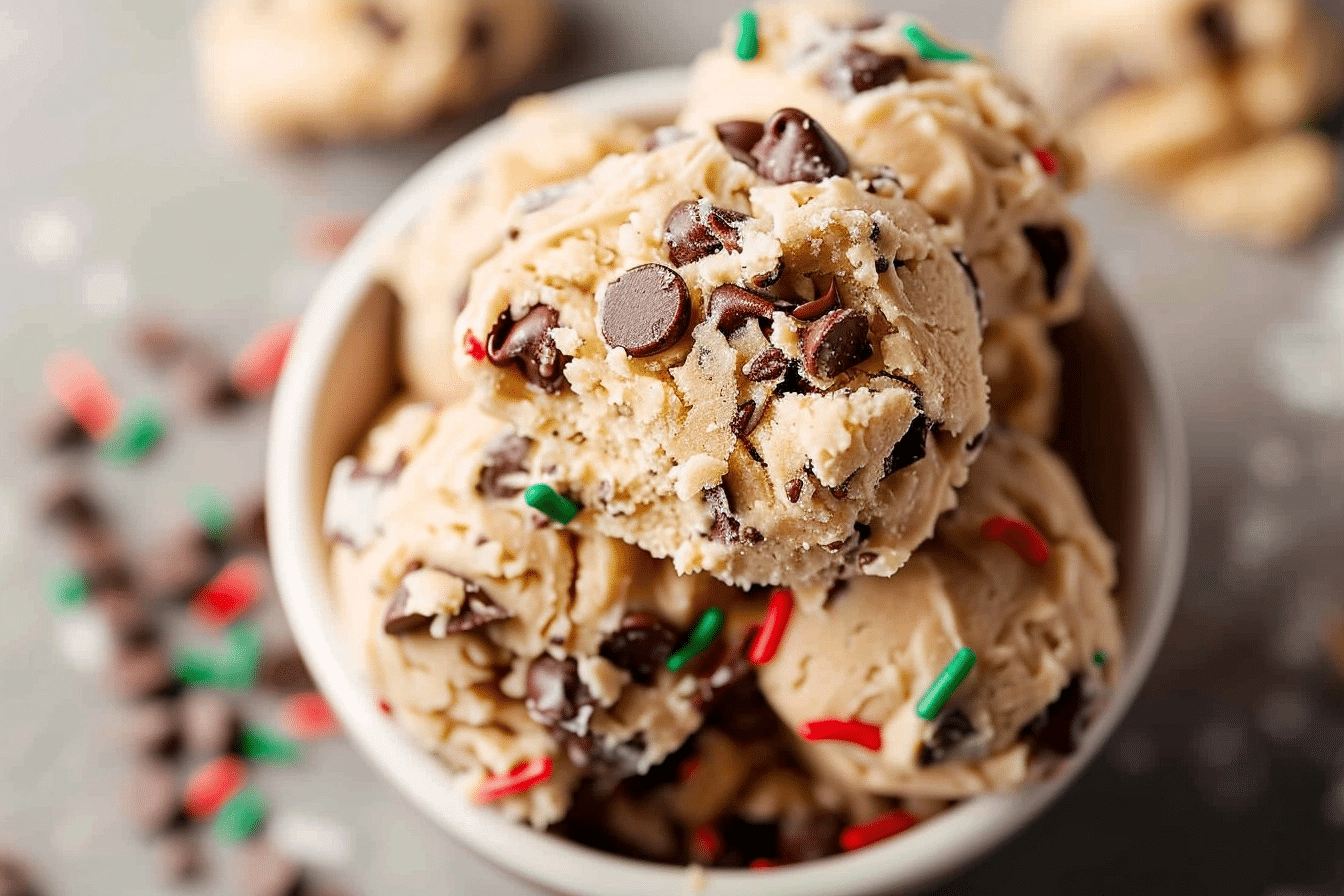
Edible Chocolate Chip Cookie Dough is a safe, no-bake treat made from heat-treated flour, buttery sugars, and melty chocolate chips that you can eat by the spoonful. The dough produces the classic cookie flavor and soft, creamy texture without baking, while remaining reliably safe when the flour is properly heat treated. Follow the simple steps for a consistently luscious snack.
| Prep Time | Cook Time | Total Time | Servings | Difficulty | Cuisine |
|---|---|---|---|---|---|
| 10 minutes | 6 minutes (flour heat-treat) | 16 minutes (including cooling) | 8 servings | Easy | American |
Image ALT text suggestion: Jar of edible chocolate chip cookie dough in a glass bowl with a spoon.
Why This Recipe Works
This recipe works because it balances safety, texture, and classic cookie taste in a no-bake format. I rely on heat-treated flour to remove risk while preserving the raw-dough flavor that people love, and the combination of granulated and brown sugar with softened butter creates that familiar caramelized sweetness and creamy mouthfeel. The minimal ingredient list and straightforward technique make this recipe reliable for busy kitchens and last-minute cravings.
My hands-on experience shows that creaming the sugars and butter thoroughly yields the smoothest, most scoopable dough, and adding milk gradually lets you tune the texture from thick to spreadable. The final stir-in of chocolate chips gives bursts of chocolate without altering the dough structure, making every bite satisfying.
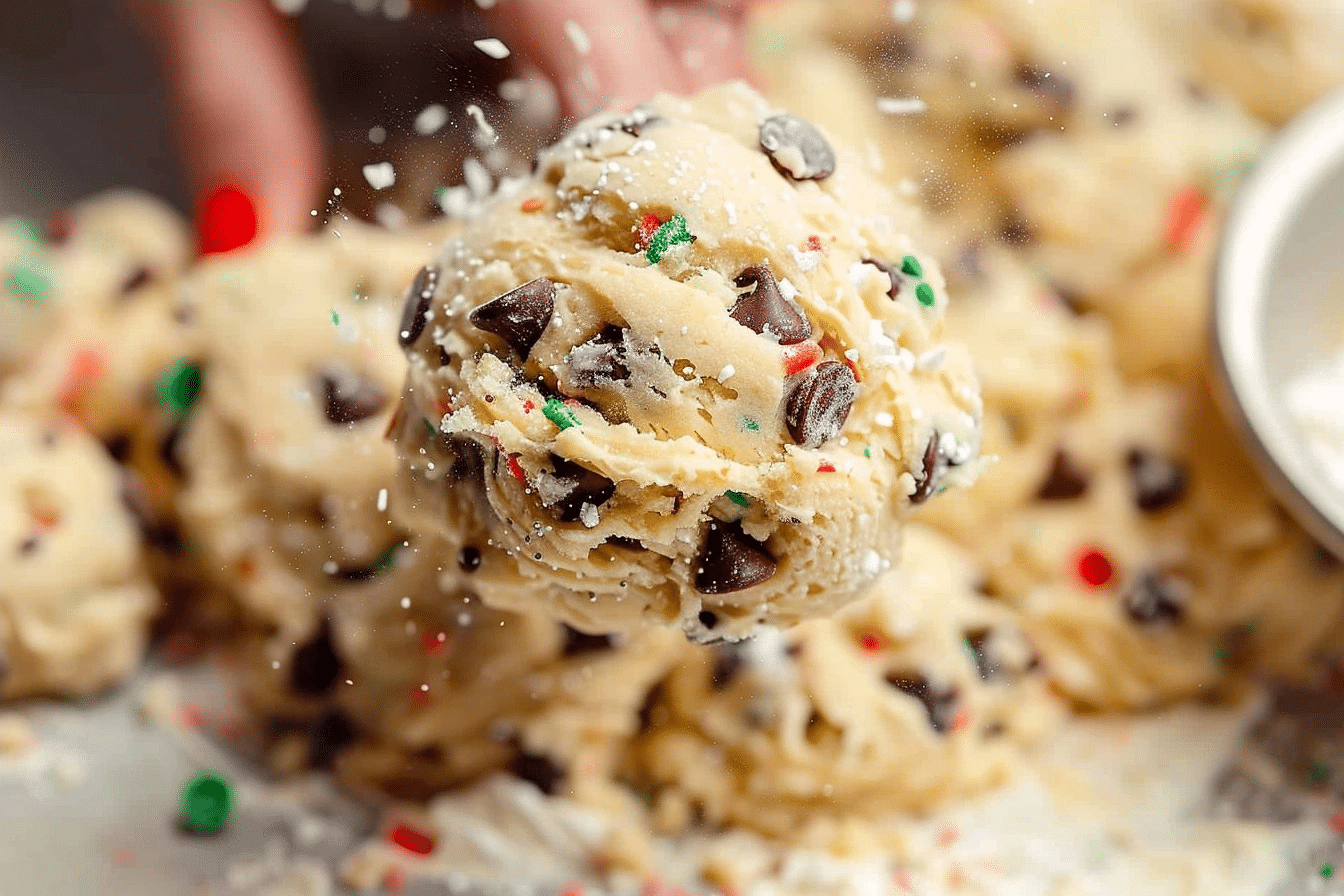
Image ALT text suggestion: Close-up of spoon scooping the finished cookie dough showing chocolate chips.
Ingredients
This recipe lists simple pantry items and practical swaps so you can assemble edible cookie dough quickly. Use the heat-treated flour and specified measurements for safe, consistent results.
| Ingredient | Quantity | Notes/Alternatives |
|---|---|---|
| All-purpose flour (heat-treated) | 1½ cups (188 g) | Heat treat by baking at 350°F for ~6 minutes or microwave 1-2 minutes; must reach 160°F. See steps. |
| Granulated sugar | ⅓ cup (66.67 g) | Use caster sugar for slightly smoother texture. |
| Light or dark brown sugar (packed) | ⅓ cup (66.67 g) | Dark brown adds more molasses depth; coconut sugar works for lower glycemic index. |
| Unsalted butter, softened | ½ cup (113.5 g) | Room temperature for easier creaming; swap with vegan butter for dairy-free. |
| Salt | ½ teaspoon | Adjust to taste; balances sweetness. |
| Vanilla extract | 1 teaspoon | Pure vanilla gives better aroma than imitation. |
| Milk | 2–2½ tablespoons | Use whole milk for richness or plant milk for dairy-free swap. |
| Chocolate chips | 1 cup (170 g) | Semisweet chips are classic; use mini chips for more even distribution. |
Image ALT text suggestion: Ingredients measured and arranged on a kitchen counter for edible cookie dough.
Step-by-Step Instructions
This section gives clear, verb-driven steps so you can make the dough without confusion. Follow the heat-treatment and mixing sequence exactly for safe, smooth dough.
Heat Treat the Flour
- Heat the flour: Heat treat the flour by either baking it in the oven at 350°F for about 6 minutes, or in a bowl in the microwave for 1-2 minutes.
- Stir and check: Stir the flour and check it with a thermometer to make sure it reaches 160°F, then let it cool completely before using.
Mix the Dough
- Cream the wet ingredients: Cream together the sugars, butter, vanilla extract and milk really well (2-3 minutes) until light and fluffy.
- Break up flour clumps: Gently break up the flour using the back of a spoon and sift it into the dough mixture, discarding any large clumps.
- Combine dry ingredients: Mix the sifted flour in along with the salt until combined and the dough holds together without streaks of flour.
- Fold in chips: Stir in chocolate chips evenly through the dough so every bite has chocolate.
- Serve or chill: Scoop into a bowl to enjoy immediately or chill for firmer scoops; enjoy!
Image ALT text suggestion: Step-by-step sequence of mixing edible cookie dough in a mixing bowl.
Chef Tips for Perfect Results
This list provides precise techniques and cues that I use to hit the right texture every time.
- Use a thermometer to confirm the flour reaches 160°F; visual cues alone can be misleading. Accurate temperature ensures safety and consistent results.
- Cream the butter and sugars for a full 2-3 minutes at medium speed or by hand to incorporate air, which yields a lighter mouthfeel. The mixture should look pale and slightly fluffy.
- Add milk slowly: Start with 2 tablespoons and add the last ½ tablespoon only if the dough feels too dry. The dough should be soft but not runny.
- Soften butter at room temperature, but avoid melting it; melted butter creates greasy dough that loses structure.
- Use mini chocolate chips for more even distribution in every bite and less structural interference with the dough.
- Chill for 10-15 minutes if you want firmer scoops for serving; the flavor also tightens slightly after chilling.
Image ALT text suggestion: Tips overlay with spoonful of cookie dough and measuring spoons nearby.
Common Mistakes to Avoid
This list explains typical errors and how to fix them so you get a consistently successful batch. Read the why and how for each mistake before you start.
- Using raw, unheated flour: Raw flour can contain bacteria. Fix by heat treating flour to 160°F as instructed before using.
- Overmelting the butter: Melted butter produces greasy, flat dough. Prevent this by bringing butter to room temperature and creaming rather than melting.
- Adding too much milk: Excess milk makes the dough loose and sticky. Correct by adding milk in small increments and chilling if needed to firm up the texture.
- Not sifting flour: Large flour clumps cause uneven texture. Prevent by breaking clumps with the back of a spoon and sifting into the bowl.
- Skipping salt: Omitting salt results in bland dough. Fix by adding the recommended ½ teaspoon to enhance sweetness and chocolate flavor.
Image ALT text suggestion: Illustration of a crossed-out mistake like melted butter next to correct room-temperature butter.
Variations and Substitutions
This table shows safe ingredient swaps and how each change alters flavor or texture so you can customize the dough confidently.
| Ingredient | Substitution | Flavor/Texture Impact |
|---|---|---|
| All-purpose flour (heat-treated) | Gluten-free flour blend (heat-treated) | Slightly different crumb and denser texture; confirm blend works 1:1 and heat treat. |
| Unsalted butter | Vegan butter | Removes dairy flavor and may be slightly softer; choose a high-fat vegan butter. |
| Milk | Almond, oat, or soy milk | Alters creaminess; full-fat plant milks mimic dairy best. |
| Chocolate chips | Chopped chocolate, white chocolate, or butterscotch chips | Changes sweetness and texture; chopped chocolate gives larger pockets of chocolate. |
Image ALT text suggestion: Three small bowls showing variation options: vegan butter, almond milk, and different chips.
Serving Suggestions and Pairings
This section recommends complimentary drinks, garnishes, and occasions so you can present the dough attractively and pair it well. Serve the dough as a spoonable dessert, dip, or garnish.
- Serve with fresh fruit like strawberries or banana slices for contrast and freshness.
- Pair with cold milk, chilled oat milk lattes, or an iced espresso for a sweet-and-bitter balance.
- Use as a topping for warm brownies or molten cakes for an indulgent combo at casual gatherings.
- Garnish with flaky sea salt or extra mini chips for holiday platters and party bowls.
Image ALT text suggestion: Small dessert board showing cookie dough, fruit, and a glass of milk.
Storage and Reheating
This table outlines safe storage durations and instructions for keeping the dough fresh and scoopable. No reheating is needed; follow chilling or freezing instructions for best texture.
| Method | Duration | Instructions |
|---|---|---|
| Refrigerator | Up to 7 days | Store in an airtight container; bring to room temperature for 10-15 minutes before serving for scoopable texture. |
| Freezer | Up to 3 months | Portion into scoops on a baking sheet, freeze until firm, then store in a sealed bag; thaw in fridge overnight. |
| Room temperature | Up to 2 hours | Keep covered and cool; avoid prolonged exposure to heat to prevent melting and spoilage. |
Image ALT text suggestion: Airtight container labeled with date containing cookie dough in the fridge.
Nutritional Information
This table provides approximate nutrition per serving to help with dietary planning. Values are estimates and will vary by exact ingredients and portion size.
| Nutrient | Amount per Serving |
|---|---|
| Calories | 220 kcal |
| Protein | 2 g |
| Fat | 11 g |
| Carbohydrates | 29 g |
| Fiber | 1 g |
| Sugar | 17 g |
| Sodium | 95 mg |
Approximate values.
Image ALT text suggestion: Nutrition facts overlay beside a scoop of cookie dough.
Frequently Asked Questions
This FAQ section addresses common long-tail queries about edible cookie dough safety, substitutions, and storage. Each answer gives a concise, definitive response with practical guidance.
Can I use heat-treated flour for edible cookie dough substitutions?
Yes, you can use heat-treated gluten-free flour blends as a substitute when heat treated to 160°F. The texture will often be slightly denser, so consider blends labeled 1:1 for best results and test a small batch first.
How do I know when edible cookie dough is the right doneness for serving?
Doneness for edible cookie dough is based on texture rather than internal temperature, and it should be soft but not wet or grainy. If the dough feels dry, add the remaining ½ tablespoon of milk; if it is too loose, chill for 10-15 minutes to firm it up.
Why does my edible cookie dough turn greasy or thin and how can I troubleshoot it?
Greasy or thin dough usually happens because the butter was too warm or melted, which alters fat distribution. Fix by chilling the dough briefly, then reworking it with a spatula; for future batches, use room-temperature but not softened-to-melted butter.
Can I make edible cookie dough ahead of time and how should I store it?
Yes, make-ahead edible cookie dough keeps well refrigerated for up to 7 days and frozen for up to 3 months. Store in airtight containers, portion before freezing for convenience, and thaw in the refrigerator overnight before serving.
What are the best serving and storage tips for edible chocolate chip cookie dough after parties?
Store leftover dough in airtight containers in the fridge and label with the date for up to 7 days, then freeze any remaining portions for longer storage. Serve chilled or at room temperature for best texture, and avoid leaving dough out longer than two hours.
Image ALT text suggestion: FAQ collage showing storage jars, thermometer, and a spoonful of dough.
Internal links for related recipes and tips: classic chocolate chip cookies, no-bake desserts, and dessert tips. For authoritative guidance on flour safety see the USDA page: USDA and food safety recommendations from the FDA: FDA.
Conclusion
This Edible Chocolate Chip Cookie Dough recipe delivers a safe, no-bake sweet with classic cookie flavor and a creamy texture that people love. Follow the heat-treatment step and the creaming method for reliably delicious results, then customize with chips or mix-ins. Scoop, share, and savor the rich chocolate pockets in every bite.
Image ALT text suggestion: Final shot of a small bowl of edible cookie dough with chocolate chips glistening.
Edible Chocolate Chip Cookie Dough
Ingredients
- 1½ cups all-purpose flour (heat-treated)
- ⅓ cup granulated sugar
- ⅓ cup light or dark brown sugar (packed)
- ½ cup unsalted butter, softened
- ½ teaspoon salt
- 1 teaspoon vanilla extract
- 1 tablespoon whole milk or non-dairy milk
- ¾ cup semi-sweet or milk chocolate chips
Instructions
- Heat-treat flour in 350°F oven for 6 minutes or microwave on high for 1-2 minutes until reaches 160°F.
- In a large bowl, cream butter, granulated sugar, and brown sugar until smooth.
- Gradually mix in heat-treated flour, salt, and vanilla extract.
- Stir in milk to achieve desired texture.
- Fold in chocolate chips until evenly distributed.
Notes
Swap vegan butter for dairy-free version.
Adjust milk to customize texture.
Store in airtight container in refrigerator up to 5 days.