

Cooking a Turkey in a Roaster
The first time I tried cooking a turkey in a roaster, I wasn’t sure what to expect. I grew up watching my grandmother roast her holiday bird in the oven, carefully basting it every half hour, juggling side dishes, and worrying that the turkey might come out dry. Then one year, I discovered the magic of a roaster oven. It transformed the whole process. Suddenly, cooking a turkey in a roaster became not only simpler but also more reliable. The turkey stayed moist, the skin browned beautifully, and my oven stayed free for casseroles, pies, and all the holiday trimmings.
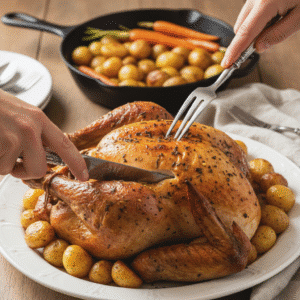
Cooking a Turkey in a Roaster
Ingredients
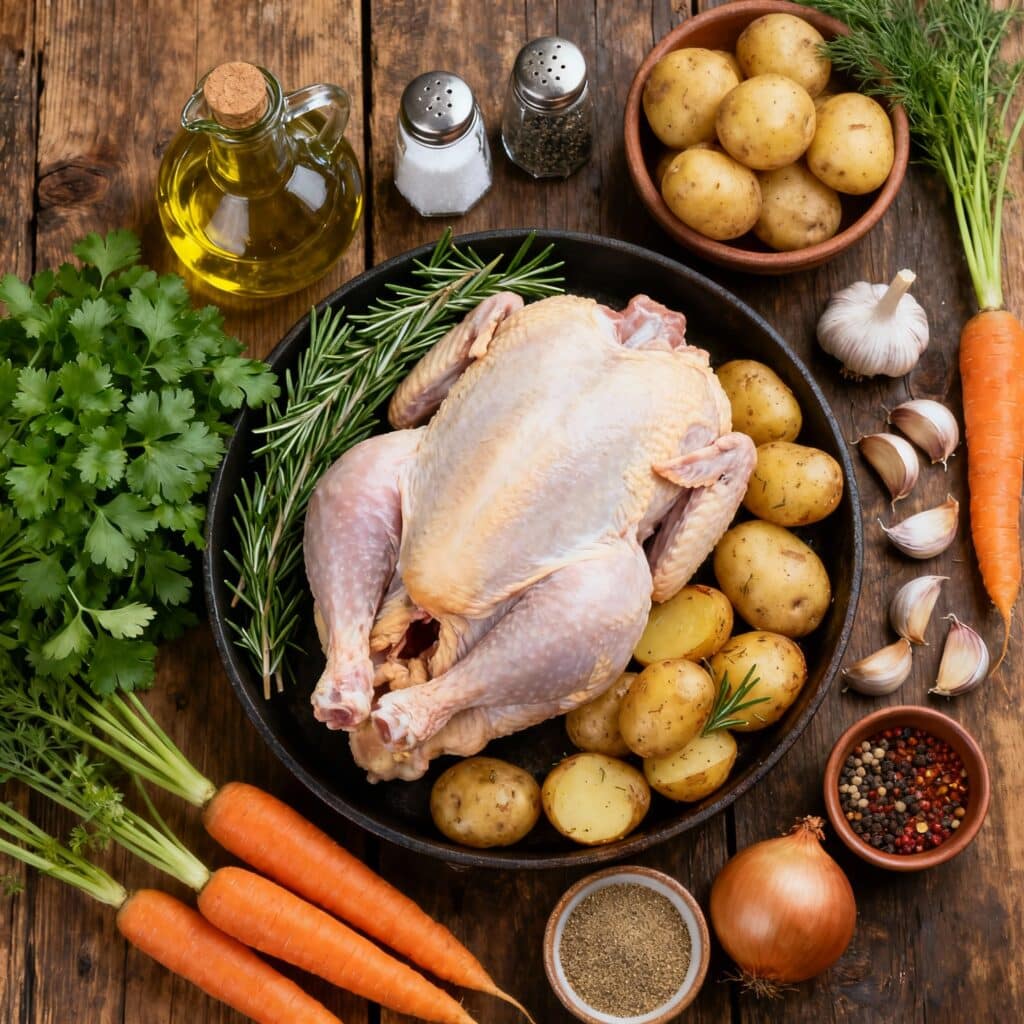
1 whole turkey (14–16 pounds), thawed½ cup olive oil or melted butter2 tablespoons kosher salt1 tablespoon black pepper1 teaspoon garlic powder1 teaspoon onion powder2 tablespoons chopped fresh herbs (thyme, rosemary, sage)1 large onion, quartered2 medium carrots, chopped2 celery stalks, chopped2 cups chicken broth1 lemon, cut in half (optional)
Instructions
Preheat your roaster oven to 325°F (163°C).Remove giblets and neck from the turkey, rinse, and pat dry.Rub the turkey with olive oil or melted butter to coat evenly.Season generously with salt, pepper, garlic powder, and onion powder.Stuff the cavity with onion, lemon halves, and fresh herbs.Place carrots and celery in the bottom of the roaster pan.Pour in the chicken broth to keep the turkey moist.Cover and roast for about 15 minutes per pound, or until the internal temperature reaches 165°F (74°C).Baste the turkey with pan juices every hour for golden, crisp skin.Rest for 20–30 minutes before carving to let the juices settle.Serve warm with your favorite sides like cranberry sauce or roasted vegetables.
Notes
Nutrition
Table of content
Table of Contents
That experience taught me that cooking a turkey in a roaster is more than just a shortcut—it’s a stress-saving method that guarantees results. If you’ve ever worried about dry meat or chaotic kitchen timing, this guide will walk you through everything you need to know about cooking a turkey in a roaster, from choosing the right bird to seasoning, prepping, and setting up your roaster for success.
Why Cooking a Turkey in a Roaster Works So Well
When you’re cooking a turkey in a roaster, you’re using an appliance designed to lock in moisture and create even heat. Unlike a traditional oven that loses heat every time the door opens, a roaster’s sealed lid traps steam. This means less babysitting, no endless basting, and a turkey that comes out juicy every time.
The main benefits of cooking a turkey in a roaster include:
- Faster cook times (about 30% quicker than a regular oven).
- Consistent results thanks to even heating.
- Juicier meat because of the sealed cooking environment.
- Extra oven space for side dishes, desserts, or breads.
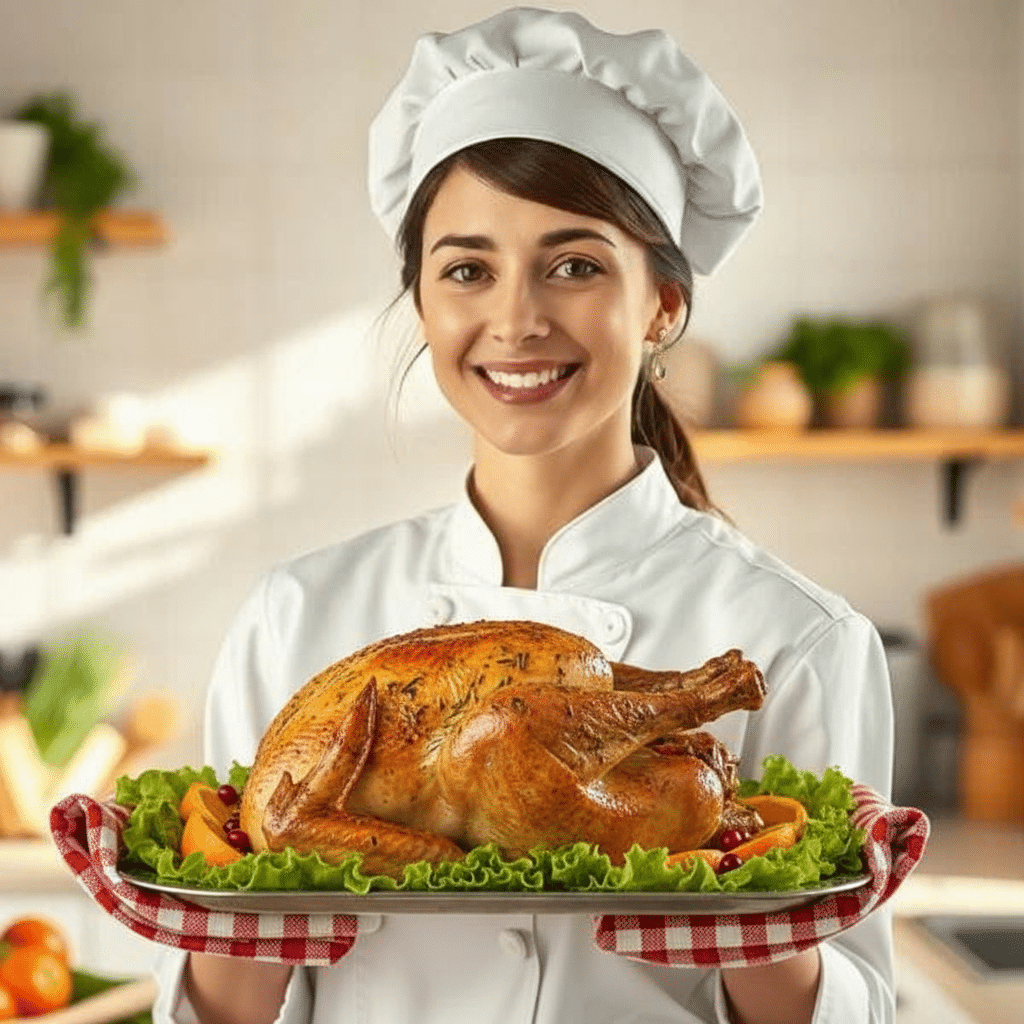
Once you’ve tried cooking a turkey in a roaster, you may never go back to your oven again.
Choosing the Right Turkey for the Roaster
The size and type of bird you buy matters. For most models, cooking a turkey in a roaster works best with birds between 14 and 22 pounds. Anything larger may not fit properly, while smaller turkeys might not feed the whole group.
Here are a few tips:
- Fresh vs. Frozen: Frozen is convenient, but allow 24 hours of thawing for every 4–5 pounds. Fresh saves time if you’re short on prep days.
- Natural vs. Self-basting: Natural turkeys let your seasonings shine. Self-basting turkeys can be helpful if you’re new to cooking a turkey in a roaster.
- Leftover plans: Bigger birds mean more leftovers for sandwiches, soups, or recipes like my turkey lunch meat guide.
Prepping the Bird Before Cooking a Turkey in a Roaster
Preparation is key. Pat the turkey dry with paper towels—this helps the skin crisp up. Then season it generously. Salt, pepper, garlic powder, and paprika form the base, but herbs like rosemary, thyme, and sage add depth. Many cooks also tuck softened butter under the skin to create extra richness.
If you want the juiciest results when cooking a turkey in a roaster, consider brining. A simple overnight brine of water, kosher salt, sugar, and citrus slices makes the meat tender and flavorful. Don’t forget to add aromatics like onion, celery, and lemon to the cavity for extra fragrance while cooking.
Setting Up Your Roaster Oven
The actual setup for cooking a turkey in a roaster couldn’t be easier:
- Preheat to 325°F.
- Place the rack inside so the turkey doesn’t sit in liquid.
- Add ½ cup broth or water to the bottom.
- Position the turkey breast-side up.
Cover with the lid and let the roaster do its work. When cooking a turkey in a roaster, the key is resisting the urge to lift the lid. Each time you peek, you lose heat and steam, slowing the cooking process.
The Story Continues
By the time your turkey is halfway through, the kitchen will be filled with aromas that remind you why cooking a turkey in a roaster is such a game-changer. You’ll be relaxed, your oven will be free for sides like roasted Brussels sprouts with balsamic, and your guests will marvel at the golden, juicy bird waiting on the counter.
Cooking a turkey in a roaster doesn’t just save you stress—it guarantees you’ll serve a tender, flavorful turkey that brings everyone to the table with smiles.
Mastering Cooking Times in a Roaster
One of the biggest questions people ask when cooking a turkey in a roaster is, “How long will it take?” The good news is that roaster ovens simplify timing. Unlike a standard oven, they cook faster while still keeping the bird juicy.
As a rule of thumb:
| Turkey Weight | Cooking Time (325°F) | Internal Temperature Goal |
|---|---|---|
| 10–14 lbs | 3–3.5 hours | 165°F in the breast, 175°F in thighs |
| 14–18 lbs | 3.5–4.5 hours | Same as above |
| 18–22 lbs | 4.5–5 hours | Same as above |
Always check with a reliable meat thermometer placed in the thickest part of the breast and thigh (not touching bone). When your turkey hits the target temperature, it’s safe and ready. Don’t guess—thermometers prevent undercooking or dry, overcooked meat.
Keeping the Turkey Moist and Tender
Moisture is everything when you’re cooking a turkey in a roaster. That sealed lid creates a self-basting environment, but a few tricks ensure melt-in-your-mouth results:
- Butter under the skin: Adds richness and prevents the breast from drying out.
- Broth at the bottom: Start with half a cup of chicken or turkey broth in the roaster pan. It steams gently without making the turkey soggy.
- Lid discipline: Resist opening the roaster too often—every peek slows cooking and lets moisture escape.
Some cooks also tent the breast with foil during the final hour if it browns too quickly. This helps balance color with tenderness.
Flavor Boosters That Work
Seasoning can make or break your turkey. While a simple salt-and-pepper rub works, you can elevate flavors with a few extras:
- Herb butter rub – Mix softened butter with garlic, rosemary, thyme, and parsley. Rub under the skin for rich herbal notes.
- Citrus zest – Add lemon or orange zest to the rub for a refreshing, bright finish.
- Dry brine – Rub salt and herbs on the turkey 24 hours before cooking. This pulls in flavor while breaking down proteins for tenderness.
- Smoky twist – Paprika and a dash of chipotle powder add a mild smoky flavor, complementing hearty sides like chipotle chicken recipes.
The Beauty of Hands-Off Cooking
Unlike babysitting a bird in the oven, cooking a turkey in a roaster is refreshingly hands-off. Once it’s set up, you can focus on preparing side dishes, enjoying family, or even sneaking a moment for yourself.
During my last holiday dinner, I prepped the turkey early in the morning, popped it in the roaster, and let it cook while I worked on sides like casseroles and a batch of swamp potatoes that became everyone’s favorite. By the time guests arrived, the turkey was done, resting, and ready for carving—without a stressful kitchen frenzy.
Letting the Turkey Rest
This step is often overlooked but essential. After cooking, transfer the turkey to a cutting board, cover loosely with foil, and let it rest for at least 20–30 minutes.
Resting allows juices to redistribute, ensuring every slice—whether breast or thigh—is juicy and flavorful. Cutting too soon lets the juices escape, leaving your turkey dry. Use this downtime to finish off gravy or warm up side dishes.
Moisture Myths Debunked
There are a lot of myths about how to keep turkey moist. Some suggest constant basting, others say to soak it in broth after roasting. The truth is:
- Basting isn’t necessary in a roaster—the lid traps steam effectively.
- Soaking after roasting doesn’t help—once overcooked, you can’t “fix” dryness.
- Brining and temperature control are key—both help avoid dryness from the start.
When you follow these principles, cooking a turkey in a roaster becomes foolproof.
Carving, Serving & Leftovers
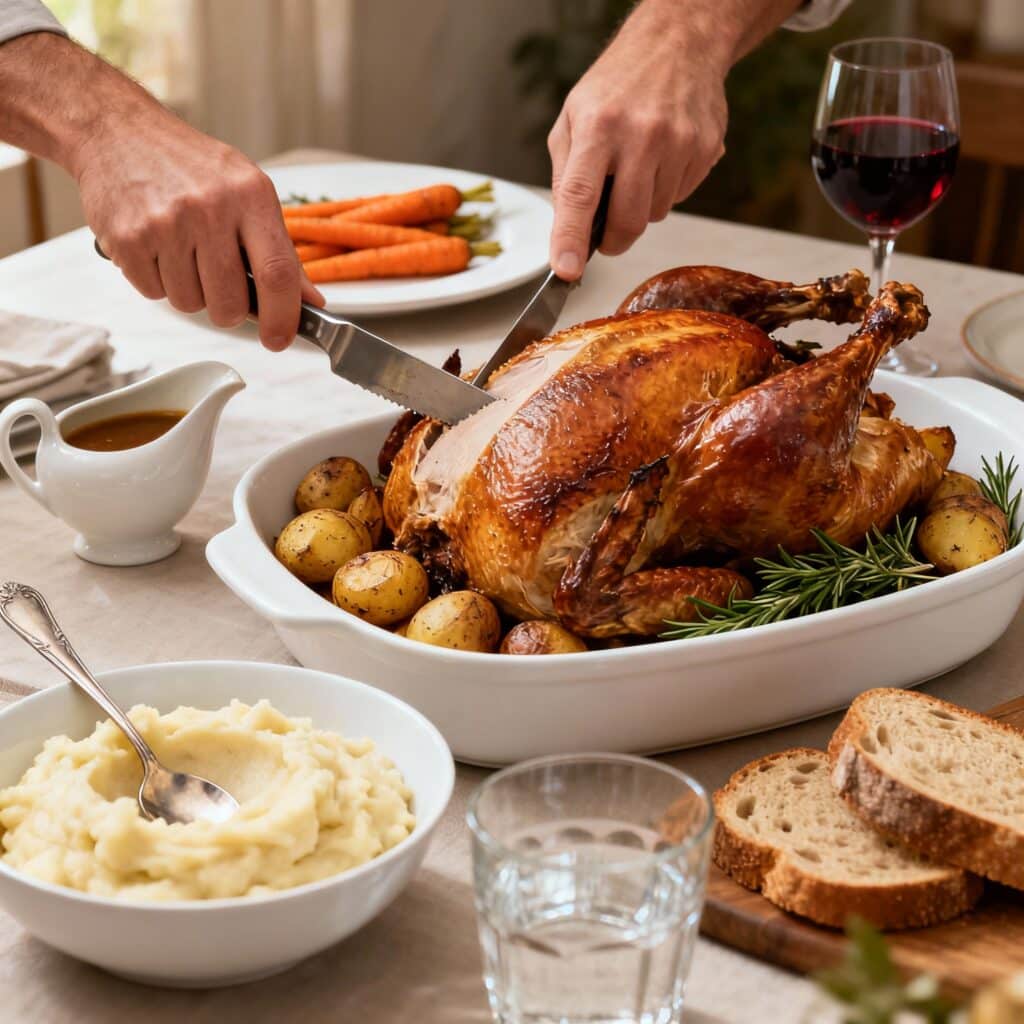
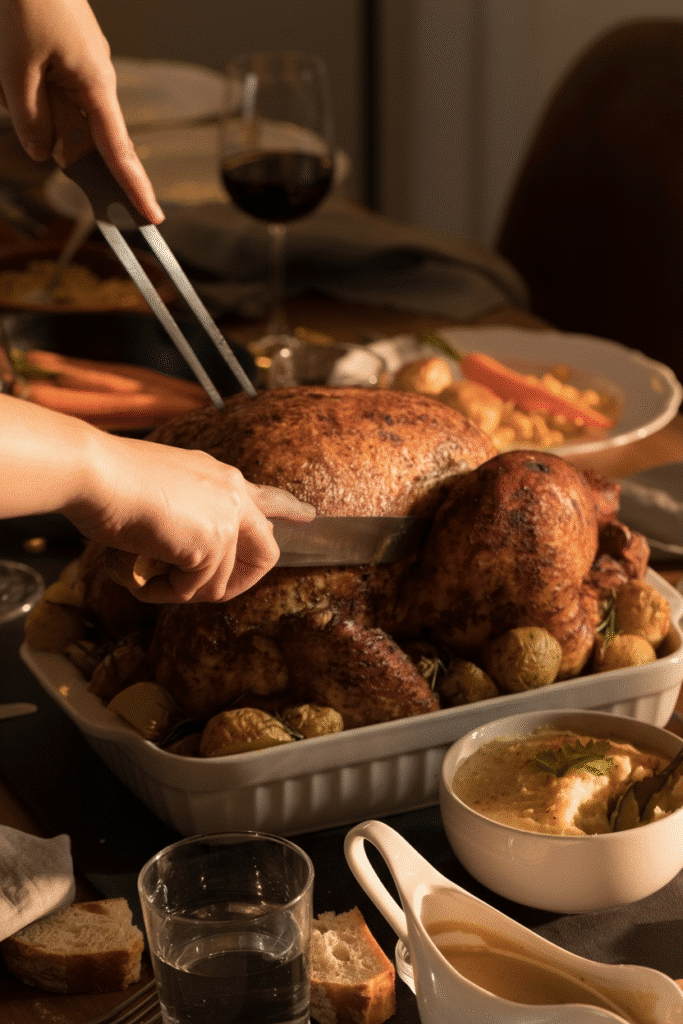
After hours of anticipation, the turkey is done, rested, and ready to shine. But here’s the truth—many home cooks get nervous about carving. Don’t worry; with a few simple steps, you’ll slice clean, juicy portions without shredding the meat.
- Remove the legs first: Cut through the skin between the thigh and body. Pull gently until the joint pops, then slice clean through.
- Separate the wings: Similar to the legs, cut through the joint.
- Slice the breast: Using a long, sharp carving knife, slice along the breastbone to remove the breast in one piece. Then cut it crosswise into even slices.
- Don’t forget the dark meat: Thighs and drumsticks are packed with flavor, so serve them proudly.
Arrange everything on a large platter for a presentation worthy of the centerpiece. The golden skin, moist slices, and aromatic herbs will make everyone eager to dig in.
Serving Suggestions for a Roaster Turkey
Cooking a turkey in a roaster delivers tender meat that pairs beautifully with a variety of sides. For a balanced holiday plate, combine textures, flavors, and colors:
- Greens: Roasted Brussels sprouts with balsamic bring a savory crunch that balances the richness of turkey.
- Comfort carbs: Mashed potatoes, stuffing, or swamp potatoes keep the meal hearty and traditional.
- Cranberry sauce: The sweet-tart flavor cuts through the richness of roasted poultry.
- Bread rolls: Perfect for soaking up gravy or making mini sandwiches.
Pro tip: Warm serving platters in the oven before adding the turkey slices. This helps keep meat hot at the table.
Gravy That Steals the Show
Don’t let those pan drippings go to waste. When cooking a turkey in a roaster, the juices that collect at the bottom can be transformed into a rich, flavorful gravy.
- Step 1: Carefully skim excess fat from the juices.
- Step 2: Transfer the liquid to a saucepan and bring to a gentle simmer.
- Step 3: Whisk in a slurry of flour (or cornstarch) and broth until the sauce thickens.
- Step 4: Season with salt, pepper, and a dash of fresh herbs.
This gravy will tie everything together, turning mashed potatoes and stuffing into irresistible bites.
Making the Most of Leftovers
One of the best parts of cooking a turkey in a roaster is the leftovers. A well-cooked bird doesn’t just feed your guests—it sets you up for easy meals days after the feast.
- Turkey sandwiches: Use slices for a classic lunch or take inspiration from my turkey lunch meat guide to try new twists.
- Soups and stews: Simmer leftover turkey with vegetables and broth for a comforting bowl.
- Salads and wraps: Toss chopped turkey into greens or stuff into tortillas for light meals.
- Casseroles: Combine turkey, pasta, and creamy sauce for a weeknight favorite.
Tip: Store leftovers in airtight containers. Turkey stays fresh for 3–4 days in the fridge or up to three months in the freezer.
Pairing Wine and Drinks with Turkey
The right drink elevates the meal. Turkey’s flavor is mild yet savory, making it versatile with pairings:
- White wines: Chardonnay or Sauvignon Blanc complement herb rubs and lighter sides.
- Red wines: Pinot Noir or Zinfandel balance richer dishes like stuffing or potatoes.
- Non-alcoholic options: Sparkling apple cider or cranberry spritzers keep things festive for all ages.
A thoughtful pairing enhances the flavors of your turkey and rounds out the dining experience.
Creating a Memorable Experience
Cooking a turkey in a roaster is about more than a recipe—it’s about the atmosphere you create. Set the table with seasonal touches like candles, greenery, or rustic napkins. Play background music that encourages conversation. When the turkey arrives, carve with confidence and serve with joy.
Guests remember the feeling of togetherness as much as the taste. That’s why a roaster turkey, with its dependable tenderness and ease, makes hosting stress-free. You get to stay present at the table instead of stuck in the kitchen.
Common Mistakes When Cooking a Turkey in a Roaster
Even though cooking a turkey in a roaster is easier than juggling a traditional oven, a few mistakes can trip up even seasoned cooks. Avoiding these ensures your bird comes out moist, flavorful, and photo-worthy every time.
1. Choosing the wrong size turkey
If the bird is too large, it won’t fit comfortably in the roaster. Always check your roaster’s maximum capacity. A 22-pound turkey usually fits most standard models, but double-check before buying.
2. Skipping the thermometer
Guessing is the fastest way to undercook or dry out your bird. Always check the internal temperature—165°F for the breast, 175°F for thighs—for safety and juiciness.
3. Lifting the lid too often
Every peek releases steam and heat. Keep the lid on unless you’re checking temperature. The beauty of cooking a turkey in a roaster is its sealed environment—don’t undo the advantage.
4. Forgetting to rest the turkey
Carving too soon releases all the juices onto the cutting board instead of keeping them inside the meat. Resting 20–30 minutes is non-negotiable.
1. How long does it take to cook a turkey in a roaster?
A roaster usually cooks faster than an oven. Expect about 15 minutes per pound at 325°F. For example, a 16-pound turkey takes around 4 hours. Always check internal temperature: 165°F for breast, 175°F for thighs.
2. Do you put water in the bottom of a roaster when cooking turkey?
Yes, but sparingly. Add about half a cup of broth or water. This keeps the turkey moist without creating soggy skin.
3. Should I baste my turkey in a roaster?
No need. The sealed lid traps steam, creating a self-basting effect. If you crave ultra-crispy skin, remove the lid in the last 30 minutes instead of basting.
4. Can I stuff the turkey in a roaster oven?
It’s possible but not recommended. Stuffing slows down cooking and can create food safety risks. Cook the stuffing separately in your oven while the turkey roasts.
Pairing Ideas for the Perfect Roaster Turkey Dinner
The joy of cooking a turkey in a roaster is that your main oven stays free. That means you can bake sides, casseroles, and desserts without juggling timing. Consider pairing your turkey with:
- Roasted Brussels sprouts with balsamic for a savory vegetable side.
- Swamp potatoes for a hearty, rustic touch.
- Classic stuffing and cranberry relish for traditional flavors.
- Freshly baked bread rolls to mop up rich gravy made from your roaster drippings.
Storage and Leftover Strategies
One overlooked advantage of cooking a turkey in a roaster is how leftovers retain their moisture. Store carved turkey in airtight containers or freezer bags with a splash of broth to keep it juicy.
Fridge: Lasts 3–4 days.
Freezer: Lasts up to 3 months.
Ideas for leftovers:
- Turkey noodle soup for cozy evenings.
- Creamy casseroles with pasta and cheese.
- Turkey salad sandwiches inspired by the turkey lunch meat guide.
- Wraps or grain bowls for quick lunches.
Hosting Confidence: Creating the Full Experience
Cooking a turkey in a roaster isn’t only about food—it’s about the whole experience. By using a roaster, you minimize stress, free your oven, and actually get to enjoy the holiday with your guests.
Set the mood with soft background music, seasonal décor, and a festive drink like sparkling cider or mulled wine. When the turkey emerges golden and aromatic, carve it confidently at the table. Guests remember the atmosphere as much as the taste.
Conclusion
Cooking a turkey in a roaster makes holiday dinners smoother, tastier, and more enjoyable. With fewer mistakes, flavorful tips, and the freedom of extra oven space, this method guarantees a moist, tender turkey every time.
“Whether it’s Thanksgiving, Christmas, or a family Sunday meal, cooking a turkey in a roaster gives you reliable results and cherished memories. The combination of simplicity, flavor, and tradition makes this method one you’ll use again and again. For more comforting and creative recipes, be sure to follow me on Pinterest.