
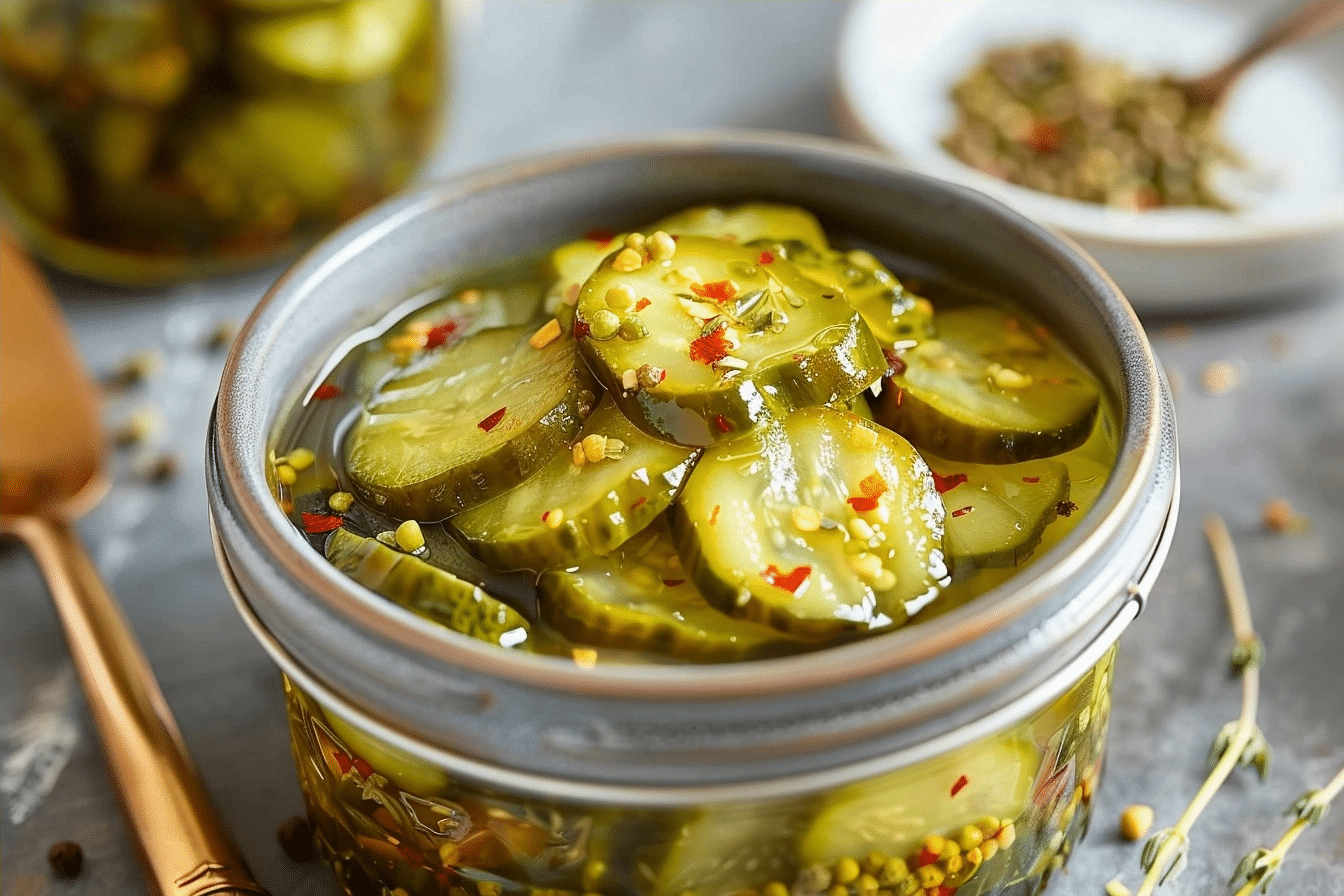
Bread and Butter Pickles Canning Recipe yields crisp, tangy-sweet cucumber slices preserved in a warmly spiced vinegar syrup. This reliable canning method produces jars that develop balanced sweetness, bright acidity, and a satisfying crunch after a short resting period. Follow the precise salting, syrup, and processing steps to achieve consistent results you can gift or stash in the pantry.
| Prep Time | Cook Time | Total Time | Servings | Difficulty | Cuisine |
|---|---|---|---|---|---|
| 20 mins active + 4 hrs chill | 15 mins processing + 10–15 mins syrup | Approx. 4 hr 45 min | About 6 pints | Intermediate | American |
Why This Recipe Works
This recipe works because the salt-chill-drain step pulls excess moisture so the pickles remain crisp and the syrup penetrates evenly. I rely on the 4-hour chill with ice to draw water out of the cucumbers while keeping them chilled and crunchy rather than soggy.
This method also works because the combined white distilled and apple cider vinegars create bright acidity with rounded apple undertones, while the sugar tempers the bite. The whole and ground pickling spices infuse complexity during the brief syrup boil and subsequent jar rest, producing predictable, well-balanced bread and butter pickles every time.
Image ALT text suggestion: “Close-up of crisp cucumber and onion slices ready for pickling in a large bowl.”
Ingredients
This section answers what you need to make classic bread and butter pickles suitable for canning or refrigerator storage. Use fresh, firm cucumbers and measure vinegars for 5% acidity to ensure safe preservation and optimal flavor.
| Ingredient | Quantity | Notes/Alternatives |
|---|---|---|
| Pickling cucumbers | 2 1/2 pounds | Choose firm, small-to-medium cucumbers; Kirby or Persian work well |
| Pickling salt | 1/4 cup | Use pickling or kosher salt; avoid iodized table salt |
| White or yellow onions | 1 pound | Thinly sliced; sweet onion is an option |
| White distilled vinegar (5% acidity) | 1 1/4 cups | Required for safe preservation; see substitutions below |
| Apple cider vinegar (5% acidity) | 1 cup | Adds depth and mild fruitiness |
| Sugar | 2 1/4 cups | Adjust slightly for sweetness preference; affects texture |
| Mustard seeds | 1 tablespoon | Yellow or brown mustard seeds both work |
| Crushed red pepper flakes | 1 teaspoon | Use less for milder pickles |
| Celery seeds | 3/4 teaspoon | Gives that classic bread-and-butter profile |
| Cinnamon stick | 1 inch | Break for more contact with liquid |
| Allspice berries + ground allspice | 6 berries + pinch ground | Whole berries provide background warmth |
| Whole cloves + ground cloves | 6 whole + pinch ground | Use sparingly; cloves are potent |
| Ground turmeric | 1/2 teaspoon | For color and mild earthiness |
Image ALT text suggestion: “Ingredients measured and arranged on a counter including vinegars, sugar, spices, cucumbers, and onions.”
Step-by-Step Instructions
This section answers how to transform fresh cucumbers into safe, shelf-stable bread and butter pickles by following precise salting, syrup, packing, and processing steps. Follow the sequence exactly for reliable results.
Prep and rinse
- Rinse and slice the cucumbers: Carefully rinse the cucumbers, scrubbing away any dirt that may have stuck to the ribs; slice off 1/8 inch from the ends and discard; slice the cucumbers into 1/4-inch thick slices and place in a large bowl.
- Add onions and salt: Mix in the thinly sliced onions and all of the pickling salt, stirring so the salt distributes evenly among the cucumber slices.
- Cover and chill: Cover the bowl with a clean, thin tea towel and then cover with a couple of inches of ice; put in the refrigerator and let chill for 4 hours.
- Drain and rinse: Discard the ice and thoroughly rinse the cucumber and onion slices, then drain; rinse and drain again to remove excess salt.
Heat jars and prepare lids
- Heat the jars: Place empty jars on a metal rack in a large 16-quart canning pot; fill with warm water at least 1 inch above the jars and bring to a boil, then reduce heat to warm to keep jars hot and ready for canning.
- Wash lids: Wash lids in hot, soapy water and set aside to stay warm; they do not require separate sterilization for this water bath process longer than 10 minutes.
Make the pickling syrup and pack jars
- Combine syrup ingredients: In a 4- or 6-quart pot, place the white distilled vinegar, apple cider vinegar, sugar, and all of the pickling spices (do not add salt) and bring to a boil over medium-high heat.
- Add cucumbers and onions to syrup: Once the sugar dissolves, add the sliced cucumbers and onions and bring the syrup to a boil again.
- Pack jars: As soon as the syrup begins boiling again, use a slotted spoon to pack the hot cucumbers and onions into the heated jars, packing to 1 inch from the rim.
- Pour syrup and seal: Pour the hot vinegar-sugar syrup over the packed cucumbers to 1/2 inch from the rim; wipe rims clean with a paper towel, place a dry clean lid on each jar, and secure with a metal screw band.
Process jars in a hot water bath
- Return jars to canner: Carefully return filled jars to the canning pot with its already hot water, ensuring water covers jars by at least 1 inch.
- Boil for 15 minutes: Bring the pot to a vigorous boil and boil hard for 15 minutes, adjusting for altitude if you live over 1,000 feet using authoritative guidelines.
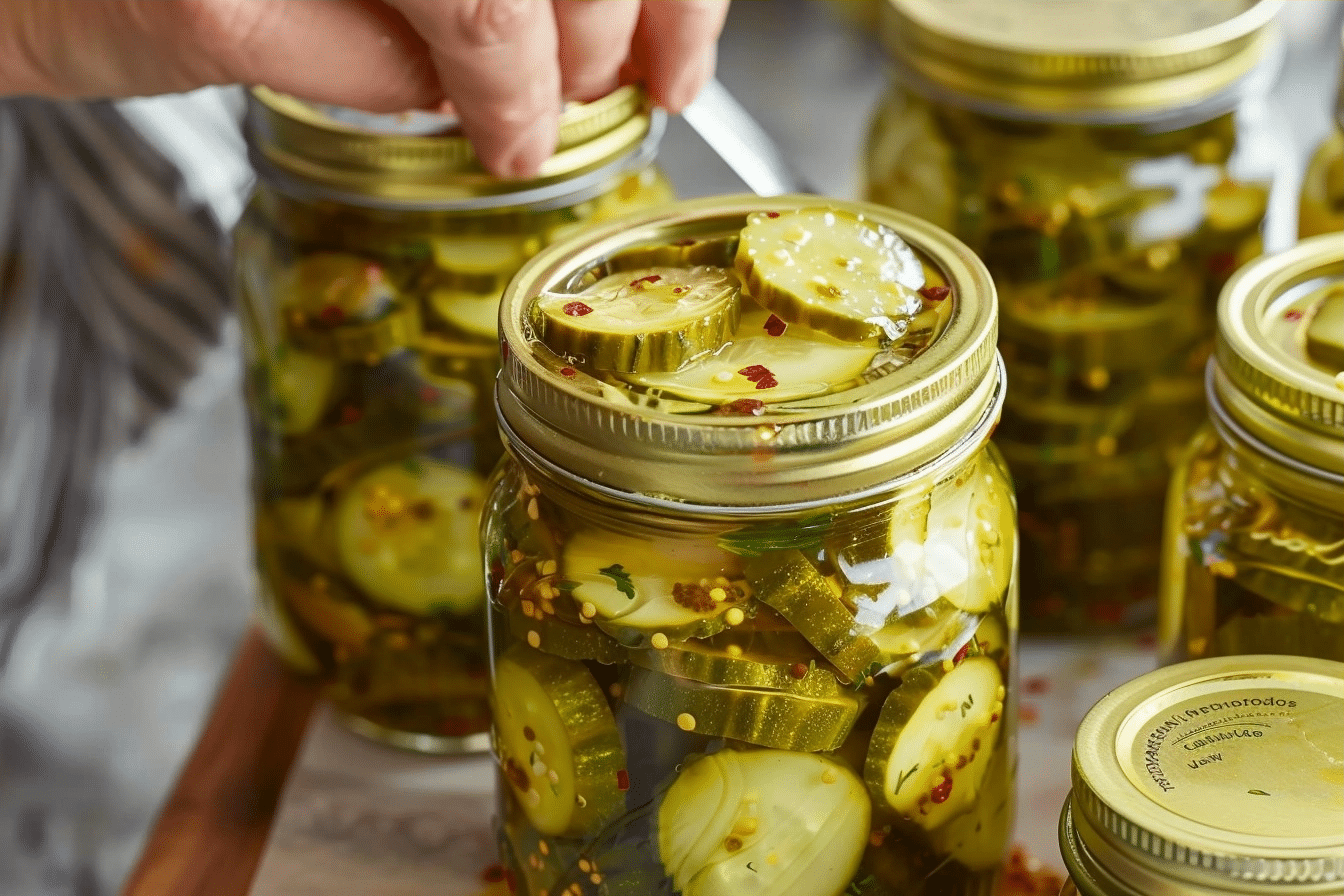
- Remove and cool: Remove jars using tongs or jar lifters and set on a towel to cool to room temperature; lids should make a popping sound as they seal; if a lid fails to seal, refrigerate that jar and use first.
Tip: If you plan to eat the pickles immediately and store them only in the refrigerator, skip the water bath step and transfer the cooled jars directly to the fridge to be used within three months.
Image ALT text suggestion: “Hot jars of bread and butter pickles being removed from a boiling water bath with jar lifters.”
Chef Tips for Perfect Results
This section answers how to achieve ideal texture and flavor through detail-oriented techniques and timing. Use these professional tips to refine crunch, spice intensity, and overall balance.
- Use firm, small cucumbers: Small to medium pickling cucumbers have thin skins and dense flesh that stay crisp after brining and heat exposure; discard soft or oversized fruit.
- Maintain cold during salting: Keep the cucumbers chilled while salting by covering with ice; cold minimizes enzymatic softening while salt draws out excess water.
- Check vinegar acidity: Verify both vinegars are labeled 5% acidity; lower acidity risks unsafe preservation, and higher acidity will overly sour the pickles.
- Boil syrup briefly: Bring the syrup to a full boil to dissolve sugar and bloom whole spices, but avoid prolonged boiling to keep cucumbers from overcooking when added.
- Pack jars snugly but not crushed: Press cucumbers gently to remove air pockets but keep slices intact for texture; leave headspace exactly as directed.
- Allow resting for best flavor: Let jars rest at least one week before tasting; three weeks yields a much deeper, melded spice profile.
Image ALT text suggestion: “A chef packing cucumber slices neatly into a jar with a slotted spoon.”
Common Mistakes to Avoid
This section answers what often goes wrong and how to prevent it so your pickles stay crisp, safe, and flavorful. Avoid these common errors for consistent success.
- Skipping the salt chill: Without salting and chilling, cucumbers release less water gradually and become mushy; always salt, ice, and refrigerate for the full 4 hours to preserve crunch.
- Using incorrect vinegar: Substituting lower-acidity vinegar reduces safety and may lead to spoilage; always use vinegars labeled 5% acidity for canning.
- Overfilling jars or leaving too little headspace: Insufficient headspace can prevent proper sealing and cause seal failures; follow 1/2 to 1 inch headspace guidelines strictly.
- Skipping the water bath when storing outside the fridge: Not processing jars in a hot water bath risks spoilage; process jars for the full 15 minutes unless keeping everything refrigerated.
- Boiling too long with cucumbers in the pot: Prolonged boiling softens cucumbers; add cucumbers just long enough for the syrup to return to a boil before packing jars.
Variations and Substitutions
This section answers how to adapt the recipe for flavor or dietary needs while maintaining reliable preservation and texture. Use the table to compare substitutions and expected impacts.
| Ingredient | Substitution | Flavor/Texture Impact |
|---|---|---|
| White distilled vinegar | More apple cider vinegar (5%) | Slightly fruitier, less neutral; maintains safe acidity if 5% |
| Sugar | Light brown sugar or coconut sugar | Brown sugar adds molasses notes; coconut sugar adds depth but alters color |
| Crushed red pepper flakes | Fresh jalapeño slices | Provides fresher heat and green pepper notes; slightly sharper spice |
| Mustard seeds | Ground mustard (1 tsp) | More immediate mustard flavor but less visual texture |
| Pickling cucumbers | Thinly sliced summer squash (for variation) | Softer texture; not traditional but pickles well for quick fridge storage |
Image ALT text suggestion: “Three jars showing pickles with different spice variations displayed on a wooden board.”
Serving Suggestions and Pairings
This section answers how to best enjoy bread and butter pickles by pairing them with specific dishes, drinks, and occasions. The classic sweet-tart profile complements sandwiches and cheese boards exceptionally well.
Serve these pickles on deli sandwiches, fried chicken plates, and burger toppings for a sweet contrast to savory richness. Add to charcuterie or cheese boards where the bright acidity cuts through creamy cheeses and spreads.
Pair with iced tea, lemon soda, or a light non-alcoholic ginger beer; the sweet-sour pickles refresh the palate. Offer jars at summer picnics, potlucks, and holiday sandwich trays where make-ahead convenience shines.
Image ALT text suggestion: “A grilled cheese sandwich paired with a small bowl of bread and butter pickles on the side.”
Storage and Reheating
This section answers how to safely store canned and refrigerated bread and butter pickles and how long they remain at peak quality. Proper storage preserves flavor, texture, and safety.
| Method | Duration | Instructions |
|---|---|---|
| Pantry (properly canned) | Up to 1 year | Store in a cool, dark place; check seals before use and refrigerate after opening |
| Refrigerator (processed or not) | Up to 3 months | Keep jars sealed or transfer to airtight containers; consume within recommended time |
| Opened jar | 3 months in fridge | Use clean utensils to avoid contamination and maintain flavor |
To reheat for a warm condiment, gently warm a small portion in a saucepan; avoid prolonged heating to preserve crunch. For serving, allow refrigerated jars to sit at room temperature 10 minutes for optimal flavor release.
Nutritional Information
This section answers what a typical serving provides in calories and macronutrients so you can plan accordingly. Values are estimates and vary by recipe specifics and serving size.
| Nutrient | Amount per 1 tbsp serving |
|---|---|
| Calories | 25 kcal |
| Protein | 0.1 g |
| Fat | 0 g |
| Carbohydrates | 6.5 g |
| Fiber | 0.1 g |
| Sugar | 6 g |
| Sodium | 120 mg |
Approximate values.
Frequently Asked Questions
This section answers common, specific concerns about substitutions, doneness, troubleshooting, make-ahead plans, and serving or storage so you can can and enjoy pickles confidently.
Can I use different vinegars in a bread and butter pickles recipe substitutions
Yes, you can substitute vinegars but keep 5% acidity for safe canning. Use additional apple cider vinegar in place of some white distilled vinegar for a fruitier note, but do not use wine or other low-acidity vinegars for water bath canning. Always verify acidity on the label to ensure shelf stability.
How do I know when bread and butter pickles are done doneness and flavor readiness
Your pickles are done when the jars seal and the flavor has mellowed after rest, not immediately after processing. The jars should pop as they cool, indicating a vacuum seal; flavor peaks after at least one week, preferably three weeks. Textural doneness depends on the salting step and chilled handling described in the recipe.
What should I do if my pickles are too soft troubleshooting
If pickles turn out soft, the most likely causes are insufficient salting, warm temperatures during salting, or excessive boiling with cucumbers present. To fix or prevent softness, always keep cucumbers cold during the salt chill, limit syrup boiling time, and rinse thoroughly before packing. For next batches, shorten time cucumbers spend in hot liquid and ensure they remain firm at harvest.
Can I make bread and butter pickles ahead make-ahead and storage tips
Yes, you can make these pickles ahead; properly canned jars store up to one year in a cool, dark place. For best flavor, let jars rest at least one week before tasting and three weeks for peak balance; once opened, store in the refrigerator and use within three months. If skipping the water bath, refrigerate and consume within three months.
How should I serve and store opened jars serving and storage instructions
Serve opened bread and butter pickles chilled or at room temperature as a condiment on sandwiches, burgers, and cheese boards. Store opened jars in the refrigerator with lids tightly sealed and use within three months to maintain quality and safety. If a sealed jar shows signs of spoilage, discard it immediately.
Conclusion
This bread and butter pickles canning recipe delivers crisp, sweet-tangy pickles that improve with time and store safely when processed correctly. Follow the salting, syrup, and water bath steps for consistent texture and flavor that will brighten sandwiches and boards. Try a jar now and savor the bright, sugary-sour crunch that elevates any meal.
Image ALT text suggestion: “Stack of sealed glass jars filled with golden bread and butter pickles cooling on a countertop.”
Easy Canning Tips | Quick Pickle Recipes | Spiced Pickle Variations
For altitude processing adjustments and safety guidelines refer to the National Center for Home Food Preservation at nchfp.uga.edu and USDA resources at usda.gov.
Bread and Butter Pickles Canning Recipe for Jars Made Easy
Ingredients
- 2 1/2 pounds pickling cucumbers (firm, small-to-medium, like Kirby or Persian)
- 1/4 cup pickling or kosher salt
- 1 pound white or yellow onions (thinly sliced)
- 1 1/4 cups white distilled vinegar (5% acidity)
- 1 cup apple cider vinegar (5% acidity)
- 2 1/4 cups sugar
- 1 tablespoon mustard seeds
- 1 teaspoon crushed red pepper flakes
Instructions
- Wash cucumbers and slice into 1/4-inch thick rounds
- Thinly slice onions
- In a large bowl, combine cucumbers, salt, and onions
- Weigh down with a plate and add ice packs
- Chill 4 hours, changing water 2-3 times
- Drain and pat dry
- In a saucepan, combine both vinegars, sugar, mustard seeds, and red pepper flakes
- Bring to a boil, stirring until sugar dissolves
- Pack cucumber-onion mixture into sterilized pint jars
- Pour hot syrup to cover by 1/2 inch
- Process jars by water bath canning (15 minutes) or refrigerate for short-term use
Notes
Measure vinegars precisely for safe preservation
Add ice again during chilling step to maintain crisper texture
Jars can be stored in pantry up to 1 year or refrigerated for 3 months
Adjust red pepper flakes for spice preference