
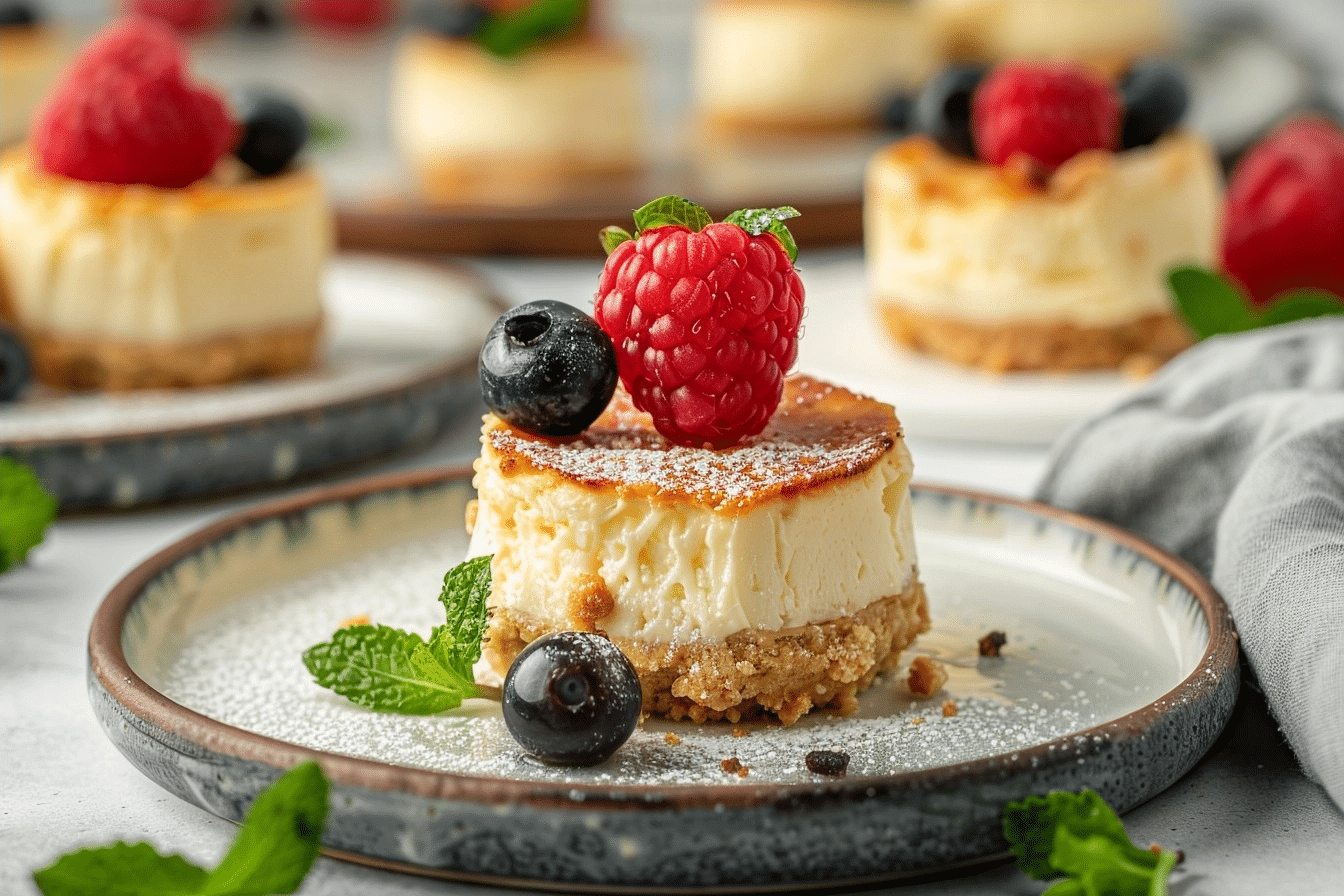
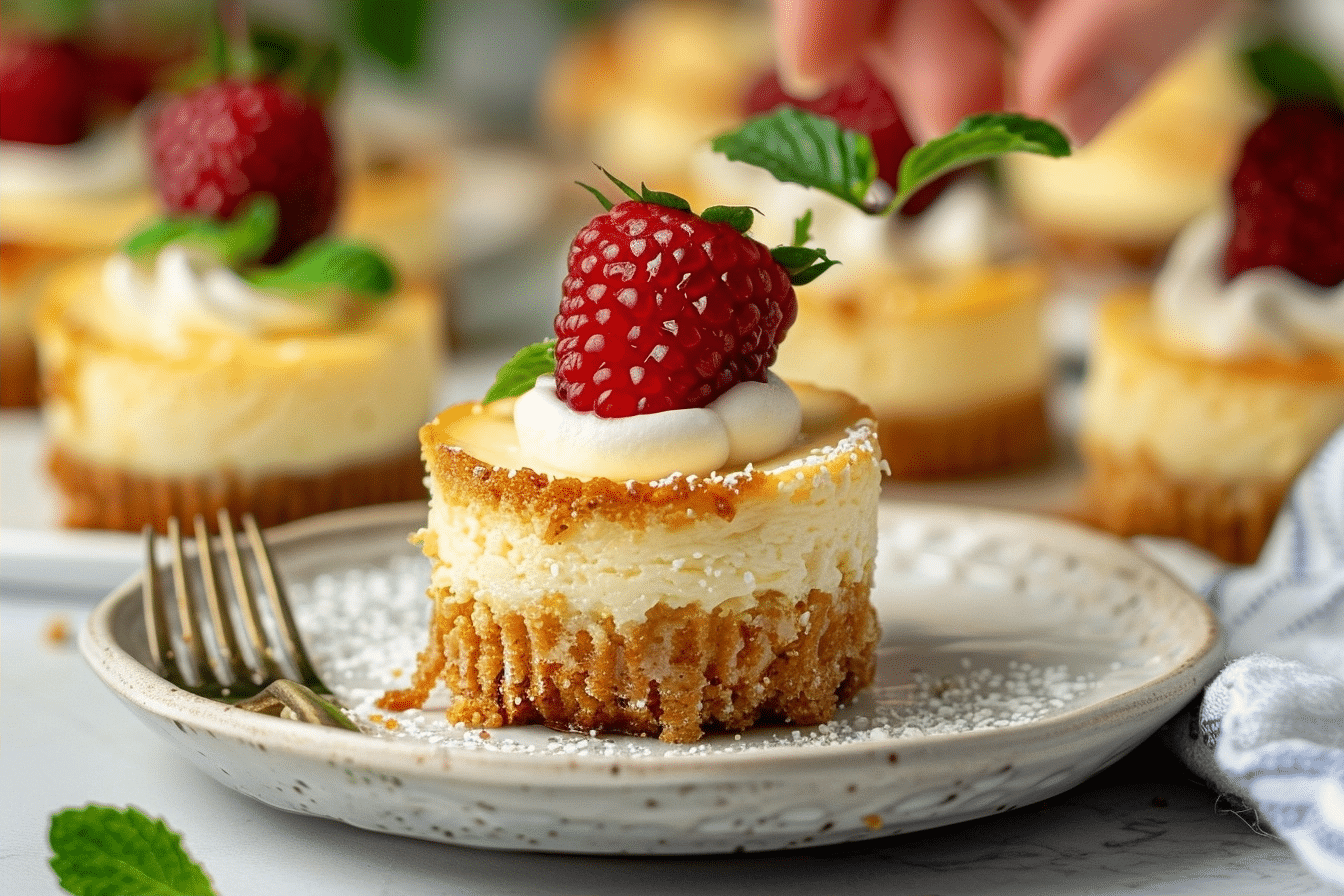
Baked Mini Cheesecakes are single-serving, creamy cheesecake bites with a buttery graham crust and tangy Greek yogurt folded into the filling for stability and bright flavor. This recipe for Baked Mini Cheesecakes yields a reliable, lightly baked custard that sets without cracking and chills to a silky texture perfect for parties and weeknight desserts.
| Prep Time | Cook Time | Total Time | Servings | Difficulty | Cuisine |
|---|---|---|---|---|---|
| 20 mins | 15 mins | 8 hrs 35 mins (including chill) | 12 mini cheesecakes | Easy | American |
This recipe works because it balances richness and tang to create a smooth, stable mini cheesecake.
I rely on a combination of room-temperature cream cheese and Greek yogurt to keep the filling creamy while reducing the overly dense mouthfeel of a full-fat cheesecake. The cornstarch adds just enough structure to prevent weeping and cracking while keeping the texture delicate.
From my experience, baking at a low temperature and removing the tins when the centers still jiggle ensures a custardy interior after chilling. The straightforward graham crust presses easily into muffin liners, making this recipe fast, repeatable, and ideal for small-batch entertaining.
Image ALT text suggestion: Close-up of a mini cheesecake with a golden graham crust and whipped cream on top.
This ingredients list gives exact amounts and practical substitutions for each component.
| Ingredient | Quantity | Notes/Alternatives |
|---|---|---|
| Graham cracker crumbs | 1½ cups (about 16 graham crackers or 150g) | Use digestive biscuits or gluten-free crackers for GF option |
| Melted butter | ¼ cup | Use salted butter or unsalted plus a pinch of salt; coconut oil works for dairy-free |
| Brown sugar | 1 tablespoon | White granulated sugar is a fine substitute |
| Cream cheese | 8 oz (250g), room temperature | Full-fat yields best texture; light cream cheese will be softer |
| Eggs | 2, room temperature | Large eggs; room temperature prevents curdling |
| Plain Greek yogurt | ¾ cup (3.6% fat recommended) | Use full-fat or a dairy-free yogurt for alterations |
| Granulated sugar | ½ cup | Can reduce by 2 tablespoons for less sweet cheesecakes |
| Vanilla extract | 1 tablespoon | Use real vanilla for the best aroma; vanilla paste is an option |
| Lemon juice | 1 tablespoon | Fresh lemon brightens flavor; omit for milder taste |
| Cornstarch | 1 teaspoon | Stabilizes filling; arrowroot can be used as a substitute |
| Salt | ¼ teaspoon | Balances sweetness |
| Toppings | Whipped cream, fruit, etc. | Berries, compote, or lemon curd all complement these cheesecakes |
These step-by-step instructions follow the recipe directions exactly and keep each action focused.
Phase 1: Prepare
- Line a 12-cup muffin tin with paper liners.
- Preheat the oven to 325ºF.
- Add 16 graham crackers (about 150g) to the bucket of the blender.
- Pulse the graham crackers until crushed into fine crumbs.
- Pour the graham cracker crumbs into a medium-size bowl.
- Stir together the crumbs with the ¼ cup melted butter and 1 tablespoon brown sugar.
- Scoop a heaping tablespoon of crust mixture into each muffin liner.
- Press the crust down using a small greased glass or measuring cup to compact it evenly.
Phase 2: Make Filling
- Wipe out the bucket of the blender to remove any leftover crumbs.
- Add all cheesecake ingredients to the blender: 8 oz cream cheese, 2 eggs, ¾ cup plain Greek yogurt, ½ cup granulated sugar, 1 tablespoon vanilla extract, 1 tablespoon lemon juice, 1 teaspoon cornstarch, and ¼ teaspoon salt.
- Blend the ingredients on low speed until smooth, taking care not to whip extra air into the filling.
- Pour the filling into the 12 muffin cups to fill each liner nearly to the top.
- Lightly shake the pan so the filling lies flat and bang the pan against the counter a few times to remove any air bubbles.
Phase 3: Bake, Cool, and Chill
- Bake at 325ºF in the lower third of the oven for 15 minutes; the centers will still jiggle when removed.
- Cool the whole muffin tin on a wire rack until room temperature, about 2 hours.
- Chill the mini cheesecakes in the refrigerator for at least 6 hours or overnight ideally.
- Top each mini cheesecake with whipped cream and assorted fruit or your preferred toppings before serving.
Image ALT text suggestion: Step-by-step layout showing crust pressing into muffin cups and a blender bowl of cheesecake filling.
These chef tips will help you achieve consistent texture and an even bake every time.
- Bring the cream cheese, eggs, and yogurt to room temperature before blending to prevent lumps and ensure a silky filling.
- Blend the filling on low speed and stop as soon as smooth to avoid incorporating excess air, which can cause cracks or a spongy texture.
- Press the crust firmly but evenly; a compact crust prevents crumbling when unmolding and creates a stable base.
- Bake on the lower third of the oven to encourage gentle, even heat through the bottoms without overbrowning the tops.
- Remove the tin while centers still jiggle; the residual heat finishes the set during cooling and chilling for the right custard-like texture.
- Chill for at least 6 hours or overnight; this step is essential for firm slices and clean presentation when serving.
Image ALT text suggestion: A baker pressing crumbs into a muffin tin to form even mini cheesecake crusts.
These common mistakes explain why issues happen and how to fix or prevent them.
- Overbeating the filling: Overwhipping incorporates air, causing cracks or sponge-like texture. Fix by blending on low and checking for smoothness rather than whipping to volume.
- Using cold ingredients: Cold cream cheese creates lumps and an uneven filling. Prevent this by planning ahead and letting dairy sit at room temperature for 30 to 60 minutes.
- Underpressing the crust: A loose crust falls apart when served. Press firmly with a measuring cup or small glass to compact crumbs for a stable base.
- Baking too long or too hot: High heat or overbaking yields dry, rubbery centers. Set the oven to 325ºF and remove while the centers still jiggle; chilling completes the set.
- Skipping the chill: Serving before adequate chilling causes slumping and sloppy slices. Chill at least 6 hours or overnight for best texture and flavor melding.
Image ALT text suggestion: A mini cheesecake with a cracked top and annotation showing overbaked edges.
These variations and substitutions let you customize flavor and accommodate dietary needs.
| Ingredient | Substitution | Flavor/Texture Impact |
|---|---|---|
| Graham cracker crumbs | Digestive biscuits or gluten-free crackers | Slightly different sweetness and texture; GF crackers keep it gluten-free |
| Cream cheese | Neufchatel or dairy-free cream cheese | Lower fat makes a softer set; dairy-free changes mouthfeel slightly |
| Greek yogurt | Sour cream or dairy-free coconut yogurt | Sour cream yields richer tang; coconut yogurt adds subtle coconut flavor |
| Granulated sugar | Honey or maple syrup (reduce amount) | Adds distinct flavor and more moisture; reduce other liquids slightly |
| Lemon juice | Lime juice or a few drops of lemon extract | Lime brightens differently; extract gives aroma without extra liquid |
Image ALT text suggestion: Three mini cheesecakes each topped with different fruit and sauces showcasing variations.
These serving suggestions and pairings complement Baked Mini Cheesecakes for any occasion.
Serve chilled with a dollop of lightly sweetened whipped cream and fresh berries for a classic finish. Drizzle with berry coulis, lemon curd, or a salted caramel sauce for a more indulgent presentation.
Pair these mini cheesecakes with non-alcoholic sparkling cider, cold-brew coffee, or a simple herbal tea for balance. They work well for holiday buffets, bridal showers, weeknight desserts, and as portable treats at picnics or potlucks.
Image ALT text suggestion: A dessert platter with mini cheesecakes garnished with berries, caramel, and mint sprigs.
These storage and reheating instructions preserve texture and flavor.
| Method | Duration | Instructions |
|---|---|---|
| Refrigerator | Up to 4 days | Store in an airtight container or cover the muffin tin tightly; add toppings just before serving. |
| Freezer | Up to 1 month | Flash-freeze on a tray, then transfer to a freezer bag; thaw overnight in the fridge before serving. |
| Reheating | Not recommended for texture | Serve chilled; if you prefer warm, allow to sit at room temperature for 15 minutes to soften slightly. |
Image ALT text suggestion: Airtight container with mini cheesecakes ready for refrigeration and a labeled freezer bag of mini cheesecakes.
This nutritional table provides estimated values per serving for planning and dietary awareness.
| Nutrient | Amount per Serving |
|---|---|
| Calories | ~260 kcal |
| Protein | ~5 g |
| Fat | ~16 g |
| Carbohydrates | ~22 g |
| Fiber | ~0.8 g |
| Sugar | ~14 g |
| Sodium | ~150 mg |
Approximate values.
Image ALT text suggestion: Nutrition facts style layout next to a mini cheesecake on a plate.
These frequently asked questions answer common concerns about substitutions, doneness, troubleshooting, make-ahead plans, and storage.
Can I substitute low-fat cream cheese in baked mini cheesecakes?
You can use low-fat cream cheese, but expect a slightly softer set and tangier flavor. The texture may be less rich and may require additional chilling to firm up. Adjust by chilling longer and adding a touch more cornstarch if needed.
How do I know when baked mini cheesecakes are done without overbaking?
They are done when the edges look set and the centers still jiggle slightly when the pan is gently shaken. Remove them at this stage and allow residual heat to finish the set during cooling and chilling. Overbaking produces a dry, rubbery texture so watch the 15-minute bake time closely.
What should I do if the filling separates or becomes grainy?
Separation usually happens when ingredients are cold or overmixed, causing curdling. Fix by blending slowly at low speed and ensuring cream cheese and eggs reach room temperature before mixing. If graininess occurs, press the mixture through a fine sieve before baking to smooth it out.
Can I make these mini cheesecakes ahead for a party?
Yes, you can prepare these mini cheesecakes a day in advance by chilling them overnight and adding toppings just before serving. For longer storage, freeze them and thaw overnight in the refrigerator. Label containers with the date to ensure freshness.
How should I store leftover mini cheesecakes to keep them fresh?
Store leftovers in an airtight container in the refrigerator for up to 4 days to maintain texture and flavor. For longer preservation, freeze on a tray then transfer to a freezer bag for up to 1 month. Thaw overnight in the fridge before serving.
Image ALT text suggestion: Q&A graphic with small icons representing storage, baking, and troubleshooting topics.
For more crust techniques, see Graham crust tips, for pairing ideas check Non-alcoholic pairings, and for troubleshooting guides visit Cheesecake troubleshooting. For science-backed cheesecake technique, consult Serious Eats cheesecake science or food safety guidance from the USDA.
This conclusion summarizes the recipe and encourages confident baking of Baked Mini Cheesecakes.
Baked Mini Cheesecakes deliver creamy, individually portioned desserts with a crisp graham base and bright, tangy filling that holds shape after chilling. Follow the low-temperature bake and room-temperature ingredient cues for consistent results, then top with fresh fruit or a light sauce. Enjoy the balance of buttery crust and silky, slightly tangy filling in every bite.
Image ALT text suggestion: Final plated mini cheesecake with glossy berries and a dollop of whipped cream, highlighting the contrast of textures.
Baked Mini Cheesecakes: Creamy Individual Cheesecakes
Ingredients
- 1½ cups graham cracker crumbs
- ¼ cup melted butter
- 1 tablespoon brown sugar
- 8 oz (250g) cream cheese, room temperature
- 2 large eggs, room temperature
- ¾ cup plain Greek yogurt (3.6% fat recommended)
- ½ cup granulated sugar
- 1 tablespoon vanilla extract
- 2 tablespoons lemon juice
- 2 tablespoons cornstarch
Instructions
- Preheat oven to 350°F (180°C)
- Mix graham crumbs, melted butter, and brown sugar in a bowl
- Press half into paper muffin liners to form crusts
- In a separate bowl, beat cream cheese and granulated sugar until smooth
- Fold in Greek yogurt and vanilla
- Beat eggs lightly and mix into the cheese/yogurt batter
- Sift in cornstarch and stir in lemon juice
- Spoon batter into prepared crusts, filling each 3/4 full
- Bake for 15–17 minutes, until edges are set but centers still jiggle slightly
- Cool to room temperature before chilling for 4–8 hours
Notes
Adjust salt in butter based on preference
Dairy-free option: substitute butter with coconut oil and yogurt with non-dairy alternative
Chill longer (overnight) for cleaner slicing
Top with whipped cream or fresh fruit before serving