
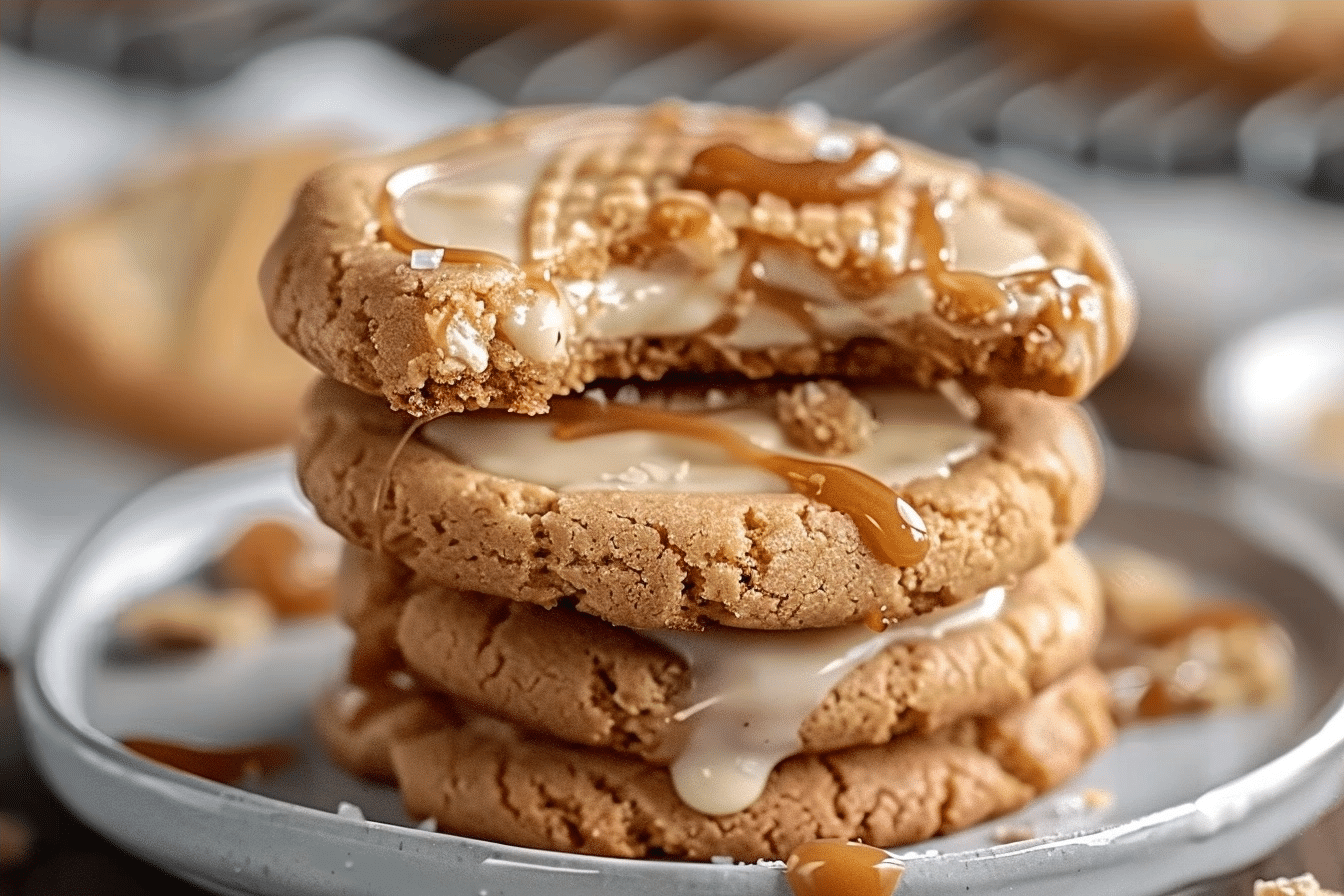
Crumbl Salted Caramel Cheesecake Cookies are thick graham cracker cookies topped with a smooth cheesecake frosting and a salted caramel drizzle, creating a bakery-style cookie that balances sweet and salty. This Crumbl Salted Caramel Cheesecake Cookies recipe yields soft centers, crisp edges, and a pipeable cheesecake topping for a polished finish.
| Prep Time | Cook Time | Total Time | Servings | Difficulty | Cuisine |
|---|---|---|---|---|---|
| 20 mins (+1 hr chill) | 10-12 mins per batch | 1 hr 32 mins | 24 cookies | Medium | American |
Image ALT: Close-up of finished Crumbl Salted Caramel Cheesecake Cookies stacked on a plate, showing frosting and caramel drips.
This recipe works because it balances texture, flavor, and technique for bakery-style cookies.
I cook these cookies often when I want a thick, bakery-style cookie that still finishes quickly at home. The combination of graham cracker crumbs with all-purpose flour gives the base a toasty, slightly honeyed note that complements the caramel and cream cheese topping.
My hands-on insight: chilling the dough is the single most reliable step for keeping these cookies tall and cakey at the center while allowing the edges to brown. The cheesecake frosting adds a tangy counterpoint that brightens the rich caramel drizzle.
Image ALT: The process shot of chilled cookie dough scoops on a parchment-lined baking sheet.
This ingredients list contains the exact elements to make the graham cracker cookie base, cheesecake frosting, and salted caramel topping.
| Ingredient | Quantity | Notes/Alternatives |
|---|---|---|
| All-purpose flour | 2 cups | Use 1:1 gluten-free flour blend for GF option, texture will be slightly crumblier |
| Graham cracker crumbs | 1 cup | Use finely crushed for even texture; substitute digestive biscuits if unavailable |
| Baking soda | 1 teaspoon | Ensures light rise; replace with 1 1/4 tsp baking powder if needed |
| Salt | 1/2 teaspoon | Balances sweetness; reduce for low-sodium diets |
| Unsalted butter, softened | 3/4 cup | Room temperature for proper creaming; use salted butter and reduce added salt by 1/4 tsp |
| Granulated sugar | 1/2 cup | For structure and light crisping |
| Light brown sugar, packed | 1/2 cup | Adds moisture and molasses flavor; dark brown gives deeper caramel notes |
| Large egg | 1 | Room temperature for even mixing |
| Vanilla extract | 1 teaspoon | Use pure vanilla for best flavor |
| Cream cheese, softened (for frosting) | 8 oz | Full-fat for stability and flavor; low-fat will be thinner |
| Powdered sugar | 1 cup | Sifted for smooth frosting |
| Vanilla extract (frosting) | 1 teaspoon | Brightens the cheesecake flavor |
| Thick caramel sauce | 1/2 cup | Use store-bought or homemade thick caramel; refrigerate to thicken if runny |
| Sea salt | 1 teaspoon (or to taste) | Flaky sea salt makes the finishing touch; reduce for less salty contrast |
Image ALT: Spread of measured ingredients on a countertop including flour, graham crumbs, sugars, butter, and cream cheese.
These step-by-step instructions walk you through dough making, chilling, baking, frosting, and finishing with caramel and salt.
Make the Cookie Dough
- Whisk together the flour, graham cracker crumbs, baking soda, and salt in a medium bowl.
- Cream the softened butter with the granulated and brown sugars in a large bowl until light and fluffy, about 2–3 minutes using a hand mixer.
- Beat in the egg and vanilla extract until fully combined and smooth.
- Slowly add the dry ingredients to the wet mixture and mix until a cohesive dough forms.
- If the dough feels a bit dry, stir in a tablespoon of milk to bring it together without making it too sticky.
Chill the Dough
- Cover the dough tightly and chill in the refrigerator for at least one hour to firm up the fats and make the dough easier to shape.
- Use chilled dough within 24 hours for best rise and texture; you can freeze portions for longer storage.
Bake the Cookies
- Preheat the oven to 350°F (175°C) and line a baking sheet with parchment paper.
- Scoop about 2 tablespoons of dough and roll into balls, spacing them 2 inches apart on the baking sheet.
- Press each ball down slightly so they hold a bakery-style profile and bake for 10–12 minutes until the edges are just golden brown.
- Let cookies rest on the baking sheet for 5 minutes before transferring to a wire rack to cool completely; the centers will set as they cool.
Make the Cheesecake Frosting
- Beat the softened cream cheese in a bowl until smooth and fluffy.
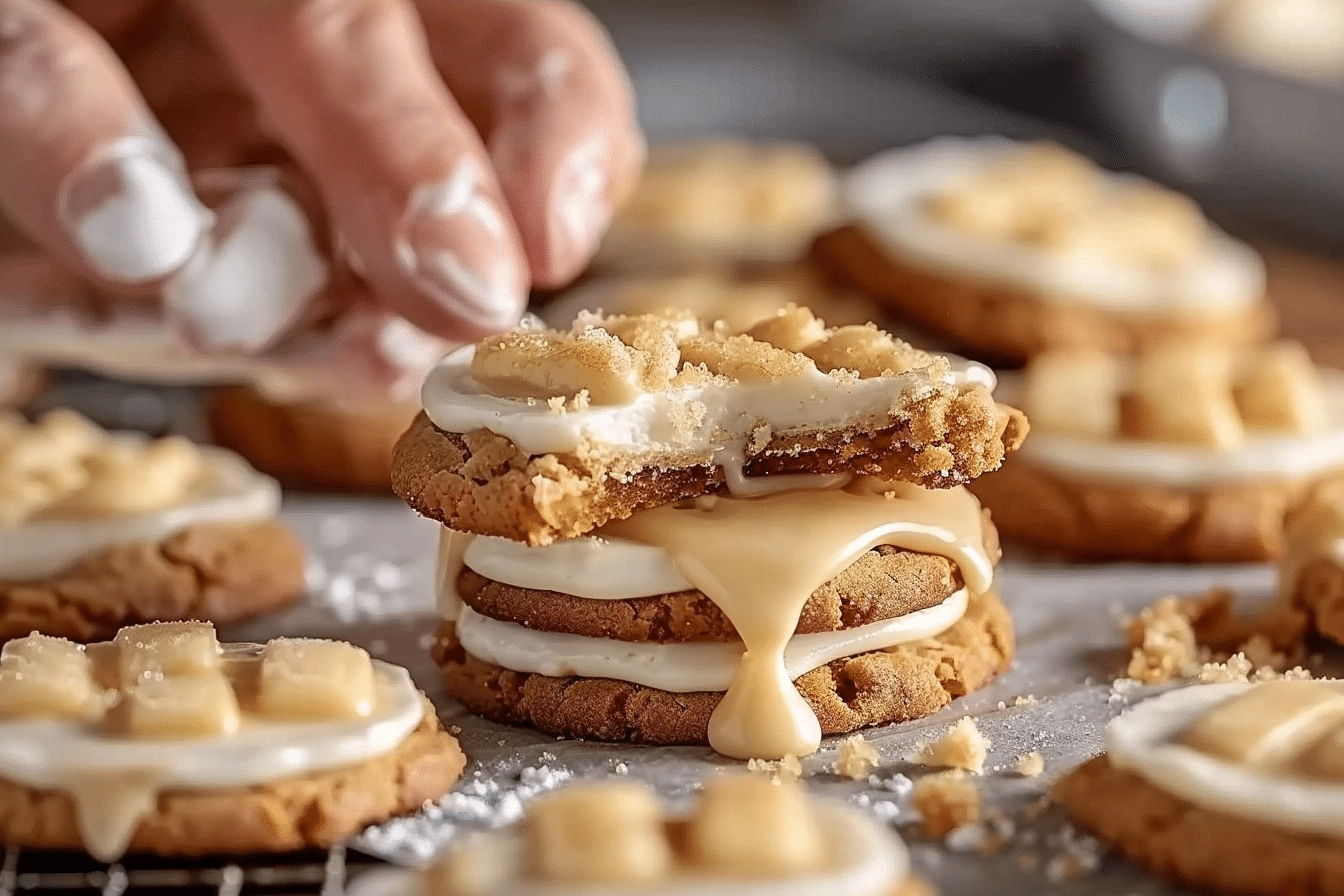
- Add the powdered sugar and vanilla extract and mix until silky and spreadable, aiming for a thick but pipeable consistency.
- Transfer frosting to a piping bag or use a spoon to top the cooled cookies.
Decorate with Caramel and Salt
- Top each cooled cookie with a generous swirl of cheesecake frosting.
- Drizzle thick caramel sauce over the frosting in a controlled pattern.
- Finish with a small pinch of sea salt on top of each cookie to create the sweet-salty contrast.
Image ALT: Step-by-step collage showing scooping dough, baked cookies cooling, piping cheesecake frosting, and drizzling caramel.
These chef tips offer practical techniques, timing cues, and texture signals to ensure bakery-style results every time.
- Cream butter and sugars until pale and airy for about 2–3 minutes; this traps air that helps the cookies rise without spreading too thin.
- Chill the dough for at least one hour; if you need extra height, chill overnight to solidify the butter completely.
- Use a cookie scoop for uniform portions; 2-tablespoon scoops create consistent baking times and uniform stacks for frosting.
- Bake until the edges are just golden and centers still look slightly underbaked—cookies finish setting on the tray and remain soft inside.
- Bring cream cheese to room temperature and beat thoroughly to avoid lumps; if frosting seems loose, chill briefly to firm it up before piping.
- Use a thick caramel and apply sparingly if the sauce is runny; cool store-bought caramel in the refrigerator to thicken before drizzling.
Image ALT: Close-up of piping cheesecake frosting onto cooled cookie using a star tip.
These common mistakes cause texture or flavor problems and each answer explains why they occur and how to fix them.
- Overcreaming the butter and sugar can make cookies too thin; fix by chilling the dough and reducing mixing time to avoid excess air incorporation.
- Underchilled dough causes excessive spread in the oven; prevent it by refrigerating the dough for at least one hour and returning to chill if it becomes soft while shaping.
- Using cold cream cheese leads to lumpy frosting; correct by bringing cream cheese to room temperature and beating until smooth.
- Drizzling hot or thin caramel will soak the frosting and make the cookie soggy; avoid this by using thick caramel or chilling thin caramel to thicken before drizzling.
- Not letting cookies rest on the baking sheet causes them to break when moved; always rest 5 minutes to allow the structure to set.
Image ALT: Side-by-side comparison of a cookie that spread versus a properly chilled cookie with height and structure.
These variations and substitutions let you customize flavor and adapt to dietary needs while noting the expected flavor and texture impact.
| Ingredient | Substitution | Flavor/Texture Impact |
|---|---|---|
| All-purpose flour | 1:1 gluten-free flour blend | Texture becomes slightly more crumbly and less elastic; add 1 tsp xanthan gum if the blend lacks it |
| Graham cracker crumbs | Digestive biscuit crumbs or finely crushed golden Oreos (for chocolate twist) | Digestive gives similar flavor; Oreo adds chocolate depth and darker color |
| Powdered sugar (frosting) | Less sugar + a tablespoon of sour cream | Reduces sweetness and adds tang; frosting will be slightly looser and less pipeable |
| Caramel sauce | Salted dulce de leche or butterscotch sauce | Dulce de leche adds thicker, richer milk-sweet notes; butterscotch yields deeper brown sugar flavor |
| Sea salt | Coarse kosher salt or flaked Maldon | Maldon gives a delicate crunch and visual appeal; kosher is less pronounced |
Image ALT: Variations of the cookie displayed with dulce de leche and butterscotch drizzles alongside the original caramel.
These serving suggestions and pairings match the cookies with beverages, sauces, garnishes, and occasions for the best experience.
Serve these cookies with strong coffee, cold milk, or a lightly brewed black tea to balance the sweetness. For a dessert platter, arrange with fresh berries, a small bowl of extra caramel, and whipped cream to cut richness.
Pair them with seasonal events: make minis for holiday cookie exchanges, bring full-size cookies to potlucks, or include them on a brunch pastry board. Garnish with extra flaky sea salt, finely grated chocolate, or toasted pecans for texture and visual contrast.
- Drinks: espresso, latte, or classic whole milk
- Sides: vanilla ice cream, salted caramel dip, or fresh strawberries
- Occasions: holiday trays, bake sales, birthdays, and afternoon tea
Image ALT: Dessert board showing cookies paired with espresso, berries, and a small bowl of caramel sauce.
These storage and reheating methods keep cookies fresh, maintain texture, and preserve the cheesecake frosting when possible.
| Method | Duration | Instructions |
|---|---|---|
| Room temperature | 1-2 days | Store in an airtight container with parchment layers between cookies to protect frosting; keep away from heat. |
| Refrigerator | 3-5 days | Place in a shallow airtight container; allow cookies to come to room temperature before serving for best texture. |
| Freezer (unfrosted) | Up to 3 months | Flash-freeze baked cookies on a tray, then transfer to a sealed freezer bag. Thaw at room temperature before frosting. |
| Reheating (frosted) | Warm briefly | Let cookie sit at room temperature; for a warm bite, remove frosting or warm unfrosted cookie 5-8 seconds in microwave and re-frost if desired. |
Image ALT: Stacked cookie storage showing airtight containers for room temperature and refrigerated storage.
This nutritional information provides approximate per-serving values for one cookie based on the recipe yield stated above.
| Nutrient | Amount per Serving |
|---|---|
| Calories | 250 kcal |
| Protein | 3 g |
| Fat | 12 g |
| Carbohydrates | 33 g |
| Fiber | 1 g |
| Sugar | 18 g |
| Sodium | 120 mg |
Approximate values.
Image ALT: Nutritional label style layout beside a single decorated cookie on a napkin.
These frequently asked questions address substitutions, doneness, troubleshooting, make-ahead strategies, and storage for salted caramel cheesecake cookies.
Can I substitute the graham cracker crumbs in salted caramel cheesecake cookies?
Yes, you can substitute graham cracker crumbs with digestive biscuit crumbs or finely crushed golden Oreos for a chocolate version. Digestive biscuits preserve a similar flavor profile and texture, while Oreos add chocolate flavor and darker color. Adjust sweetness accordingly when using sweeter substitutes.
How do I know when Crumbl-style cookies are done baking?
Cookies are done when the edges are just golden and the centers look slightly underbaked. The centers will continue to set as the cookies rest on the baking sheet for five minutes. Overbaking will dry them out, so remove them from the oven at the first sign of color change.
Why did my frosting become runny or lumpy, and how do I fix it?
Your frosting becomes runny when the cream cheese is too warm or when powdered sugar is not sifted. Fix runny frosting by chilling it briefly to firm up or adding more powdered sugar a tablespoon at a time until you reach a pipeable consistency. To remove lumps, beat the frosting longer or pass it through a fine mesh strainer.
Can I make these cookies ahead of time for events?
Yes, you can make the cookie shells and freeze them unfrosted for up to three months. Thaw at room temperature and then pipe the cheesecake frosting and drizzle caramel the day of the event to ensure the freshest texture.
What is the best way to store salted caramel cheesecake cookies to maintain texture?
Store frosted cookies in a single layer in an airtight container in the refrigerator for up to five days to preserve the cream cheese topping. Bring to room temperature before serving for the best mouthfeel, and keep extra caramel separate until ready to serve if you plan on longer storage.
Image ALT: FAQ composite image showing cooling cookies, frosting bowls, and storage containers.
For more cookie recipes, see Best cookie recipes, my baking tips, and a seasonal holiday cookie guide. For authoritative guidance on food safety and baking technique consult USDA food safety and Serious Eats baking resources.
This conclusion summarizes the recipe and encourages you to bake these bakery-style cookies at home.
This Crumbl Salted Caramel Cheesecake Cookies recipe produces tall, bakery-style cookies with a tangy cheesecake frosting and a rich salted caramel finish. Try the recipe as written the first time to learn the dough and baking cues, then personalize with variations. Expect balanced sweet-and-salty bites that highlight toasted graham flavor and creamy frosting.
Image ALT: Final hero shot of several Crumbl Salted Caramel Cheesecake Cookies on a marble slab with caramel drips.
Crumbl Salted Caramel Cheesecake Cookies
Ingredients
- All-purpose flour, 2 cups
- Graham cracker crumbs, 1 cup
- Baking soda, 1 teaspoon
- Salt, 1/2 teaspoon
- Unsalted butter, softened, 3/4 cup
- Granulated sugar, 1/2 cup
- Light brown sugar, packed, 1/2 cup
- Large egg, 1
- Cream cheese, softened, 4 oz (113g)
- Butter, softened, 1/4 cup (57g)
- Powdered sugar, 1 cup (120g)
- Vanilla extract, 1 teaspoon
- Dark brown sugar, 1 cup
- Unsalted butter, 1/2 cup (113g)
- Light corn syrup, 1/4 cup (60ml)
- Flaked sea salt, 1/2 teaspoon
Instructions
- Preheat oven to 350°F (175°C)
- Whisk all-purpose flour, graham cracker crumbs, baking soda, and salt in a bowl
- In a separate bowl, cream softened butter with granulated and brown sugars until fluffy
- Add egg and vanilla extract, beating to combine
- Gradually mix dry ingredients into wet ingredients until a thick dough forms
- Scoop dough into 1 1/2-inch balls, chill for 1 hour
- Bake for 10-12 minutes, or until edges are golden and centers are soft
- In a bowl, beat cream cheese, butter, powdered sugar, and vanilla until smooth; chill 30 minutes
- Pipe frosting onto cooled cookies
- In a saucepan, melt brown sugar, butter, and corn syrup over medium heat; remove from heat and stir in 1/4 cup heavy cream and salt
- Drizzle caramel over frosting and top with flaked sea salt
- Let caramel harden slightly before serving
Notes
Use gluten-free flour blend for GF option (texture becomes crumblier)
Substitute digestive biscuits for graham cracker crumbs
Adjust salt if using salted butter
Store in an airtight container for up to 3 days